Silence.
In a subterranean hall carved eighty meters beneath the Zagros Mountains, the only sound is the high, metallic whine of thousands of aluminum cylinders spinning faster than the speed of sound, a relentless mechanical hum that vibrates straight through the soles of a technician’s boots and settles deep into the marrow of his bones. Discover more on a connected issue: this related article.
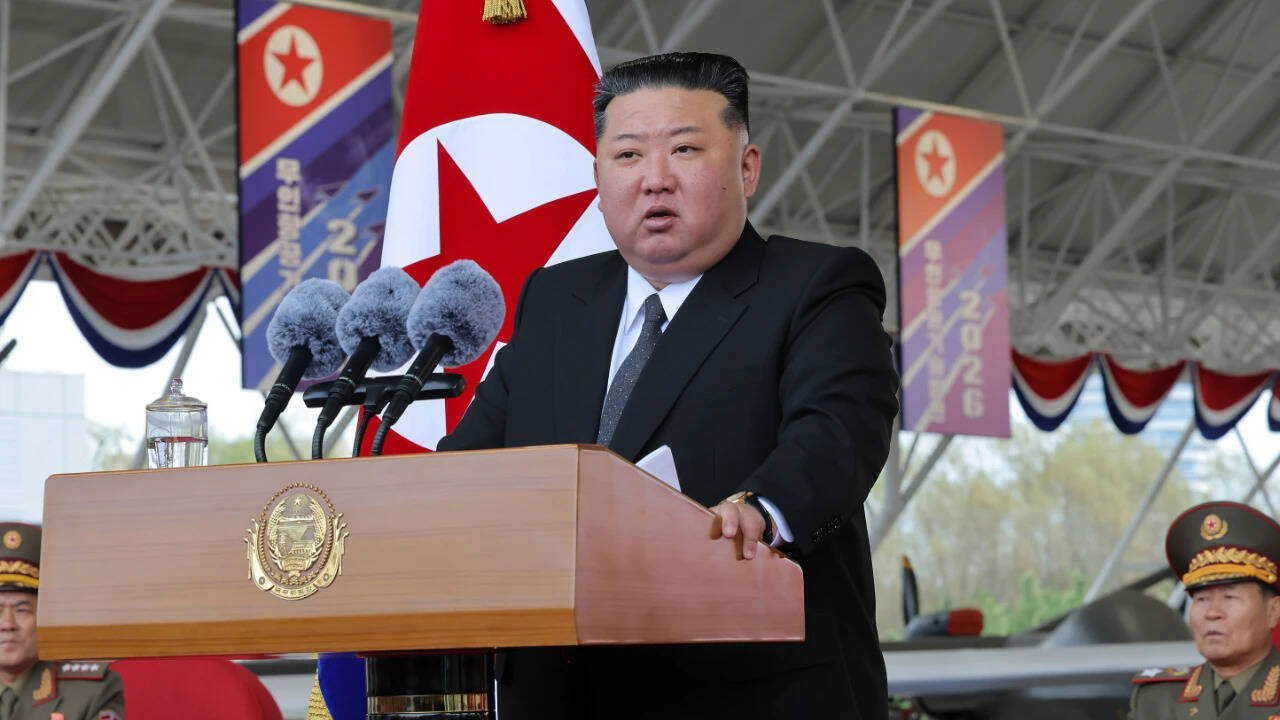
To the outside world, this is a geopolitical chess piece. To diplomats in Geneva and Washington, it is a metric ton of numbers on a briefing sheet—percentages of purity, stockpile weights, breakout timelines. Yet when an Iranian official stepped before a bank of microphones recently and declared that Tehran would not move a single atom of enriched uranium from its territory, he was not merely reciting a diplomatic talking point. He was drawing a line in the dust of a decades-long standoff where the physical weight of a few hundred kilograms of pale yellow powder carries the emotional gravity of national survival, historical trauma, and the terrifying math of modern deterrence.
Most news reports treat that quote like a weather update. They tell you what was said, who said it, and which sanctions might follow. They miss the heartbeat beneath the headline. Because to understand why a nation refuses to surrender a single microscopic particle of enriched uranium—even when its currency is collapsing and its grocery shelves are thinning—you have to look past the podium and step into the lives of the people caught between the centrifuges and the sanctions. Further analysis by Reuters delves into related views on the subject.
The Weight of an Invisible Grain
Consider a hypothetical character—let us call her Mina, a thirty-four-year-old pharmacist in central Tehran. Every morning, Mina unlocks the glass door of her shop and checks the import invoices before she even turns on the lights. Insulin is scarce again. Chemotherapy drugs have tripled in price since autumn. Her customers do not ask her about isotopic separation or cascade configurations; they ask her why their mother’s blood pressure medication vanished from the supply chain overnight.
When Mina hears on the evening broadcast that her government will not ship a single atom of enriched uranium abroad, she feels a collision of two irreconcilable truths. On one hand, she knows the economic chokehold tightening around her neighborhood is directly tied to that stockpile buried beneath Natanz and Fordow. On the other, she grew up listening to her father recount the eight-year war with Iraq in the 1980s, watching chemical weapons rain down on Iranian cities while international powers looked away or quietly supplied the aggressor.
For generations raised on that memory, self-reliance is not an abstract policy preference. It is a religion forged in scar tissue.
To grasp what enriched uranium actually is, forget the glowing green rods of Hollywood movies. Think instead of baking bread. Natural uranium dug from the earth is mostly a heavy, sluggish isotope called uranium-238, which does not easily split to release energy. Mixed inside it, like a tiny pinch of active yeast hidden inside a massive sack of flour, is just 0.7 percent of uranium-235—the volatile, energetic isotope capable of sustaining a nuclear chain reaction.
Enrichment is simply the agonizingly slow process of sifting out the flour to concentrate the yeast.
When centrifuges spin uranium hexafluoride gas at tens of thousands of revolutions per minute, the heavier uranium-238 atoms are flung slightly outward toward the cylinder walls, while the lighter uranium-235 atoms linger closer to the center. Scoop out that slightly richer gas, feed it into the next spinning tube, and repeat the process thousands of times in endless cascades. At roughly 3.5 to 5 percent purity, you have fuel for a civilian power plant that keeps hospital lights burning. Push that concentration to 20 percent, and you can produce medical isotopes to diagnose cancer. Push it to 60 percent—where Iran’s stockpiles now sit in staggering quantities—and you are standing on the doorstep of the 90 percent threshold required for a nuclear weapon.
Notice the physics of that climb. Getting from 0.7 percent to 20 percent takes roughly ninety percent of the total mechanical effort. Getting from 60 percent to weapons-grade 90 percent is a short, downhill sprint. That is why every gram sitting inside Iranian vaults keeps intelligence analysts awake at three in the morning.
Why Shipping It Away Feels Like Surrender
During the 2015 nuclear accord, formally known as the Joint Comprehensive Plan of Action, Tehran agreed to ship roughly ninety-eight percent of its enriched uranium stockpile out of the country to Russia. In exchange, economic sanctions were lifted, frozen assets thawed, and container ships began returning to Iranian ports. For a brief, intoxicating window, Mina’s pharmacy shelves filled back up. Young engineers in Tehran spoke about tech startups rather than brain drain.
Then came May 2018. The United States unilaterally withdrew from the agreement, reimposing sweeping financial penalties that severed Iranian banks from the global economy.
I remember speaking with an Iranian nuclear engineer years ago in Vienna during a break between tense diplomatic rounds. He stood near a rain-streaked window, stirring a cold cup of espresso, and tried to explain the psychological wreckage of that moment. "We packed our leverage onto ships and watched it sail away across the Caspian Sea," he said quietly, his voice stripped of official bravado. "We kept our side of the ledger. Then the signature on the other side evaporated overnight. Tell me—if you hand over your only shield in good faith and get struck anyway, what kind of fool hands it over a second time?"
That is the emotional core missing from Western coverage. When an Iranian official vows that not a single atom will leave Iranian soil, he is speaking directly to that institutional scar. In Tehran’s strategic calculus, enriched uranium is no longer just nuclear fuel; it is liquid insurance. Once shipped abroad, it is gone forever, leaving the country naked if a future administration in Washington tears up another deal four years down the road.
Consider what happens next in any negotiation room when trust has been burned down to ash. Western negotiators demand physical removal—shipping the 60-percent enriched material out of the country or diluting it back down to harmless levels—because inspectors cannot guarantee safety when weapons-usable material sits minutes away from enrichment halls. Iranian negotiators refuse physical removal because keeping the stockpile inside fortified tunnels is the only guarantee that keeps their adversaries from dictating terms at gunpoint.
Both sides are acting with cold, ruthless logic. Both sides are trapped inside a hall of mirrors where every defensive move looks like preparation for an attack.
The Invisible Anatomy of a Standoff
If you walk through the history of nuclear diplomacy, you quickly realize that treaties rarely fail over physics. The math of enrichment is universal and unforgiving. Treaties fail over memory.
Look at Libya in 2003. Muammar Gaddafi voluntarily dismantled his nascent nuclear program and shipped his centrifuge components to Tennessee in exchange for normalized relations with the West. Eight years later, NATO airstrikes helped topple his regime, and Gaddafi died in a drainage ditch outside Sirte. Look at Ukraine in 1994, surrendering the world’s third-largest nuclear arsenal under the Budapest Memorandum in exchange for security assurances, only to watch Russian tanks roll across its borders decades later.
Decision-makers in Tehran study those histories the way surgeons study anatomy charts. To them, surrendering the physical stockpile is not a pathway to peace; it is an invitation to vulnerability.
Yet holding onto that stockpile carries its own slow-motion devastation. Walk down Valiasr Street in Tehran today and you can see the cost etched into the faces of ordinary families. Inflation eats savings before paychecks even clear. The rial has lost so much value that buying a used car requires carrying stacks of bills or transferring billions of toman on a smartphone screen. Young couples postpone marriage because renting a two-bedroom apartment demands a deposit equivalent to years of wages.
Here lies the quiet tragedy of the Iranian nuclear crisis. The very asset designed to protect the state from external coercion is hollowing out the society from within.
Let us return to our hypothetical pharmacist, Mina, closing her shop as dusk settles over the Alborz foothills. Across town, a university student packs his suitcase for a one-way flight to Toronto or Berlin, part of an exodus of doctors, coders, and engineers draining the country of its brightest minds. Meanwhile, deep inside the mountain tunnels near Qom, advanced IR-6 centrifuges continue their silent, hypnotic spin, separating uranium-235 atom by microscopic atom.
What Actually Happens to Those Atoms?
Readers often ask a straightforward question buried beneath all the diplomatic jargon: if Tehran refuses to ship its enriched uranium abroad, is there any middle ground left, or are we marching straight toward a military collision?
The honest answer is unsettling because the margin for error has shrunk to almost nothing.
In technical terms, there are only three things you can do with highly enriched uranium:
- Export it to a third country like Russia or Oman for safekeeping or conversion into reactor fuel. Tehran has just slammed that door shut.
- Down-blend it inside Iran—chemically mixing the 60-percent enriched uranium with natural or depleted uranium until the overall concentration drops back below 5 percent, rendering it useless for a weapon without re-enrichment.
- Fabricate it into fuel plates for research reactors, locking the uranium into a solid metallic matrix that is extraordinarily difficult to convert back into gas for centrifuges.
Notice the subtle opening hidden inside that uncompromising public statement. Saying Tehran will not move a single atom from its territory is a maximalist rejection of export, yet it leaves the door cracked—just barely—for domestic down-blending or fuel conversion under strict international monitoring. Diplomats parse syllables like medieval theologians for a reason. In public, leaders must sound immovable to satisfy hardliners at home; behind closed doors, every word is chosen to preserve a sliver of maneuverability.
Still, relying on semantic loopholes while stockpiles grow larger every month is like balancing a glass of water on the edge of a moving train. Every time international inspectors from the International Atomic Energy Agency report that cameras have been disconnected or access restricted, the blind spots widen. When intelligence agencies lose visibility, they do not assume innocence—they assume the worst. And when military planners assume the worst, preemptive strikes move from theoretical contingency folders onto active desks.
The Human Ledger Beneath the Rhetoric
We live in an era that loves clean binaries. Heroes and villains. Capitulation or war. Press releases reduced to twenty-eight-character outrage.
Nuclear physics refuses to cooperate with slogans, and human survival rarely fits inside a soundbite.
When I think about the standoff over Iran’s enriched uranium, I do not picture flags fluttering outside conference halls in Vienna or stern portraits hanging in government ministries. I picture the sheer physical absurdity of the object at the center of the storm. If you gathered all of Iran’s 60-percent enriched uranium together in one room, it would not fill a warehouse. It would sit inside a handful of steel canisters small enough to load onto the back of a single pickup truck.
A few hundred kilograms of heavy metal salt. Invisible to the naked eye when suspended as gas inside a spinning tube. Utterly ordinary to look at if you saw it sitting in a glass vial on a laboratory bench.
Yet around those silent canisters revolves the fate of eighty-eight million Iranians desperate for economic breath, the security anxieties of neighbors across the Middle East, the credibility of global nonproliferation treaties, and the looming shadow of a regional war that could set oil markets and shipping lanes ablaze from the Strait of Hormuz to the Mediterranean.
Mina locks the iron shutter over her pharmacy window, pockets her keys, and steps out into the cool evening air. Above the smog line, the snow-dusted peaks of the Alborz Mountains catch the last bruised violet light of sunset. Somewhere beyond the southern horizon, invisible beneath tons of reinforced concrete and solid rock, the machines keep spinning, counting out atoms one by one while an entire nation holds its breath.