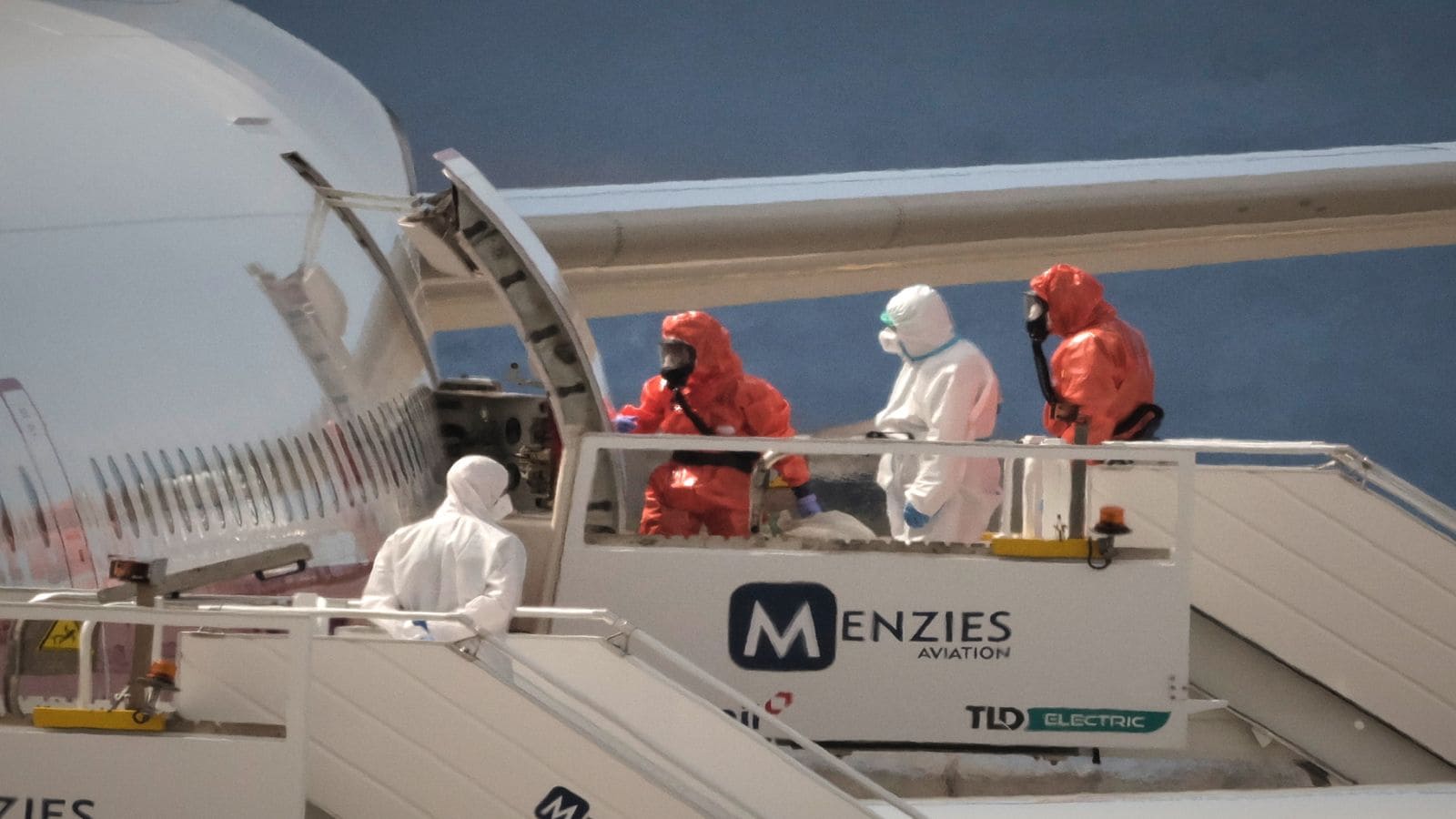
The containment of Hantavirus Pulmonary Syndrome (HPS) within maritime and transit corridors depends entirely on the speed of contact tracing and the clinical stratification of viral incubation periods. In the recent incident involving a vessel in Argentine waters, the primary challenge is not the presence of the pathogen itself—which is endemic to specific South American rodent populations—but the logistical latency in tracking a mobile, international demographic of passengers. To understand the risk profile, one must deconstruct the transmission mechanics and the operational hurdles of cross-border epidemiological surveillance.
The Triad of Viral Persistence
Hantaviruses, specifically those within the Orthohantavirus genus found in the Americas (such as the Andes or Laguna Negra strains), operate through a distinct ecological-to-human pipeline. The risk surface is defined by three intersecting variables:
- Reservoir Density: The concentration of infected Oligoryzomys (long-tailed pygmy rice rats) in the geographic origin of the passengers or the vessel’s previous ports of call.
- Environmental Stability: The virus is excreted in rodent urine, feces, and saliva. Its viability outside the host depends on UV exposure and humidity, with aerosolization occurring when dried excreta are disturbed.
- Human Interfacing: The probability of inhalation in confined spaces, such as ship cabins, storage holds, or during land-based excursions in endemic rural areas.
In the Argentine context, the Andes virus variant introduces a critical fourth variable: the documented potential for human-to-human transmission. Unlike North American strains like Sin Nombre, the Andes virus has shown the ability to spread between close contacts during the prodromal phase or early symptomatic stage. This shift transforms a localized zoonotic event into a potential cluster-based outbreak, necessitating an immediate transition from environmental investigation to rigorous contact tracing.
Structural Bottlenecks in Maritime Contact Tracing
The transition from a suspected case on a ship to a coordinated public health response reveals a series of systemic friction points. When authorities retrace the footsteps of passengers, they are fighting an exponential decay in the accuracy of data.
- The Dispersion Variable: Once passengers disembark, they transition from a controlled, traceable environment to a fragmented one. The "footsteps" mentioned by authorities are often digital and administrative trails—flight manifests, hotel registries, and credit card logs. The delay between the identification of a primary case (the index case) and the notification of secondary contacts often exceeds the 1-to-6-week incubation window.
- Asymptomatic Latency: HPS is notoriously difficult to diagnose in its early stages. The prodromal phase mimics common influenza, characterized by fever, myalgia, and fatigue. Without a known exposure history, clinicians in a passenger’s home country may fail to order the specific serology or RT-PCR tests required to identify the virus. This leads to a "diagnostic lag" where the patient's condition may deteriorate into respiratory failure before the link to the Argentine vessel is established.
The Biphasic Progression of Hantavirus Pulmonary Syndrome
The clinical severity of HPS demands an uncompromising triage logic. The disease typically follows a biphasic trajectory that dictates the urgency of medical intervention.
The Febrile Prodrome
For the first 3 to 5 days, the viral load builds. Patients experience non-specific symptoms. During this phase, the primary diagnostic tool is the detection of IgM antibodies or viral RNA. The logistical failure at this stage is often the lack of "geographic suspicion"—if the patient doesn't mention Argentina or a ship, the healthcare provider may miss the window for early aggressive monitoring.
The Cardiopulmonary Phase
The transition is abrupt. As the viral load triggers a systemic inflammatory response, capillary leak syndrome occurs in the lungs. This leads to rapid-onset pulmonary edema and shock. The case fatality rate (CFR) for HPS remains high, often cited between 25% and 40%. The mechanism of death is typically myocardial depression and intractable shock rather than simple respiratory failure. At this point, the patient is often too unstable for transport, meaning the local healthcare infrastructure where the passenger finished their journey becomes the deciding factor in survival.
Quantifying the Probability of a Cluster
To determine if the ship represents a point-source outbreak or a series of isolated exposures, analysts apply a spatial-temporal filter to the passenger list.
- Temporal Clustering: Did the symptomatic individuals share a specific excursion window in a high-risk zone (e.g., a rural trekking route in Patagonia)?
- Spatial Proximity: Were the infected individuals housed in the same deck or ventilation circuit? While aerosolization is the primary route, the mechanical airflow of a modern vessel can, in theory, transport viral particles, though the Andes variant's human-to-human path is more likely linked to direct mucosal contact or prolonged close-quarter breathing.
The Argentine authorities' focus on "retracing footsteps" serves two functions. First, it identifies the "Hot Zone"—the exact location where the rodent-to-human jump occurred. Second, it establishes the "Contact Ring"—the list of individuals who were within the transmission radius of the index case during their infectious period.
The Economic and Operational Cost of Epidemiological Uncertainty
The impact of a Hantavirus scare on maritime operations is measured in more than just health outcomes; it is a disruption of the "Trust Economy" in international travel.
- Regulatory Friction: Increased scrutiny of vessel sanitation certificates and rodent control logs. Ports may implement mandatory quarantine periods if documentation is deemed insufficient, leading to demurrage costs and schedule collapses.
- Liability Frameworks: The legal burden on cruise lines and shipping companies to provide "safe passage." If a ship is found to have a rodent infestation or failed to warn passengers of endemic risks in excursion zones, the litigation tail can last years.
- Surveillance Infrastructure: The incident highlights the need for real-time biosurveillance. Future maritime strategy will likely involve the integration of rapid diagnostic kits (RDTs) for endemic viral threats on board vessels operating in high-risk regions.
Strategic Priority: The Rapid Response Protocol
The current situation in Argentina suggests that the window for localized containment is closing. The strategy must now shift to international notification and localized clinical preparedness.
- Immediate Action: All passengers and crew from the affected vessel must be categorized by risk level: High (close contact with the index case), Medium (shared quarters/dining), and Low (general vessel population).
- Clinical Guardrails: High-risk individuals should undergo daily temperature monitoring for 42 days (the upper limit of the incubation period). Any febrile event must trigger immediate hospitalization in a facility capable of Extracorporeal Membrane Oxygenation (ECMO), which has been shown to improve survival rates in severe HPS cases.
- Vector Audit: The vessel in question must undergo a professional forensic pest audit. Identifying the species of rodent (if any) found on board and testing them for the virus provides the only definitive link between the ship's environment and the patient's pathology.
The reliance on retracing physical steps is a reactive posture. A proactive epidemiological framework assumes that in a globalized transit network, the pathogen has already exited the point of origin by the time the first case is confirmed. Survival and containment, therefore, rely on the speed of the information relay and the readiness of the receiving intensive care units to recognize a rare but lethal viral syndrome. The focus must remain on the mechanics of the Andes virus's unique transmission profile, ensuring that every contact is monitored not just for their safety, but to prevent the establishment of a secondary transmission chain in a non-endemic region.