European savers are sitting on a mountain of cash that does absolutely nothing for them or the continent's economy. It’s a staggering amount of money. We’re talking about roughly €35 trillion in private financial assets. Most of it just sits in boring bank accounts, gathering dust and losing value to inflation while American tech giants and Chinese manufacturers sprint ahead.
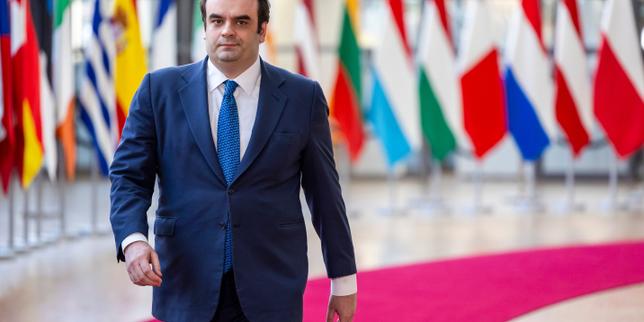
For years, talk of a "Capital Markets Union" sounded like another dry, bureaucratic dream cooked up in Brussels. It was the kind of topic that sent even the most dedicated policy wonks to sleep. But something changed recently. Paschal Donohoe, the President of the Eurogroupe, is now sounding a different note. He’s signaling that for the first time in a decade, the political will to actually move this money is real. The urgency isn't just about efficiency anymore. It's about survival.
Why the old way of saving is killing European growth
If you live in Paris, Berlin, or Madrid, your instinct is probably to keep your money "safe" in a traditional savings account. It feels responsible. In reality, that caution is a massive drag on the European project. When your money stays in a local bank, it mostly funds local mortgages or small loans. It doesn't find its way into the high-growth startups or massive infrastructure projects Europe needs to compete with the U.S. and China.
The American model is different. There, a much higher percentage of household wealth is tied up in capital markets. This creates a massive pool of venture capital and deep liquid markets that allow companies to scale at lightning speed. Europe doesn't have that. We have 27 different sets of rules, 27 different tax systems, and 27 different ways of protecting investors.
This fragmentation is a tax on innovation. A Finnish startup shouldn't find it easier to get funding from a New York VC than from a pension fund in Italy. But right now, that's the reality. Donohoe and his colleagues realize that if they don't fix this, Europe will remain a museum of past industrial greatness rather than a laboratory for the future.
The sudden shift in political appetite
Governments used to be protective of their national financial "ecosystems." They liked having their own national stock exchanges and their own specific bankruptcy laws. It felt like sovereignty. But the bill for that pride has arrived. Europe needs to find roughly €600 billion to €800 billion extra every year just to meet its climate goals and bolster its defense capabilities.
Public debt is already at its limit for many eurozone countries. You can't just keep printing money or borrowing from future generations. The only untapped well left is private savings.
This is why the tone from the Eurogroupe has shifted from "this would be nice" to "we have no choice." Donohoe has been pushing a roadmap that focuses on practicalities rather than just lofty ideals. They're looking at ways to make it easier for small businesses to list on stock exchanges and, more importantly, how to encourage everyday citizens to move their money out of low-interest accounts and into productive investments.
Making retail investing less scary for the average person
Let's be honest. Most people don't invest because the system feels rigged or overly complex. If Europe wants to mobilize these trillions, it has to fix the "retail" experience. This means better transparency on fees and simpler products that don't require a PhD in finance to understand.
There’s also a cultural wall to climb. In many European cultures, the stock market is seen as a casino. Changing that mindset requires more than just a new regulation from Brussels; it requires a fundamental shift in how we talk about wealth building.
What actually needs to happen now
- Standardized insolvency laws: This sounds incredibly dull, but it's the biggest hurdle. Investors won't put money into a cross-border project if they don't know how they'll get paid back if things go south.
- Harmonized tax treatments: Why should an investor pay three different types of withholding tax just because a company operates in multiple EU countries?
- A unified European "Golden Account": There’s talk of creating simple, cross-border investment products that are portable and tax-advantaged across the entire Union.
The defense and climate connection
Don't think this is just about making rich people richer. It’s about the tank in the garage and the heater on the wall. With the geopolitical situation in 2026 looking more volatile than ever, Europe’s "strategic autonomy" is the phrase of the day. You can't have a strong defense industry if your capital markets are weak.
The Green Deal also relies on this. Most of the transition to renewable energy will have to be funded by the private sector. If the Capital Markets Union remains a half-baked idea, the "Green Transition" will simply be too expensive to achieve.
Donohoe's optimism stems from the fact that the big players—France and Germany—finally seem to be on the same page. They've realized that a fragmented market is a weak market. They're looking at a "bottom-up" approach, starting with the things that actually matter to businesses today, rather than trying to build a perfect federal system overnight.
Stop waiting for a miracle and start moving the needle
If you're waiting for a single "Big Bang" moment where all European markets merge into one, you'll be waiting forever. That's not how the EU works. It’s a game of inches. But the inches are finally adding up.
If you're managing a portfolio or even just looking at your own savings, start looking beyond your national borders. The barriers are thinning. Look for European-wide ETFs or investment platforms that treat the Single Market as a single entity. The smart money isn't waiting for the final signature in Brussels; it's already positioning itself for a more integrated financial Europe.
Check your current savings yield against the average inflation rate in your country. If you're losing 3% a year in "real" value just to keep your money in a local branch, you're the one paying for Europe's inefficiency. Transitioning even a small percentage of your "lazy" cash into diversified European equity funds is the first step toward the change the Eurogroupe is trying to spark. Don't wait for the bureaucrats to finish their paperwork before you start protecting your own purchasing power.