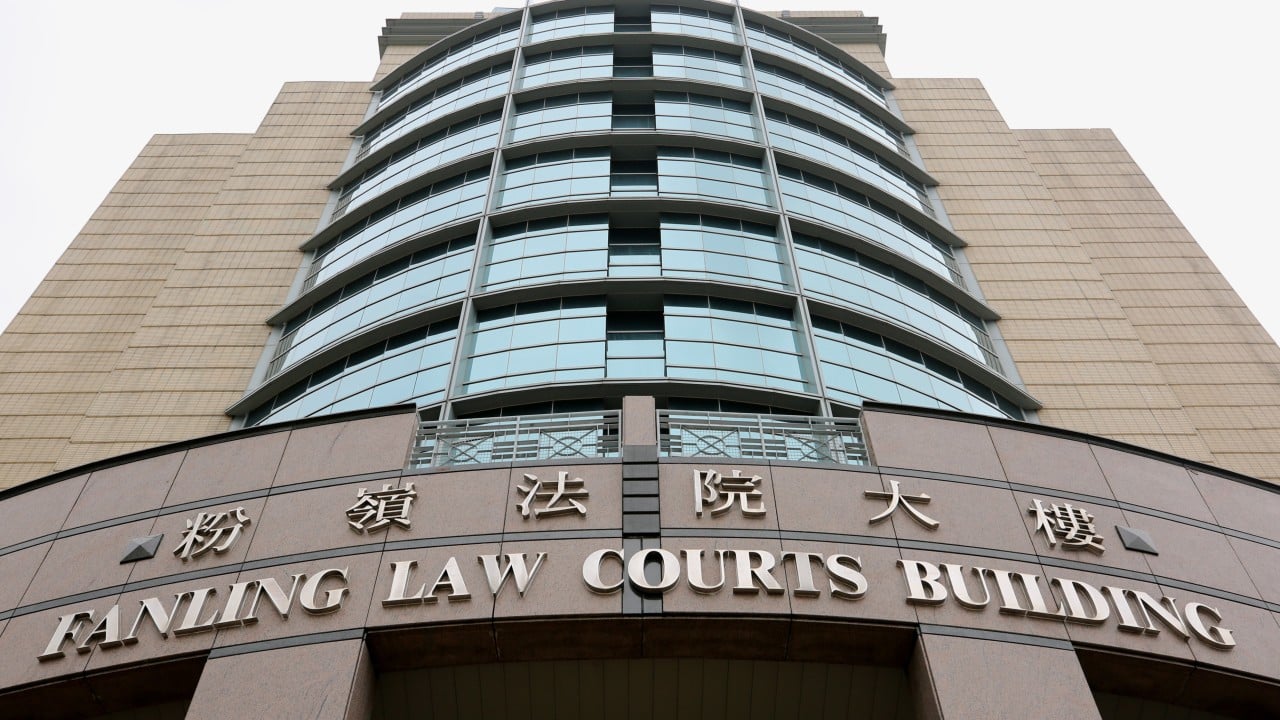
The Hong Kong government suffered a definitive legal defeat when the Court of Appeal dismissed its bid to overturn a successful challenge against a public housing project on the Fanling Golf Course. This ruling effectively strands a multi-million-square-foot land reclamation effort meant to ease the city's chronic housing deficit, laying bare a deep structural friction between bureaucratic overreach and entrenched privilege.
For years, the state has attempted to repossess a fraction of the historic Fanling course to construct thousands of public flats. Instead of achieving a swift victory for public welfare, the initiative became bogged down in procedural missteps, faulty environmental impact assessments, and fierce resistance from elite stakeholders.
The Anatomy of a Procedural Collapse
Bureaucratic hubris often masks itself as administrative efficiency. When the Environmental Protection Department initially green-lit the development, it relied on an environmental impact assessment that the courts later found deficient. Public consultation was treated as a box-ticking exercise rather than a mandatory pillar of statutory compliance.
The legal fallout centers on administrative fairness. By failing to make crucial supplementary information available for public inspection, the administration handed the Hong Kong Golf Club a precise legal weapon.
- The Environmental Protection Department misjudged the threshold of public scrutiny.
- The Court of Appeal ruled the Director of Environmental Protection acted unreasonably by ignoring specific club submissions.
- Statutory timelines were prioritized over transparent governance, creating an avoidable vulnerability.
Courts do not exist to rubber-stamp executive ambition. When state departments treat environmental safeguards as administrative hurdles to be bypassed, they invite the exact judicial interventions that stall their own projects for years.
Elite Preservation Versus Urgent Public Need
The symbolism of Fanling is toxic. On one side stands a desperate population enduring exorbitant rents and sub-divided flats, waiting decades for public housing allocations. On the other side sits a century-old playground for the financial aristocracy, defended with elite legal representation and heritage arguments.
The government thought it could slice off 9.5 hectares of the Old Course while leaving the rest intact, splitting the difference between social necessity and elite leisure. That compromise satisfied nobody.
The golf club successfully framed the defense around cultural heritage and ecological preservation. Yet, observers watching the real estate market understand that the defense of a golf course is rarely about rare trees or historical tee boxes. It is about spatial dominance in a territory where every square meter dictates economic survival.
By losing the appeal, the administration faces a humiliating choice. It can restart the entire environmental assessment process from scratch—incorporating proper public consultations and risking further delays—or it can abandon the green-space blueprint entirely and search for alternative parcels that lack such fierce defenders.
The Broader Administrative Crisis
This defeat transcends a single patch of turf in the New Territories. It signals a systemic fatigue within Hong Kong's development machinery. For decades, large-scale infrastructure and land initiatives relied on executive dominance and minimal pushback. That era has closed.
Statutory frameworks like the Environmental Impact Assessment Ordinance are legally binding traps for an administration that moves too fast to care about details. When agencies attempt to force projects through by trimming consultative corners, civil society organizations and wealthy interest groups alike use the judiciary to halt them.
The Civil Engineering and Development Department now faces extensive timeline adjustments. Housing yields projected from the site evaporate into political uncertainty. Thousands of families relying on those units must continue waiting while lawyers argue over technical definitions of procedural fairness in appellate courts.
The Cost of Shortcuts
Shortcuts in urban planning invariably produce long-term paralysis. If the administration had invested the necessary time into bulletproof public consultations and thorough ecological data collection from the outset, the legal challenge would have lacked teeth. Instead, an appetite for speed birthed sloppiness.
The judiciary's rebuke was sharp, highlighting that administrative convenience cannot override statutory obligations. Public trust in housing delivery mechanisms erodes every time a flagship project collapses under judicial scrutiny.
Fixing the housing shortage requires more than seizing high-profile recreational land. It demands a complete overhaul of how the state evaluates environmental risk and interacts with public dissent. Until the machinery of government learns to respect the procedural rules it writes, executive ambition will continue to crash against the unyielding wall of the law