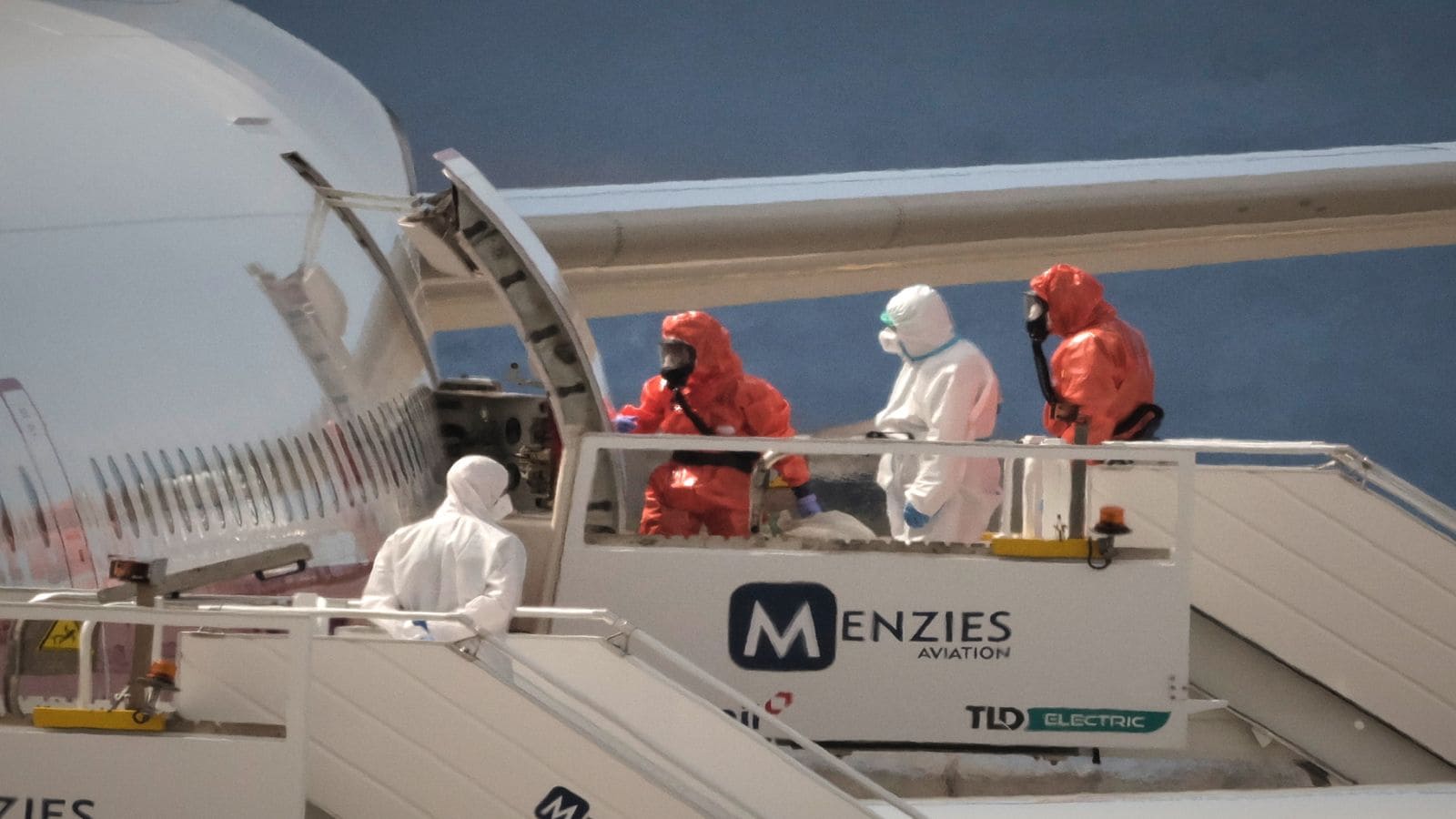
Hantavirus poses a negligible systemic threat to the Indian population when compared to endemic vector-borne diseases like Dengue or Malaria, yet the psychological contagion of "outbreak news" often obscures the specific biological and environmental constraints that prevent its widespread transmission. To accurately calculate the risk profile, one must move beyond the generalized anxiety of viral titles and analyze the intersection of rodent reservoir density, viral shedding mechanics, and human-environment contact points.
The Mechanistic Barrier to Human Transmission
Hantavirus operates on a fundamentally different transmission logic than respiratory viruses like SARS-CoV-2. It is primarily a zoonotic pathogen, meaning the jump from animal to human is the terminal event in most cases. Human-to-human transmission is statistically non-existent for the strains typically found in Asia, such as the Hantaan or Seoul viruses.
The transmission cycle depends on a specific sequence of events:
- Reservoir Shedding: The virus resides in specific rodent species (the Muridae family). It is excreted through saliva, urine, and feces.
- Viral Persistence: The virus must remain viable in the environment. Hantaviruses are enveloped viruses, which makes them highly susceptible to UV light, heat, and common detergents.
- Aerosolization: Human infection occurs almost exclusively through the inhalation of microscopic particles of dried rodent excreta.
- Inhalation Dose: A critical viral load must be inhaled to bypass the upper respiratory defenses and reach the lower pulmonary tract or enter the bloodstream to affect renal function.
In the Indian context, the primary bottleneck is the environmental stability of the virus. High ambient temperatures and humidity levels in much of the subcontinent act as natural degradants, reducing the window of time during which aerosolized particles remain infectious.
Taxonomic Differentiation: HFRS vs. HCPS
Confusion in public discourse often stems from failing to distinguish between the two primary clinical manifestations of Hantavirus. This distinction is vital because it dictates the severity of the medical response required.
Hemorrhagic Fever with Renal Syndrome (HFRS)
Commonly associated with Old World hantaviruses found in Europe and Asia. The pathology targets the vascular system and the kidneys. The clinical progression follows a defined five-stage trajectory: febrile, hypotensive, oliguric, diuretic, and convalescent. Mortality rates vary by strain, ranging from less than 1% to approximately 15%. In India, suspected cases usually fall into this category, often misdiagnosed initially as Leptospirosis due to overlapping renal symptoms.
Hantavirus Cardiopulmonary Syndrome (HCPS)
Associated with New World hantaviruses (primarily in the Americas). This manifestation is significantly more lethal, with mortality rates reaching 35% to 40%. It progresses rapidly from flu-like symptoms to acute respiratory failure and cardiogenic shock. There is currently no evidence that HCPS-causing strains are circulating in Indian rodent populations.
The Rodent Density Variable
The risk of Hantavirus is a direct function of rodent population dynamics. In India, the Bandicota and Rattus species are the primary candidates for viral reservoirs. However, the presence of a rodent does not guarantee the presence of the virus.
The "Amplification Effect" occurs when environmental changes—such as sudden increases in food availability (post-harvest) or rapid urbanization—lead to a spike in rodent density. When density increases, intraspecific aggression among rodents rises, leading to more frequent biting and scratching, which facilitates the spread of the virus within the rodent community. Human risk only climbs once the "Prevalence Threshold" in rodents is breached, increasing the likelihood that a human will encounter an infectious shedding site.
Clinical Differential Diagnosis Challenges
A significant hurdle in the Indian healthcare landscape is the "Diagnostic Noise" created by more prevalent diseases. Hantavirus symptoms—fever, muscle aches, and fatigue—are non-specific and mirror several endemic conditions:
- Leptospirosis: Also rodent-borne and causes renal failure. It is far more common in India, particularly during monsoon seasons.
- Scrub Typhus: Mimics the febrile and multi-organ involvement of Hantavirus.
- Dengue: Causes similar vascular leakage and thrombocytopenia (low platelet counts).
Without specific serological testing (ELISA for IgM and IgG antibodies) or Molecular testing (RT-PCR), Hantavirus cases are likely under-reported or misattributed. This creates a data gap that prevents an accurate assessment of the true "Sero-prevalence" in the Indian population.
Structural Vulnerabilities in Urban and Rural Settings
The risk is not distributed uniformly. It is concentrated in specific "Interface Zones" where human activity overlaps with rodent habitats.
The Agricultural Interface: During harvesting, farmers are exposed to dust from fields that may contain dried rodent excreta. The mechanical agitation of soil and crops facilitates aerosolization.
The Urban Slum Interface: High-density living conditions with inadequate waste management provide stable food sources and nesting grounds for rodents. The proximity of sleeping quarters to food storage areas increases the probability of nocturnal exposure.
The Peridomestic Interface: Even in affluent areas, construction sites or poorly maintained storage sheds can serve as localized reservoirs.
Quantification of the Threat Level
To move from fear to strategy, we must apply a risk matrix. The probability of an individual Indian contracting Hantavirus remains "Very Low," while the impact on the individual (severity) is "High."
The lack of a vaccine or specific antiviral treatment (like Ribavirin, which has shown inconsistent results) means that management is purely supportive. This includes fluid management, hemodynamic stabilization, and, in severe cases, renal replacement therapy (dialysis) or mechanical ventilation.
Protocol for Risk Mitigation and Exposure Management
Effective strategy shifts the focus from "waiting for a cure" to "environmental exclusion."
- Exclusionary Barriers: Sealing gaps larger than 0.25 inches in residential structures. Rodents can compress their skeletons to enter remarkably small openings.
- Moist Decontamination: This is the most critical tactical intervention. If rodent droppings are discovered, they must never be swept or vacuumed, as this action induces aerosolization—the primary mode of infection. Instead, the area should be saturated with a 10% bleach solution or a strong disinfectant for 10 minutes before being wiped up with damp paper towels.
- Occupational Respiratory Protection: Individuals working in high-risk environments (granaries, old warehouses, or fields) should utilize N95-rated respirators to filter out potentially contaminated dust particles.
The Predictive Model for Future Outbreaks
The emergence of Hantavirus as a serious public health concern in India would likely be preceded by specific environmental triggers. Ecologists monitor "Masting Events"—periods of synchronous high seed production in plants—which lead to rodent population explosions. In India, changes in monsoon patterns that alter crop yields or urban flooding that displaces rodent populations into human dwellings serve as the primary leading indicators of increased risk.
The current strategy should prioritize the integration of Hantavirus screening into existing "Fever of Unknown Origin" (FUO) surveillance programs. By establishing a baseline of sero-prevalence, health authorities can distinguish between a new outbreak and a long-standing, low-level endemic presence that was previously invisible.
The strategic priority is not the development of a mass vaccination program, which would be an inefficient allocation of resources given the transmission dynamics. Instead, the focus must remain on clinical awareness among first-contact physicians in rural and semi-urban areas to ensure that renal involvement in febrile patients triggers a broader diagnostic panel. The goal is to reduce the "Time-to-Diagnosis," which remains the most significant variable in determining patient outcomes in HFRS cases.