You are driving down the eastbound express lanes of Highway 401 in Mississauga. The morning rush is beginning to ease, but traffic is still heavy. Up ahead, brake lights flare as the flow slows down near Dixie Road. You press your brakes, expecting the usual stop-and-go crawl. But behind you, someone isn't paying attention.
That exact scenario turned fatal on Wednesday morning, July 15, 2026, when a devastating rear-end collision claimed two lives and sent three others to the hospital.
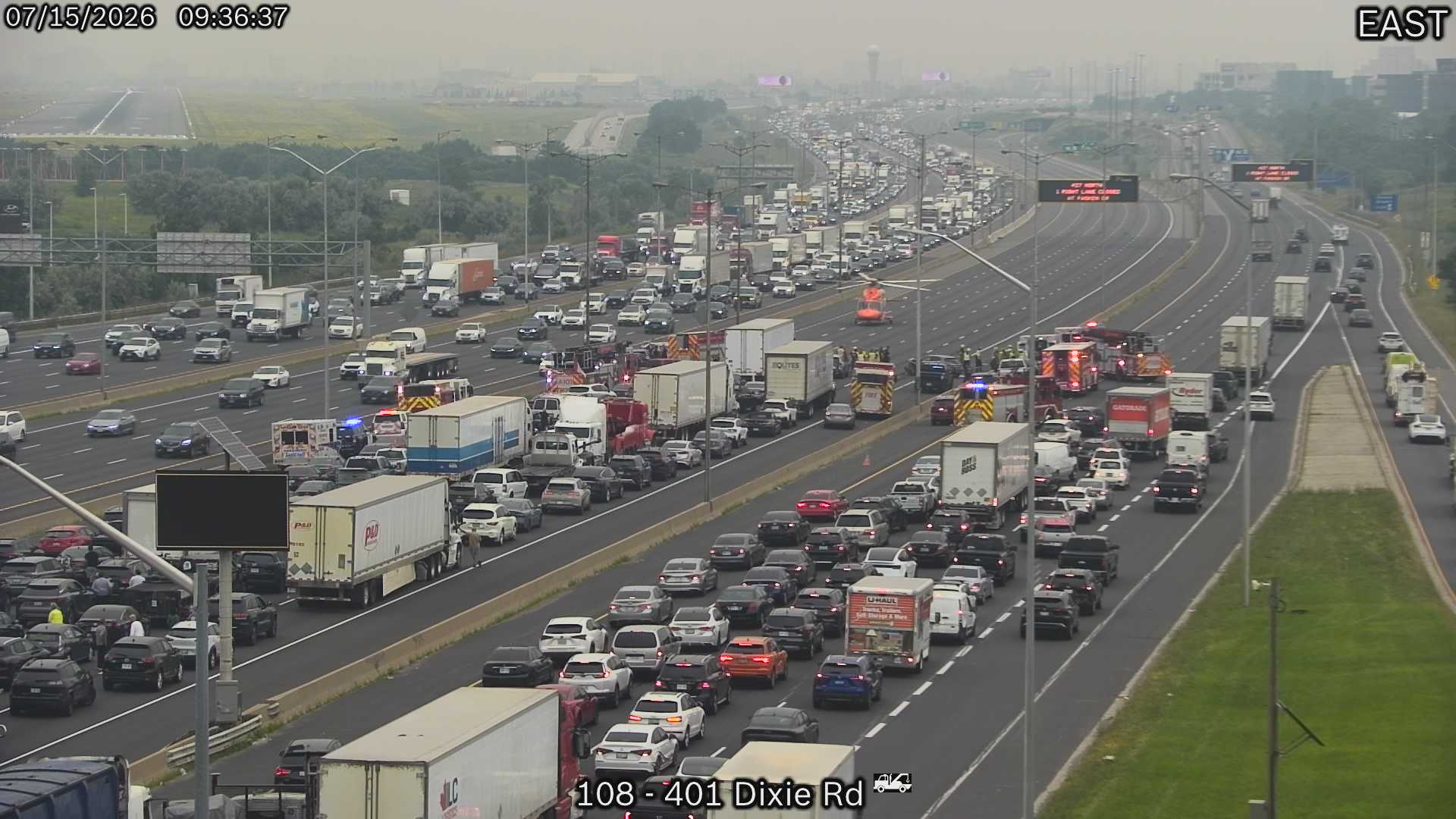
An 80-year-old man and a 53-year-old woman, both from Cambridge, Ontario, died at the scene. They were passengers in a silver Honda CRV that was struck from behind by a Mercedes SUV. The impact was so severe that an Ornge air ambulance had to land directly on the highway to fly the injured to regional trauma centres.
The disaster completely shut down the eastbound express lanes from Mississauga Road to Dixie Road. It triggered a massive traffic backlog that choked the entire West GTA corridor for the better part of the day.
But this isn't just an isolated tragedy. It’s part of a brutal, ongoing trend that makes Highway 401 one of the most stressful and dangerous highways in North America.
Anatomy of the Dixie Road Disaster
The crash happened just before 9:00 a.m. According to the Ontario Provincial Police (OPP), the silver Honda CRV was traveling in the eastbound express lanes when traffic ahead began to decelerate. The driver of the Mercedes SUV failed to react in time, slamming into the back of the Honda.
The driver of the Honda and another passenger survived the initial impact but sustained serious injuries. The driver of the Mercedes was also hospitalized.
When a heavy vehicle hits a smaller passenger car from behind at highway speeds, the physics are unforgiving. The rear seat passengers absorb the brunt of the kinetic energy transfer. It's why the two passengers in the back of the Honda stood almost no chance.
The aftermath was chaotic. The OPP, Peel EMS, and local fire crews swarmed the scene, immediately shutting down all eastbound express lanes. Metrolinx and Ministry of Transportation cameras showed a sea of red brake lights stretching back for kilometers. The highway became an active investigation zone, leaving hundreds of drivers trapped in their cars for hours.
The Real Reason the 401 is So Lethal
If you live in the Greater Toronto Area, you probably hate driving on the 401. It is a massive, multi-lane beast that carries upwards of 400,000 vehicles a day in some sections, making it the busiest highway on the continent.
But why does it see so many catastrophic rear-end collisions?
The answer lies in a mix of highway design, speed differentials, and rampant driver distraction.
- Sudden Bottlenecks: The transition zones where the collector and express lanes merge are notorious danger zones. Drivers traveling at 120 km/h suddenly round a bend to find a wall of stopped cars. If you're looking at your phone for even two seconds, you'll travel over 60 meters blind.
- Tailgating Culture: Ontarians are notoriously aggressive tailgaters. On the 401, leaving a safe three-second following distance is often seen as an invitation for someone else to cut you off. People drive bumper-to-bumper at extreme speeds, leaving zero margin for error.
- The "Mix" of Vehicles: You have tiny compact cars sharing lanes with 80,000-pound transport trucks and aggressive luxury SUVs. When these vehicles collide, the weight discrepancy guarantees catastrophic damage to the smaller vehicle.
What to Do If You're Stuck in a Highway Closure
A fatal crash like the one near Dixie Road doesn't just impact the families of the victims; it paralyzes the entire region. When the OPP closes a major highway for a fatal accident, they aren't just clearing debris. They are treating the highway as a crime scene. Accident reconstruction teams have to map tire marks, analyze vehicle crush points, and document the scene meticulously before anything can be moved.
If you find yourself trapped behind a major crash on the 401, you need to know how to handle the situation safely.
First, do not attempt to back up on the shoulders or exit ramps unless directed to do so by a police officer. It is highly illegal and incredibly dangerous, as emergency vehicles use those exact corridors to access the scene.
Second, monitor local traffic radio or navigation apps like Waze immediately. If you are approaching the area but haven't reached the closure yet, exit the highway. For the Mississauga stretch of the 401, your best alternative routes are:
- Highway 407 (ETR): If you are willing to pay the toll, this is your fastest escape route to bypass the entire Mississauga and Toronto corridor.
- Derry Road: Running parallel to the north of the 401, it can get you across Mississauga, though it will be heavily congested with other detoured traffic.
- Eglinton Avenue or Britannia Road: Good east-west arterials to the south of the highway.
How to Protect Yourself from Rear-End Collisions
You can't control how the person behind you drives, but you can take active steps to minimize your risk of being rear-ended on high-speed highways.
Always look ahead, not just at the car directly in front of you, but three or four cars ahead. Look for brake lights starting to flash in the distance. This gives you precious extra seconds to slow down gradually, signaling your intentions to the driver behind you.
When traffic grinds to a sudden halt, tap your brakes a few times to flash your brake lights before bringing your vehicle to a stop. Turn on your hazard lights if you are the last car in a fast-moving queue. It alerts drivers behind you that they are approaching a complete standstill.
Never stop right on the bumper of the car ahead. Leave enough space so you can see their rear tires touching the asphalt. If you see a vehicle coming up behind you too fast in your rearview mirror, that gap gives you room to pull onto the shoulder or escape to the side.
Keep an eye on your mirrors when slowing down. If you aren't watching your rearview mirror when traffic stops, you are completely defenseless against a distracted driver.
Drive defensively, keep your eyes on the road, and give yourself the space you need to get home safely.