The Hong Kong Monetary Authority (HKMA) just mirrored the U.S. Federal Reserve’s decision to hold interest rates steady, a move as predictable as it is perilous. While headlines focus on the surface-level stability of the base rate remaining at 5.75%, the real story lies in the tightening vise of the Linked Exchange Rate System (LERS). For forty years, this mechanism has been the bedrock of the city’s financial identity, but the cost of maintaining it against a backdrop of geopolitical volatility and a sluggish property market has never been higher.
By locking step with Washington, Hong Kong has effectively outsourced its monetary policy to a central bank across the Pacific that is currently preoccupied with domestic American inflation and the shadow of conflict in the Middle East. This leaves Hong Kong in a peculiar position. It must endure high borrowing costs to defend the HKD-USD peg even as its internal economy—hit by a correction in real estate and shifting trade flows—cries out for relief. The city is not just following the Fed; it is trapped by it.
The Price of Permanent Alignment
The HKMA does not have a choice. Under the currency board system, the base rate is set at either 50 basis points above the lower bound of the U.S. federal funds target range or the average of the five-day moving average of the Hong Kong Interbank Offered Rates (HIBOR). They chose the former. This mechanical reaction ensures the Hong Kong dollar stays within the $7.75$ to $7.85$ band, but it ignores the divergent realities of the two economies.
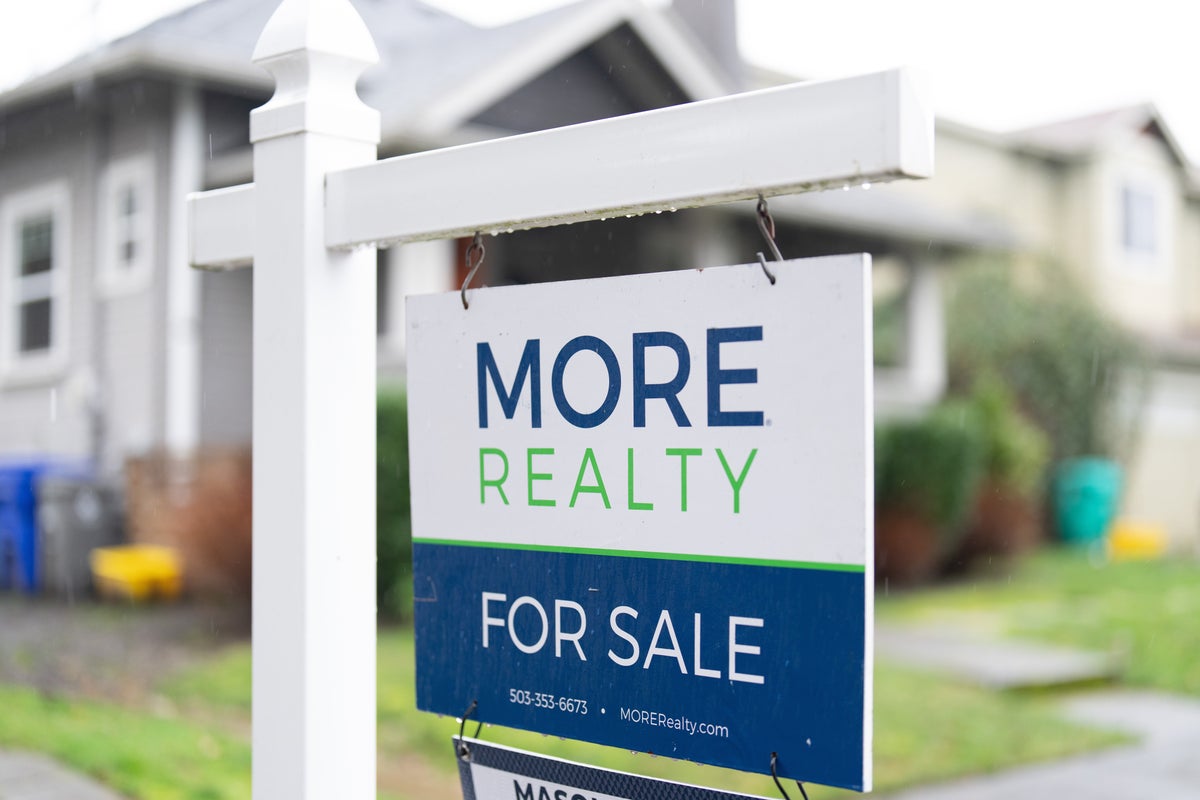
While the U.S. economy has shown surprising resilience, Hong Kong is grappling with a profound structural shift. The city's residential property prices have tumbled to levels not seen in seven years. Transaction volumes are thin. For a territory where land premium and property taxes fund a massive portion of the public purse, a prolonged high-interest-rate environment is more than an inconvenience; it is a fiscal threat. Mortgage holders are feeling the squeeze, as many HIBOR-linked loans have hit their "caps," forcing households to divert discretionary spending toward debt service.
Why the Middle East War Matters to the HKD
The mention of the Middle East in recent central bank discussions isn't just about the tragic human cost. For Hong Kong, it represents an "imported" risk. War in the Levant or disruptions in the Red Sea drive up global energy prices and shipping costs. This feeds into U.S. inflation data. If U.S. inflation stays "sticky" because of global supply shocks, the Fed will keep rates high for longer.
Consequently, Hong Kong must keep its rates high too, regardless of whether its local shops are empty or its office towers have 15% vacancy rates. This is the brutal irony of the peg. Hong Kong is importing a restrictive monetary stance to fight an inflation problem it didn't create, at a time when its local economy needs the exact opposite.
The Fragility of the Property Pillar
For decades, the "Hong Kong Dream" was built on a foundation of ever-rising property values. That pillar is cracking. When the base rate stays at 5.75%, the prime rate—the benchmark for most mortgage lending—remains stubbornly high. This kills the "carry trade" for local investors who used to borrow cheaply to buy yield-generating assets.
Developers are now sitting on significant inventory, hesitant to launch new projects into a market where buyers are sidelined by 4% or 5% mortgage rates. We are seeing a standoff. Sellers don't want to realize losses, and buyers can’t afford the monthly payments. This stagnation ripples through the economy, affecting everything from interior design firms to high-end retail.
- Negative Equity Risk: As prices drop, the number of homeowners whose debt exceeds their property value is climbing.
- Wealth Effect: When the value of the primary family asset shrinks, consumer confidence evaporates.
- Government Revenue: Smaller land auctions mean a hole in the budget that must be filled elsewhere.
The HKMA maintains that the banking system is "resilient," and they are technically correct. Capital adequacy ratios are high. But stability in the banks does not equate to vitality in the streets. A stable, high-rate environment is a slow-motion grind for the middle class.
The Shadow of the HIBOR-LIBOR Gap
Investors monitor the spread between HIBOR and the U.S. equivalent, SOFR (which replaced LIBOR), with hawk-like intensity. If HIBOR lags too far behind, the Hong Kong dollar weakens toward the $7.85$ limit, forcing the HKMA to buy HKD and sell USD. This drains the "Aggregate Balance"—the sum of balances kept by banks with the HKMA.
The Aggregate Balance has shrunk significantly over the last two years. It used to sit at over $450$ billion HKD; it has recently hovered at much lower levels, often dipping below $50$ billion. A smaller balance means HIBOR becomes more volatile. It means a single large transaction can send local borrowing costs spiking overnight. This volatility makes it nearly impossible for small business owners to plan their cash flow or for corporations to hedge their debt effectively.
Diversification or Dependency?
There is a growing chorus of analysts suggesting that Hong Kong needs to look toward the Renminbi (RMB) for its future. However, the RMB is not yet a fully convertible currency, and the "Dual Counter" model—where stocks can be traded in both HKD and RMB—is still in its infancy. For now, the USD peg is the only thing keeping international capital from fleeing entirely. It provides a legal and financial certainty that the mainland cannot yet offer.
But this certainty comes with a heavy tax. By maintaining the peg, Hong Kong is essentially betting that the U.S. economy will eventually cool down enough for rates to drop before the local property market suffers a total collapse. It is a race against time.
The Geopolitical Tightrope
The Middle East conflict adds a layer of complexity to the USD's strength. In times of global strife, the dollar acts as a "safe haven." This keeps the USD strong, which in turn keeps the HKD strong. While a strong currency sounds good in theory, it makes Hong Kong an expensive destination for tourists and a costly hub for exporters.
At the same time, the city is trying to court capital from the very regions currently in turmoil. The push to attract "family offices" from the Middle East is a strategic pivot to reduce reliance on Western capital. However, if the Fed's rates remain the primary driver of Hong Kong's internal costs, these new investors will find a local market that is struggling to generate the returns they expect. You cannot court new money with a broken domestic growth engine.
The Myth of "Higher for Longer" Relief
Many market participants are holding their breath for a "pivot"—a moment where the Fed begins a series of aggressive cuts. This is likely a fantasy. The "neutral rate" of interest—the rate at which the economy neither speeds up nor slows down—has likely moved higher since the pandemic. We are moving out of the era of "free money" and into an era of "expensive capital."
Hong Kong must adapt to a reality where $5$% is the new normal, not an anomaly. This requires a total rethink of the city’s economic model. Relying on property appreciation and a fixed exchange rate was a winning strategy when the U.S. was printing money at zero interest. In a world of geopolitical fragmentation and high rates, that strategy is a liability.
The Real Risk No One Mentions
The most significant danger isn't that the peg will break—the HKMA has the reserves to defend it for years. The danger is that the peg works exactly as intended, forcing Hong Kong to stay "stable" while the rest of the region finds ways to innovate and de-leverage. Stability can easily turn into stagnation.
If you are a business owner in Hong Kong today, you aren't looking at the Fed's dot plot for fun. You are looking at it because it dictates your rent, your loan repayments, and your customers' ability to spend. The HKMA’s decision to keep the base rate unchanged isn't a sign of strength; it’s a confirmation of a lack of autonomy.
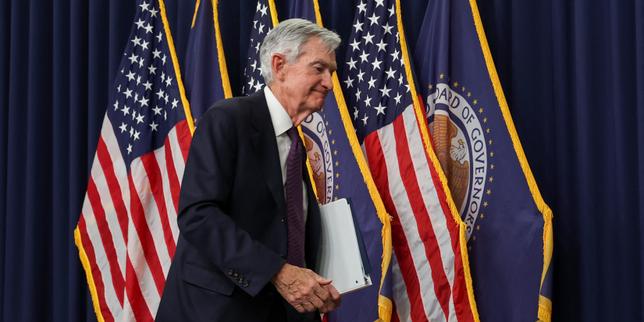
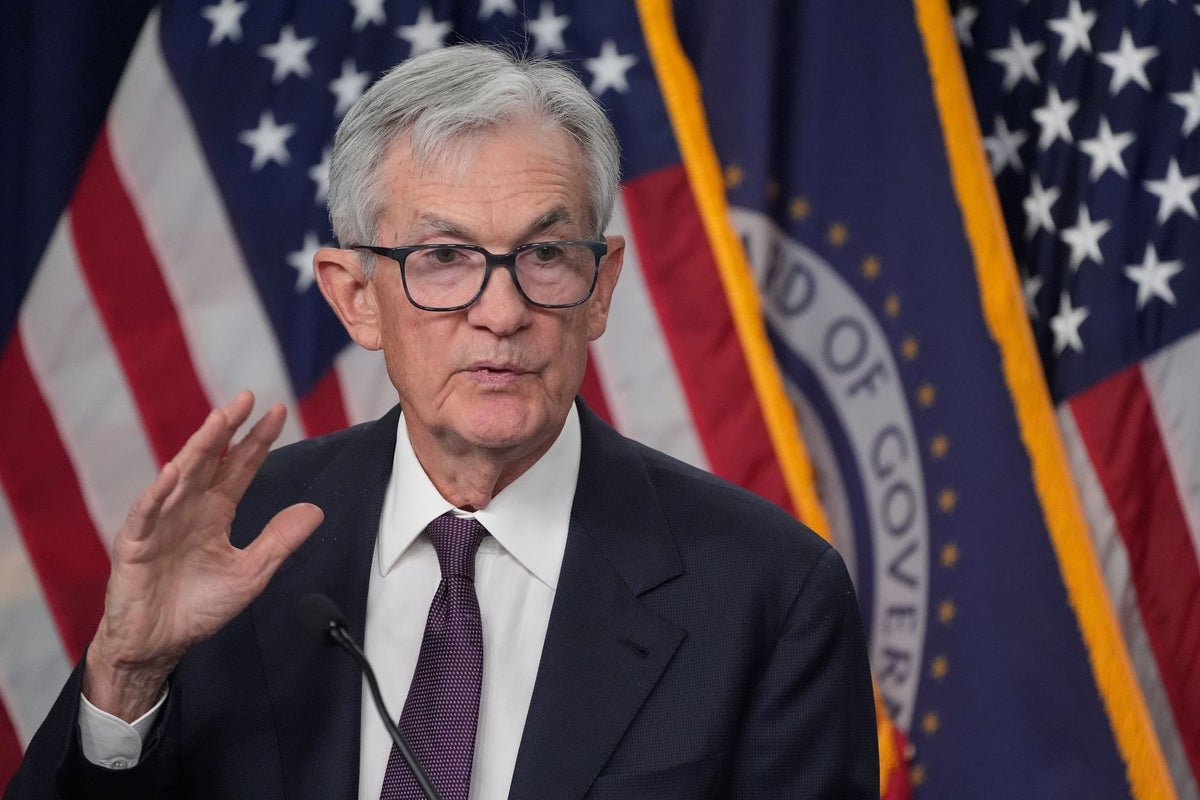
The city is currently a passenger in a vehicle driven by Jerome Powell, traveling on a road shaped by conflicts in the Middle East and inflation in the American heartland. Until Hong Kong finds a way to decouple its internal vitality from its external exchange rate requirements, it will remain at the mercy of forces it cannot control.
Watch the HIBOR fluctuations in the coming weeks. If the spread between local and U.S. rates narrows too quickly, the liquidity squeeze will intensify. This is no longer a matter of following the leader; it is a matter of survival in a high-cost environment that shows no signs of relenting.
Check your floating-rate debt exposure now and stress-test your cash flow against a scenario where rates do not move down until late 2025.