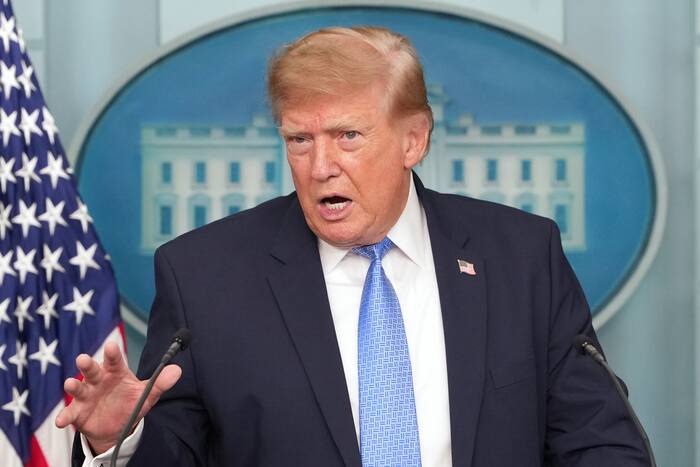
A federal judge has cleared the way for Donald Trump’s $10 billion defamation lawsuit against the British Broadcasting Corporation to move forward into the discovery phase, denying the British public broadcaster’s early bid to have the case thrown out on jurisdictional and First Amendment grounds.
For veteran media observers, this is not merely another headline in a decade-long war between the American right and legacy newsrooms. It is a rare, high-stakes collision between two fundamentally incompatible legal systems. On one side stands the First Amendment of the United States Constitution, the strongest shield for press freedom anywhere on earth. On the other stands a British publicly funded institution whose editorial mandate, funding structure, and legal vulnerabilities were built under the strictures of the United Kingdom's Defamation Act 2013—a framework that historically favored plaintiffs, not publishers. Read more on a similar topic: this related article.
By surviving a motion to dismiss, the lawsuit enters the territory media executives dread most. Discovery.
Why Surviving a Motion to Dismiss Changes Everything
In American defamation litigation, the motion to dismiss is the press’s primary line of defense. Under Federal Rule of Civil Procedure 12(b)(6), a defendant asks the court to look at the plaintiff’s complaint and rule that, even if every single factual allegation is assumed to be true, the law still provides no path to victory. Most high-profile defamation suits brought by public figures die right here. Judges routinely toss them out before a single email is handed over or a single editor is placed under oath. Further journalism by Associated Press delves into related perspectives on this issue.
That shield failed here.
When a judge allows a defamation claim to proceed past this threshold, the court is not saying the BBC defamed Trump. The court is saying that the plaintiff has alleged enough specific facts—regarding jurisdiction, defamatory meaning, and actual malice—that a reasonable jury could potentially find in his favor if those facts are proven true.
The financial leverage shifts overnight. Defending a complex, cross-border federal lawsuit through discovery and summary judgment costs tens of millions of dollars in legal fees alone, regardless of the eventual verdict. Worse for a news organization, discovery opens the newsroom’s internal plumbing to opposing counsel. Reporters’ notebooks, Slack messages, editorial pitch emails, and raw interview footage suddenly become potential exhibits in a public court filing.
For the BBC, the timing and optics are uniquely perilous. Unlike a commercial American network backed by private shareholders or a sprawling corporate conglomerate, the BBC operates under a Royal Charter and relies primarily on an annual license fee paid by British households. Every pound spent retaining high-powered American litigators is a pound drawn from a public pool already under intense political scrutiny in Westminster.
The Transatlantic Collision of Libel Laws
To understand why this case carries such unusual friction, you have to look at the legal geography separating London and Washington. For decades, the traffic in defamation lawsuits flowed exclusively in the opposite direction. Wealthy Americans and international figures routinely sued American publications in London—a practice known as libel tourism—because English law placed the burden of proof on the publisher to prove a statement was true, rather than forcing the plaintiff to prove it was false.
Congress eventually stepped in to stop that trend with the SPEECH Act of 2010, which barred American courts from enforcing foreign libel judgments that failed to meet First Amendment standards.
Trump’s lawsuit reverses the polarity. Here, an American political figure is hauling a British broadcaster into a United States federal court, demanding damages that dwarf the entire annual operating budget of the BBC.
To win in a U.S. courtroom, Trump’s legal team must clear the towering hurdle established by the 1964 Supreme Court landmark New York Times Co. v. Sullivan. Because Trump is the quintessential public figure, proving that the BBC published something false or damaging is nowhere near enough. Under the actual malice standard, his lawyers must prove by "clear and convincing evidence" that the BBC published the disputed statements either with actual knowledge that they were false, or with reckless disregard for the truth.
Courts define reckless disregard narrowly. It does not mean sloppy journalism. It does not mean a failure to follow standard editorial guidelines, nor does it mean intense political hostility toward the subject. To prove reckless disregard, a plaintiff must show that the journalists in question entertained serious doubts about the truth of their reporting before hitting publish, or purposefully avoided facts that would have disproved their narrative.
The Jurisdiction Battle and Digital Borders
Before a jury ever hears a word about editorial standards, the court had to resolve a threshold question that increasingly defines modern media law: where does a global broadcast actually happen?
Historically, a foreign broadcaster like the BBC could argue that its primary audience sat in the United Kingdom, insulated from the reach of American state long-arm statutes. That argument has eroded alongside the death of traditional broadcast borders. Today, BBC News operates one of the largest digital newsrooms in the world, aggressively monetizing U.S. web traffic, syndicating content to American public radio and television affiliates, and distributing streaming programming directly to millions of American living rooms.
In refusing to dismiss the case on jurisdictional grounds, the court underscored a reality that legacy media lawyers have warned about for years. You cannot solicit millions of American eyeballs, sell American digital advertising, and maintain permanent bureaus in Washington and New York, and then claim to be a purely domestic British entity when a lawsuit arrives.
Once a foreign media outlet establishes "purposeful availment" of the U.S. market—meaning it intentionally targets and profits from audiences within the jurisdiction—it submits itself to the authority of American courts for disputes arising out of that coverage.
What the $10 Billion Figure Actually Represents
Any seasoned litigator will tell you that the headline number in a defamation complaint is designed for press releases, not actuarial tables. A $10 billion demand bears no relationship to traditional legal calculations of reputational harm.
In American tort law, damages in a defamation suit fall into two main categories:
- Compensatory damages, which require a plaintiff to demonstrate concrete, quantifiable financial loss resulting directly from the false statements—such as canceled business deals, lost income, or measurable reputational ruin.
- Punitive damages, which are designed to punish egregious misconduct and deter future wrongdoing, though the U.S. Supreme Court has repeatedly ruled that excessive punitive awards violate the Due Process Clause of the Fourteenth Amendment.
To put $10 billion into perspective, the BBC’s total annual income from the UK television license fee hovers around £3.8 billion (roughly $4.8 billion to $5 billion, depending on exchange rates). A judgment anywhere near the amount sought in the complaint would not merely penalize the broadcaster; it would liquidate it.
Yet the sheer scale of the demand serves a calculated strategic purpose. It elevates the dispute from a routine media correction into an existential corporate risk. In corporate governance, boards of directors and trustees are legally obligated to evaluate catastrophic tail risks. Even if the statistical probability of a nine- or ten-figure verdict surviving appellate review is low, the mere existence of an active $10 billion claim forces senior leadership to divert massive resources, freeze strategic initiatives, and confront uncomfortable questions from oversight bodies.
The Anatomy of Modern Political Lawfare
This lawsuit does not exist in a vacuum. Over the past several years, defamation litigation has evolved from a sleepy corner of media law into a primary weapon of political and ideological warfare.
Traditionally, politicians avoided suing news organizations for a simple, pragmatic reason: discovery works both ways. When a public figure sues for defamation, they put their own reputation, business dealings, and truthfulness at issue. Defense lawyers gain the legal right to subpoena the plaintiff’s tax returns, private communications, and business records to prove that the allegedly defamatory statements were actually true—or that the plaintiff’s reputation was already so damaged that the broadcast caused no new harm.
The modern political playbook has inverted that calculus. For populist leaders and partisan movements, the courtroom is no longer just a venue to win monetary damages; it is an extension of the campaign trail. Filing a massive lawsuit against a major news network generates immediate, sustained media coverage, rallies supporters around a shared grievance against institutional gatekeepers, and forces the press onto the defensive.
Conversely, media defense attorneys argue that the weaponization of defamation suits creates a dangerous chilling effect on investigative journalism. Smaller newsrooms, lacking the war chests of multinational conglomerates or state-backed broadcasters, frequently self-censor rather than risk a multi-year legal attrition battle, even when their reporting is rock-solid.
Why the BBC Faces a Unique Editorial Trap
When an American network like CNN, Fox News, or The New York Times faces a major defamation suit, it defends itself under a unified cultural and legal ethos. Its reporters are trained from day one in the mechanics of Sullivan, confidential source protections, and the distinction between verifiable fact and constitutionally protected rhetorical hyperbole.
The BBC operates under a different set of rules—and those internal rules can sometimes be turned against it in an American court.
Under its Editorial Guidelines, the BBC binds itself to strict standards of "due impartiality," accuracy, and fairness, enforced by Britain’s communications regulator, Ofcom. While violating internal editorial guidelines does not legally equate to "actual malice" under U.S. law, plaintiffs’ attorneys routinely use a newsroom’s own rulebook as a cudgel during depositions.
Consider a hypothetical scenario common in media litigation: a plaintiff’s lawyer obtains an internal email in which a BBC standards producer warns a segment editor that a particular phrasing lacks proper context or fails to include a timely right-of-reply from the subject’s representatives. Under UK regulatory standards, that email represents healthy internal editorial debate. In front of an American jury, however, a skilled trial lawyer can frame that exact same email as smoking-gun evidence that the network’s own staff knew the broadcast was flawed and chose to air it anyway.
Furthermore, the BBC lacks the seamless insulation of American shield laws. While many U.S. states and federal circuits offer qualified privileges protecting journalists from revealing confidential sources or unpublished work product, navigating those protections becomes far messier when the reporting, editing, and broadcasting workflows span across London and Washington.
The Road Through Discovery and Summary Judgment
With the motion to dismiss behind it, the litigation enters a grueling, multi-stage grind that typically stretches across 18 to 36 months.
First comes written discovery and document production. Both sides will exchange exhaustive lists of demands. Trump’s legal team will seek every draft of the disputed broadcast, internal editorial memos, communications between London headquarters and U.S. correspondents, and any audience metrics showing reach within the United States. The BBC’s lawyers will simultaneously demand records from Trump’s organization and political operations to test claims of reputational and financial injury.
Next come depositions. Key editors, producers, reporters, and potentially Trump himself will be questioned under oath by opposing counsel, with every hesitation and contradiction recorded on video. For news organizations, depositions are fraught moments where offhand remarks made in the heat of a breaking news cycle are dissected line by line months or years later.
Only after discovery closes will the BBC get its next major opportunity to end the case before trial: a motion for summary judgment. At that stage, the judge will review the actual evidence gathered during discovery—not just the allegations in the complaint—and decide whether a reasonable jury could possibly find clear and convincing evidence of actual malice.
Many defamation cases that survive a motion to dismiss ultimately collapse at summary judgment, precisely because plaintiffs fail to uncover the smoking-gun internal communications needed to meet the Sullivan standard. Yet getting to that finish line requires enduring the full weight of public discovery, where damaging or embarrassing internal emails often leak into the public domain via unsealed court motions regardless of who wins on the law.
The Broader Threat to Cross-Border Journalism
Whether this case eventually ends in a summary judgment dismissal, a quiet settlement, or a blockbuster jury trial, the ruling allowing it to proceed sends an unmistakable warning across every international newsroom.
For decades, foreign public broadcasters—from the BBC and Canada’s CBC to Germany’s Deutsche Welle and Australia’s ABC—operated on the assumption that their primary legal exposure remained anchored in their home jurisdictions. Digital distribution has permanently erased that boundary. Every global news outlet that streams video, publishes English-language articles, or syndicates audio into the United States is now fully exposed to the sharpest edges of American civil litigation.
At the exact same moment, the foundational protections of New York Times Co. v. Sullivan face unprecedented pressure from within the U.S. judiciary itself, with multiple sitting Supreme Court justices having publicly questioned whether the actual malice standard remains fit for the modern media ecosystem.
International newsrooms can no longer treat American defamation law as a distant theoretical concern reserved for domestic cable networks, because the courtroom doors in the United States are now wide open to anyone with the resources to sue them.