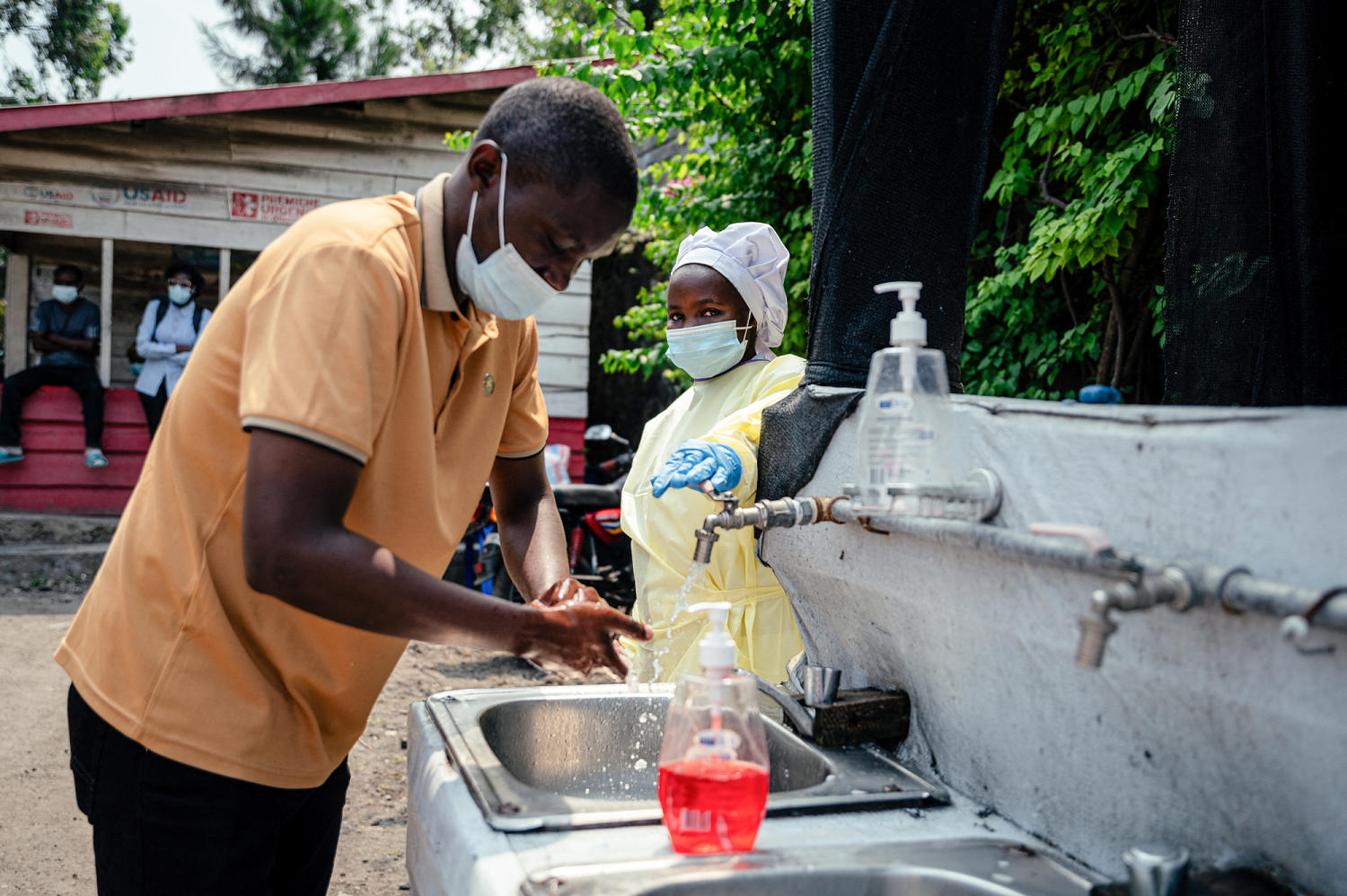
An American missionary doctor treating patients in the Democratic Republic of the Congo has tested positive for Ebola, sparking an emergency evacuation to Germany alongside six other exposed Americans. The Centers for Disease Control and Prevention confirmed that Dr. Peter Stafford contracted the virus at Nyankunde Hospital in Bunia. This infection occurs against the backdrop of a rapidly expanding outbreak that the World Health Organization just designated a public health emergency of international concern. While federal authorities maintain that the immediate risk to the American public is minimal, the domestic defense architecture is shifting into high gear with sweeping border restrictions and enhanced screening protocols.
Public health officials are fighting an enemy that is structurally different from the virus that decimated West Africa a decade ago. This is not the familiar Zaire strain. It is the Bundibugyo ebolavirus, a rare variant with no approved vaccines, no established monoclonal antibody treatments, and a historical mortality rate hovering between 25% and 50%.
The crisis is expanding in a highly volatile region, rendering traditional containment strategies nearly useless.
The Diagnostics Blindspot
The outbreak did not begin this week. It smoldered undetected for nearly a month in the gold-mining corridors of Ituri province. The index case, a local health worker, exhibited symptoms as early as April 24 in the urban hub of Bunia. Following the patient's death, the body was transported back to the densely populated mining zone of Mongbwalu for burial. Traditional funeral practices involving contact with the deceased acted as a super-spreader event.
By the time international teams noticed a cluster of deaths in early May, local medical infrastructure had already committed a critical diagnostic error. Early blood samples were tested exclusively for the Zaire strain using standard rapid diagnostic kits. Because the Zaire variant has dominated recent headlines and drove the creation of the Ervebo vaccine, it remains the default target for field laboratories.
The tests came back negative.
Believing they were dealing with a different tropical disease or severe malaria, local clinics continued operations without maximum isolation protocols. This delay allowed the virus to replicate through hospital wards, infecting multiple health workers, including Stafford. Genomic sequencing finally confirmed the Bundibugyo strain on May 15, revealing that the true scale of transmission had been obscured by a technical blindspot.
A Territory Built for Spreading
Containing a hemorrhagic fever requires geographic isolation and absolute stability. The current epicenter enjoys neither. Eastern Congo is an active conflict zone, complicated by the presence of armed rebel groups that frequently launch attacks on villages and medical outposts.
Bundibugyo Outbreak Timeline (2026)
--------------------------------------------------
April 24: Index case dies in Bunia
May 5:    50+ deaths reported in Mongbwalu mining zone
May 14:   First laboratory confirmation of Ebola
May 15:   Genetic sequencing identifies Bundibugyo strain
May 17:   American doctor tests positive
May 18:   WHO declaration; US tightens border controls
Security operations limit the movement of contact-tracing teams. Epidemiologists cannot safely enter mining camps where thousands of transient workers live in close quarters. These miners move freely across borders, a reality underscored by the immediate detection of cases in the Ugandan capital of Kampala.
Traditional containment relies on ring vaccination, a method where everyone surrounding an infected person receives a shot to create a human shield of immunity. That strategy is off the table. The lack of a vaccine means medical teams must rely entirely on supportive care: hydration, blood pressure management, and symptom control. For medical professionals on the ground, the psychological toll is immense. They are operating without a net.
Moving the Exposed
The decision to evacuate Stafford and his high-risk contacts to Germany rather than the United States reveals the logistical calculations dominating the response. Flight times from Central Africa to Europe are significantly shorter, reducing the period an unstable patient must spend in a specialized isolation capsule at 30,000 feet. Berlin and Frankfurt maintain biocontainment units with deep experience handling viral hemorrhagic fevers from previous regional spillover events.
Stafford’s wife and a third missionary doctor remain asymptomatic but are being monitored under strict quarantine protocols. The incubation period for Ebola lasts up to 21 days. A person can carry the virus through multiple international airports without triggering a single thermal camera or showing a hint of fever.
The Domestic Firebreak
Recognizing this diagnostic gap, the Department of Homeland Security and the CDC enacted an immediate 30-day suspension on the entry of non-U.S. passport holders who have traveled through the DRC, Uganda, or South Sudan within the past three weeks. For American citizens returning from these zones, mandatory rerouting and enhanced public health tracking are now active at major entry hubs.
| Border Control Measure | Target Population | Implementation Window |
|---|---|---|
| Entry Suspension | Non-U.S. passport holders from DRC, Uganda, South Sudan | 30 Days (Subject to extension) |
| Enhanced Port Screening | All arrivals with regional travel history | Immediate |
| Hospital Readiness Alert | Domestic biocontainment networks | Active nationwide |
This administrative intervention arrives at a complex moment for international transit planning. Federal agencies are currently negotiating travel protocols for international athletes and delegations ahead of the FIFA World Cup, which begins next month. Houston is scheduled to serve as the host site for the Congolese national team. Public health officials are working behind the scenes to establish screening infrastructure that protects domestic biosecurity without disrupting international commitments.
Scientists at the Biomedical Advanced Research and Development Authority are accelerating early-stage research into an experimental monoclonal antibody therapy tailored specifically for the Bundibugyo surface protein. It is a race against a clock that started ticking weeks ago in a remote mining town. The success of the global response depends on whether international agencies can suppress transmission in a war zone using nothing more than basic isolation tents and soap.