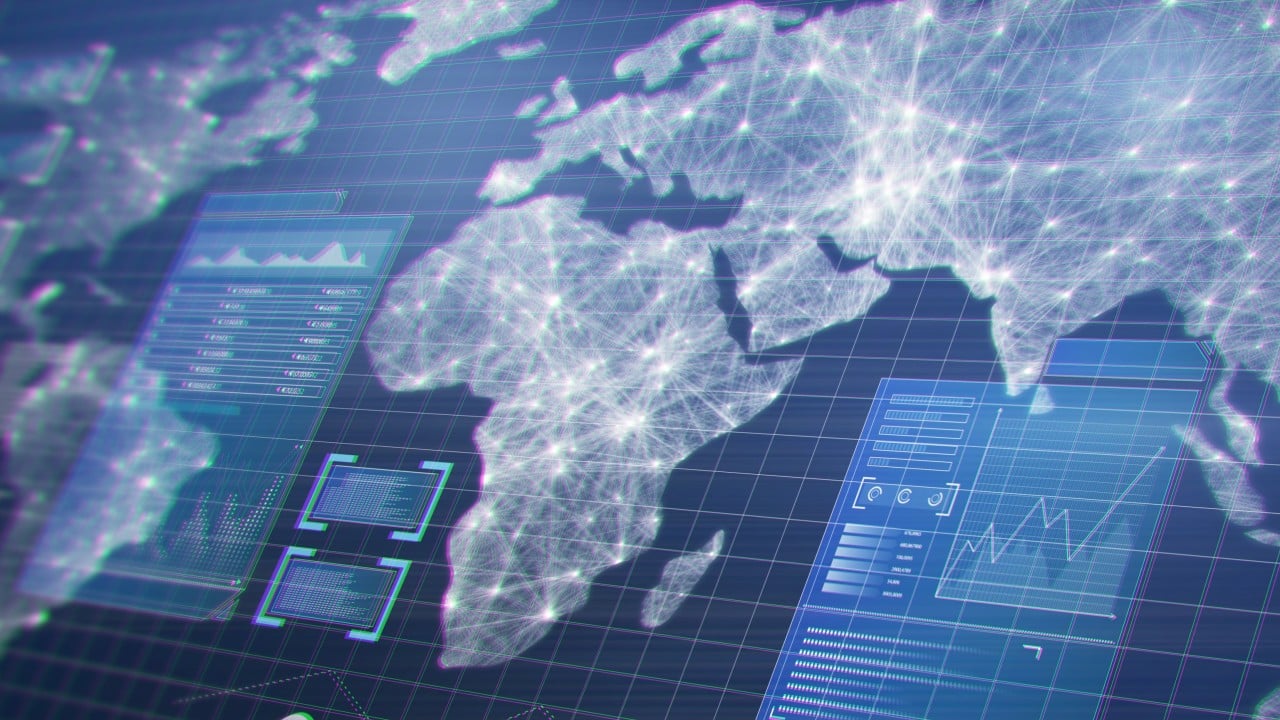
The map on the wall of the quiet briefing room in Washington used to be simple. Lines of blue ink for alliances, red ink for adversaries, and neat shaded boxes for spheres of influence. That map is gone now. It burned up quietly, replaced by something much harder to trace.
Consider a desk in Riyadh. The air conditioning hums. A senior diplomat stares at a blinking cursor on a secure terminal. On the screen is a draft agreement regarding nuclear enrichment, security guarantees, and civil technology sharing with the United States. It looks like standard bureaucratic prose. But underneath those words sits a profound, rattling anxiety. The question keeping statesmen awake at night is no longer just who holds the launch codes, but who holds the keys to the future. When trust begins to fray at the edges, nations do not panic all at once. They hedge. They look toward Beijing, toward Moscow, toward regional partnerships that would have been unthinkable a decade ago.
We forget how fragile architecture is until the ceiling starts to sag.
Diplomacy is often visualized as handshakes under chandeliers. In reality, it is a room full of people holding very sharp knives while smiling at each other. Right now, the Washington-Riyadh axis is straining under the weight of shifting global tectonic plates. The United States wants absolute non-proliferation guarantees. Saudi Arabia wants sovereign agency, clean energy, and a hedge against a rapidly changing Middle East where American commitment feels increasingly transactional.
When a superpower stumbles, the ripples don't reach the shore in a straight line. They arrive as sudden, unpredictable surges.
Step away from the marble halls of diplomacy and walk into a dusty server room thousands of miles away, where a very different kind of line is being crossed.
In the Lake Chad Basin, an entirely invisible threat has evolved. For years, the story of extremist groups like Boko Haram was told through the lens of crude violence, territory lost and retaken, AK-47s and pickup trucks. That was the old world.
Today, algorithms write propaganda.
Imagine a young recruit sitting in a dimly lit room scrolling through a smartphone. He is not reading a poorly mimeographed pamphlet. He is watching a high-definition video produced with synthetic voices, hyper-localized dialects, and targeted behavioral messaging designed by automated systems to exploit his specific psychological vulnerabilities. The video feels organic. It feels personal. It speaks directly to his grievances, his poverty, his anger.
This is what happens when artificial intelligence goes to war without a uniform.
The security analysts tracking this shift call it automated radicalization. That clinical term obscures the human wreckage. It means an extremist network thousands of miles away can scale its recruitment pipeline with the efficiency of a Silicon Valley tech startup. They use machine learning to test which narratives convert the highest number of vulnerable teenagers, optimizing their messaging in real time.
Two stories. Two different corners of the map. On the surface, they have nothing to do with each other.
Nuclear doubt in the corridors of power. Algorithmic radicalization in the shadows of insurgency.
Look closer.
They are symptoms of the exact same disease. We have entered an era where our institutions are built for a twentieth-century world while our crises operate at the speed of light. The tools we use to maintain global stability are creaking under the weight of technologies we barely understand and cannot fully control.
When nuclear diplomacy falter, small nations calculate that they must fend for themselves. When technology outpaces governance, non-state actors weaponize code just as easily as bullets.
The danger is not that the world is ending in a sudden, cinematic flash. The danger is that it is fracturing slowly, quietly, along a thousand invisible fault lines while we are distracted by the noise.
There are no easy fixes here. No neat bullet points can solve the erosion of international trust or bottle up generative algorithms once they have escaped the lab. What remains is the hard, grinding work of paying attention.
The map on the wall is gone. We are drawing the new one right now, stroke by bloody stroke, in the dark.