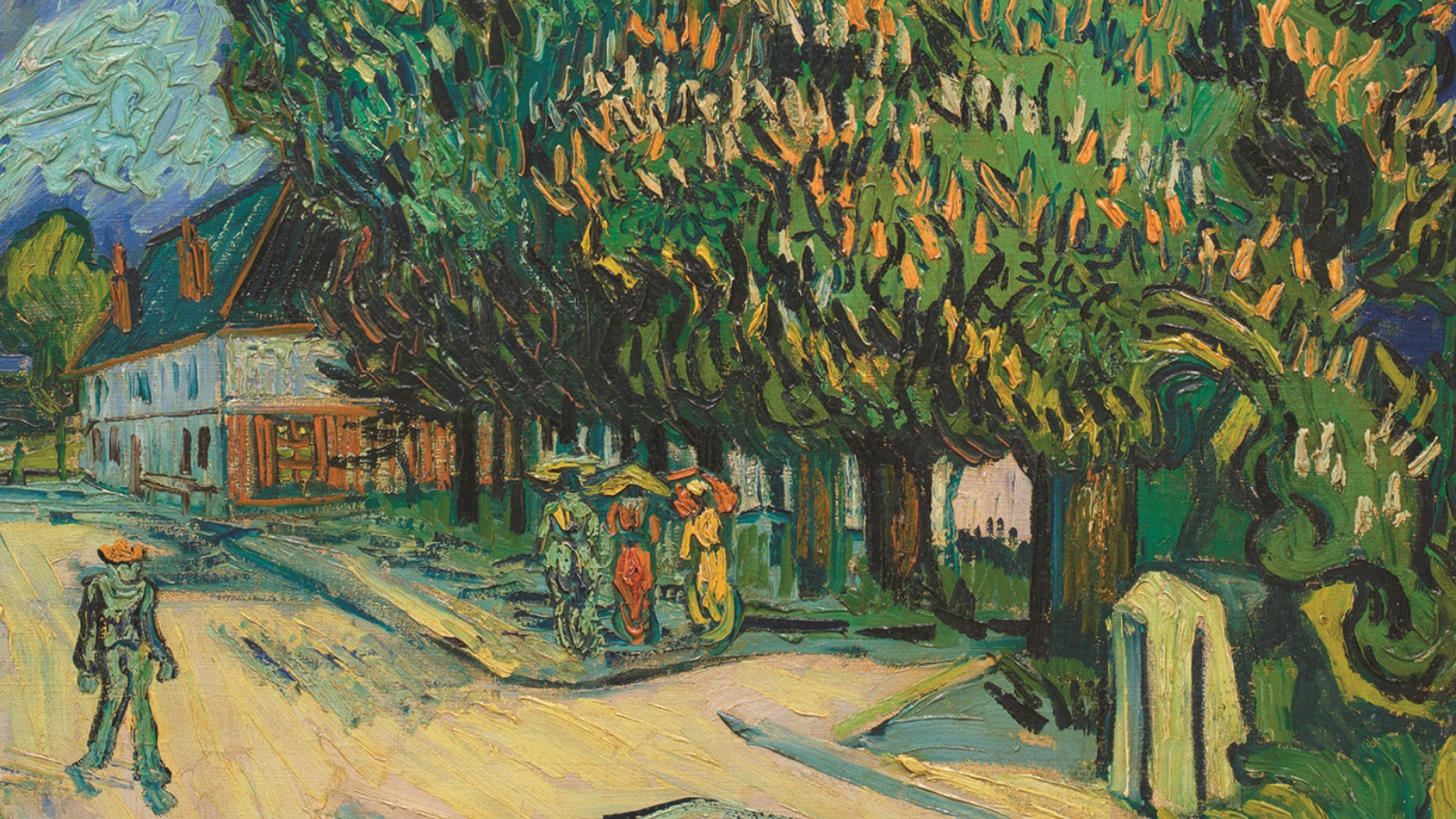
A Yellow Canvas in the Dark
Imagine standing in a whitewashed, temperature-controlled gallery room in Manhattan. The air smells vaguely of pristine wood and expensive perfume. Around you, men in tailored tuxedos and women dripping in diamonds glance nervously at their paddles. Up on the wooden podium, an auctioneer speaks in a rapid, hypnotic cadence, driving numbers higher into the stratosphere.
One hundred million.
One hundred and fifty million.
One hundred and ninety point four million dollars.
With the strike of a heavy wooden gavel, history is made. A painting by Vincent van Gogh has just shattered previous records, fetching a staggering $190.4 million. The room erupts in polite, polished applause. Somewhere, a buyer whose identity remains locked behind shell corporations and Swiss bank accounts adds a canvas to an private vault.
Now strip away the chandeliers.
Travel back to the winter of 1888 in the small French town of Arles. The mistral wind howls through the wooden shutter cracks of a cheap rented room known as the Yellow House. Inside, a thirty-five-year-old man with turpentine-stained fingers shivers over a scraped wooden table. His stomach aches with a dull, familiar hollow. He hasn't eaten a proper meal in three days. He writes a desperate letter to his brother Theo, asking for a few extra francs just to buy cheap bread, coffee, and tubes of chrome yellow paint.
During his lifetime, Vincent sold exactly one painting—The Red Vineyard—for 400 Swiss francs, roughly equivalent to a couple of hundred dollars today. He lived in agonizing, constant poverty. He relied entirely on his brother's charity, tormented by the guilt that he was a burden. He died convinced that his entire existence was a failure.
Yet today, his work commands a figure that could purchase a fleet of commercial airliners.
How did we get here? How did a society that left an artist to starve transform his desperate cries onto canvas into the ultimate status symbol for the hyper-wealthy?
The Absurdity of the Gavel
Price tags of this magnitude defy standard economic logic. When a piece of linen covered in dried oil pigment sells for $190.4 million, we are no longer discussing art appreciation. We are observing the collision of human tragedy, market scarcity, and the insatiable appetite of ultra-high-net-worth portfolio management.
In modern financial circles, masterworks by iconic figures are categorized not as cultural artifacts, but as alternative asset classes. They offer something that stocks, bonds, and real estate cannot fully replicate: total portability, emotional prestige, and a hedge against global inflation.
Think about the mechanics of an auction of this scale. The bidding doesn't reflect the intrinsic physical value of the paint or canvas. It reflects a fierce competition over a non-renewable resource. Van Gogh is not painting any more canvases. The supply curve is permanently fixed. Meanwhile, the global concentration of capital continues to rise, creating a pool of billionaires vying for a handful of universally recognized cultural trophies.
To own a Van Gogh at $190.4 million is to purchase an entry ticket into an elite brotherhood of global custodians. It is the ultimate flex in a world where digital wealth can feel abstract and impermanent. A digital bank balance is just numbers on a screen; a vibrant, swirling brushstroke carved into heavy impasto by a legendary hand is physical reality, preserved across centuries.
But there is a bitter irony lurking beneath the auction house velvet.
The Currency of Suffering
The market does not just value Van Gogh's brush technique; it actively monetizes his suffering.
Every thick, frenetic line in his work carries the weight of his psychological turmoil. The intense yellows of his sunflower series, the violent blues of his night skies, the frantic rhythm of his cypress trees—these were not mere aesthetic choices. They were frantic attempts to translate an overwhelming, painful sensory experience of the world into something visible.
Vincent painted because he had to. It was his anchor in a sea of mental anguish. He famously wrote to Theo that he put his heart and soul into his work, and lost his mind in the process.
When an auction house markets a newly discovered or rare Van Gogh, the sales catalog rarely focuses purely on technique. It sells the narrative. It sells the madness, the severed ear, the stay at the asylum in Saint-Rémy, the tragic afternoon in a wheat field in Auvers-sur-Oise.
The market has turned his agony into a luxury commodity.
Consider what this reveals about human nature. We are drawn to authentic pain. In a world increasingly saturated with polished, synthetic, AI-generated imagery and hyper-curated social media profiles, Van Gogh’s raw, unvarnished emotion acts like a lightning rod. You cannot fake the frantic energy of a man who feels he is running out of time.
The buyer at the auction is not just buying pigment. They are buying the ghost of a martyr.
The Disconnect Between Value and Worth
When news of the $190.4 million sale broke, the reaction split predictably down cultural fault lines.
Art historians celebrated the enduring legacy of a master. Financial analysts calculated the compound annual growth rate of high-end art investments. But for ordinary people trying to manage groceries and rent, the news felt absurd, almost grotesque.
It exposes a glaring glitch in how humanity assigns value.
We live in a world where the primary creator of immense cultural value receives nothing, while the secondary, tertiary, and distant financial speculators reap astronomical returns. Vincent’s grand-nephews and historical foundations preserve his legacy, but the actual wealth generated by his output circulates in a stratosphere entirely disconnected from the artist’s reality.
If Vincent were to walk into that Manhattan auction house today in his worn workman's boots and paint-splattered coat, security would likely escort him to the curb. He wouldn't belong in the room built on his name.
That tension is precisely why this record sale matters far beyond the art world. It forces us to confront our own relationship with creative work. How often do we ignore living talent while mythologizing the dead? How many struggling writers, painters, musicians, and thinkers are sitting in cold rooms right now, unable to pay their bills, while we spend fortunes consuming the works of those who passed away a century ago?
What Remains When the Lights Go Out
After the auction ends, after the reporters file their stories and the record-breaking headline recedes into the news archive, the painting is packed into a climate-controlled crate. It is loaded onto an armored transport. It travels to a private residence or a high-security vault in a duty-free airport zone.
The lights in the gallery turn off.
The $190.4 million figure will eventually be broken. Another painting will come along, another record will fall, and another round of breathless headlines will declare a new high-water mark for global prestige.
But strip away the dollars, the financialized metrics, and the ego of the auction floor.
What remains is still just a man, standing in the cold light of Arles, pressing a brush dipped in bright yellow paint against a bare piece of cloth. He wasn't thinking about investment portfolios, inflation hedges, or high-society galas. He was just trying to capture the light before the darkness took him.
He painted to communicate with a world that refused to listen while he was alive. And in the quiet beauty of his work, long after the gavel has dropped and the millions have been transferred, his voice still echoes through the paint—screaming to be seen, begging to be understood, and utterly indifferent to the price tag we finally put on his soul.