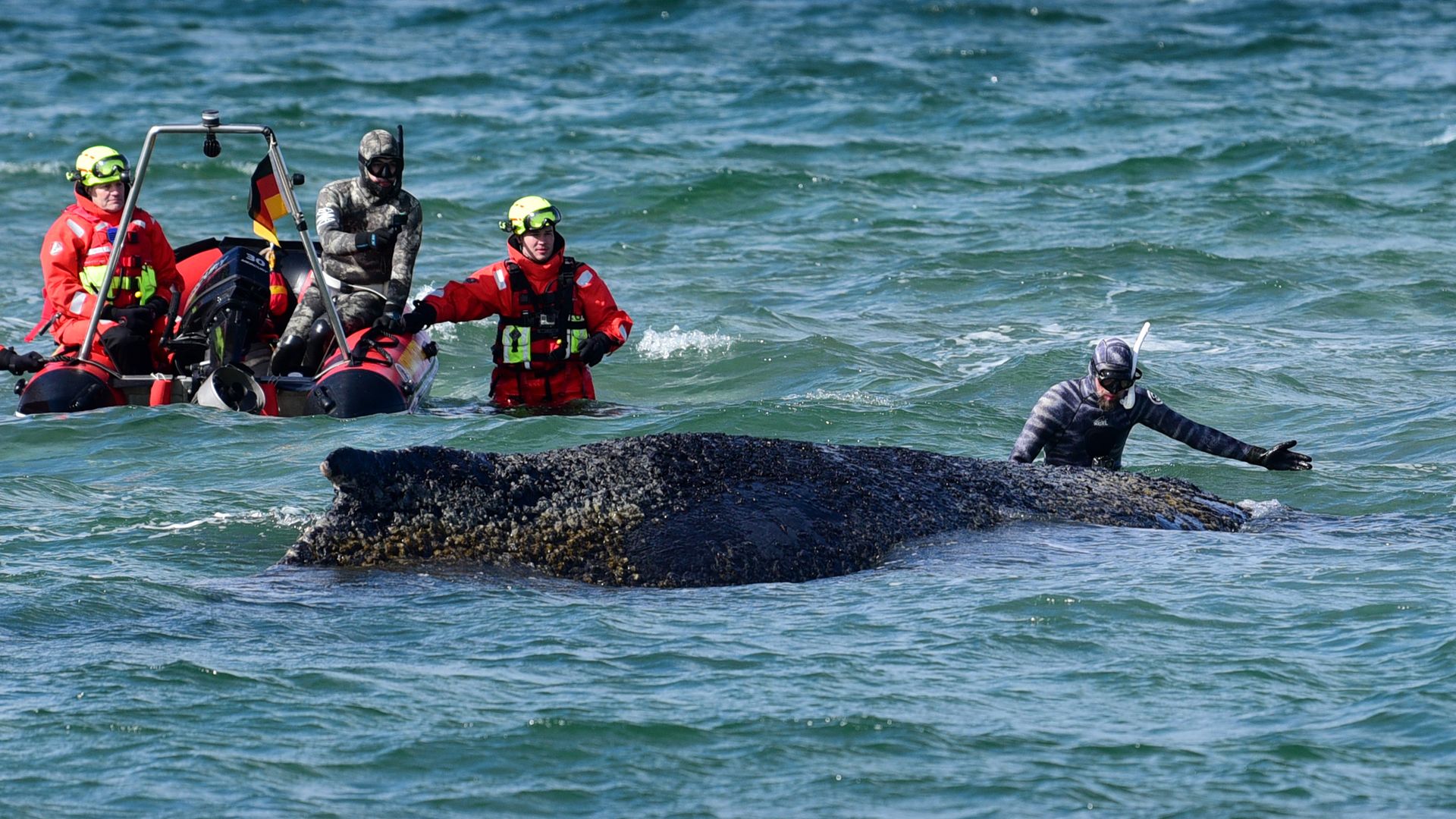
The successful extraction of a large cetacean from the shallow, brackish waters of the Baltic coast is not a triumph of sentiment but a complex triumph of engineering and biological timing. While standard reportage focuses on the emotional narrative of the "rescue," a structural analysis reveals that these events are actually high-stakes logistics operations defined by two competing variables: the physiological collapse of the specimen and the hydrological constraints of the site. The survival of a stranded whale in the Baltic Sea—a body of water increasingly functioning as an ecological trap for deep-water species—depends entirely on the rapid mitigation of gravitational crush syndrome and the management of thermal regulation.
The Biomechanical Constraints of Stranding
When a deep-water cetacean enters the shallow littoral zones of the Baltic, it transitions from a neutrally buoyant environment to a terrestrial one where its own mass becomes its primary predator. This creates a cascade of physiological failures that rescuers must counter-calculate in real-time.
The Gravitational Crush Function
In the water, a whale’s skeletal structure and internal organs are supported by buoyancy. Once grounded, the animal’s weight—often exceeding 20 to 50 tons depending on the species—compresses the ventral surface. This results in:
- Skeletal Muscle Ischemia: The weight of the animal prevents blood flow to the muscles in contact with the seafloor.
- Myoglobin Release: As muscle cells die from lack of oxygen, they release myoglobin into the bloodstream. This protein is toxic to the kidneys and often leads to renal failure several days after the whale has been returned to the sea.
- Respiratory Compromise: The sheer mass of the chest wall makes expansion difficult, leading to shallow breathing and carbon dioxide buildup.
Thermal Dysregulation
The Baltic coast presents a specific thermal challenge. While cetaceans are insulated by thick blubber layers for deep-ocean thermoregulation, a stranded whale cannot shed heat effectively in air or shallow, stagnant water. The blubber, which serves as a vital energy reserve at sea, becomes a lethal insulator on land, leading to hyperthermia. Rescuers must treat the animal as a heat-generating engine with a broken cooling system, utilizing constant irrigation and wet coverings to simulate the heat-wicking properties of the open ocean.
The Baltic Sea as a Topographical Bottleneck
The Baltic Sea is a semi-enclosed brackish basin with a unique bathymetry that creates a "one-way valve" effect for large marine mammals. To understand why whales become trapped here, one must examine the hydrodynamic and acoustic properties of the Danish Straits—the only entry point from the North Sea.
- Bathymetric Confusion: The average depth of the Baltic is approximately 55 meters. For species evolved to navigate using sonar in deep trenches, the flat, sandy bottom of the Baltic coast provides poor acoustic feedback. This creates a "ghosting" effect where the animal cannot distinguish between the water column and the approaching shoreline until it is too late.
- Salinity Gradients: The transition from the high-salinity North Sea to the brackish Baltic affects buoyancy. A whale calibrated for high-density salt water must exert more energy to remain buoyant in the lower-density Baltic waters, accelerating exhaustion and increasing the likelihood of a navigational error.
- Anthropogenic Acoustic Saturation: The Baltic is one of the most heavily trafficked maritime regions globally. The constant noise floor from commercial shipping interferes with the biological sonar of visiting whales, effectively "blinding" them in a narrow, unfamiliar corridor.
Operational Framework for Extraction
The extraction of a whale from a Baltic beach requires a tiered tactical approach. It is an exercise in fluid dynamics and heavy lifting, often involving the coordination of naval assets, environmental agencies, and specialized veterinary teams.
Phase I: Hydro-Stabilization
The immediate goal is not movement, but the restoration of a semi-buoyant state. This involves digging trenches around the animal to allow incoming tides to flow beneath the hull of the body, reducing the pressure on the internal organs. This phase is critical for reversing the effects of crush syndrome before the animal is subjected to the stress of transport.
Phase II: The Mechanical Tow
Moving a living mass of 30,000 kilograms requires specialized slings that distribute pressure evenly across the thorax. The use of simple ropes is catastrophic, as they slice through the skin and blubber, causing deep tissue trauma.
- Vector Analysis: The tow must be executed at a precise angle to avoid rolling the whale, which can cause the blowhole to submerge or the pectoral fins to snap.
- Propulsion Management: High-torque, low-speed vessels are required. Rapid acceleration can cause internal shearing of the whale’s connective tissues.
Phase III: The Deep-Water Escort
Release at the shoreline is rarely successful. The animal is often disoriented and likely to re-strand due to the same navigational errors that led to the initial event. Successful operations involve "herding" the whale into deeper water using acoustic "pingers" or a phalanx of small boats to ensure it clears the coastal shelf.
The Cost of the Baltic Trap
From a biological perspective, every whale that enters the Baltic is likely a lost unit of the population. The sea lacks the caloric density (specifically the large-scale squid and krill populations) required to sustain deep-sea cetaceans for extended periods. This leads to a "starvation loop":
- The whale enters seeking food or through navigational error.
- Caloric deficit leads to cognitive decline and weakened sonar accuracy.
- Weakened state increases the probability of stranding.
- Rescue provides temporary relief, but the animal remains in a nutrient-poor environment with no clear exit path.
The frequency of these strandings suggests that the North Sea-Baltic transition is becoming an ecological sink. Success in a single rescue, while high in humanitarian value, does not address the underlying systemic failure of migratory routes into the Baltic.
Strategic Recommendation for Management
The management of marine strandings in the Baltic must shift from reactive crisis response to a proactive monitoring and diversion system. Future operations should focus on the deployment of acoustic barriers across the Danish Straits to prevent deep-water species from entering the basin entirely. These barriers, utilizing underwater transducers, would create a sonic environment that "deteriorates" the sonar feedback for whales, encouraging them to remain in the North Sea. The cost of a single rescue—often in the hundreds of thousands of dollars when naval assets are involved—surpasses the cost of maintaining a selective acoustic fence. The long-term preservation of cetacean populations in the region requires an engineering solution that closes the Baltic trap before the next migration cycle begins.