The idea of Islamabad as a global peacemaker sounds like a fever dream to anyone following South Asian geopolitics over the last decade. Yet, here we are in March 2026, and the world's eyes are fixed on Pakistan as it tries to pull the Middle East back from the edge of a total collapse. For thirty days, the war between Iran and the US-Israeli coalition has shredded the regional order. Over 3,000 people are dead. The Strait of Hormuz is a choke point that's making global oil markets look like a heart rate monitor during a sprint.
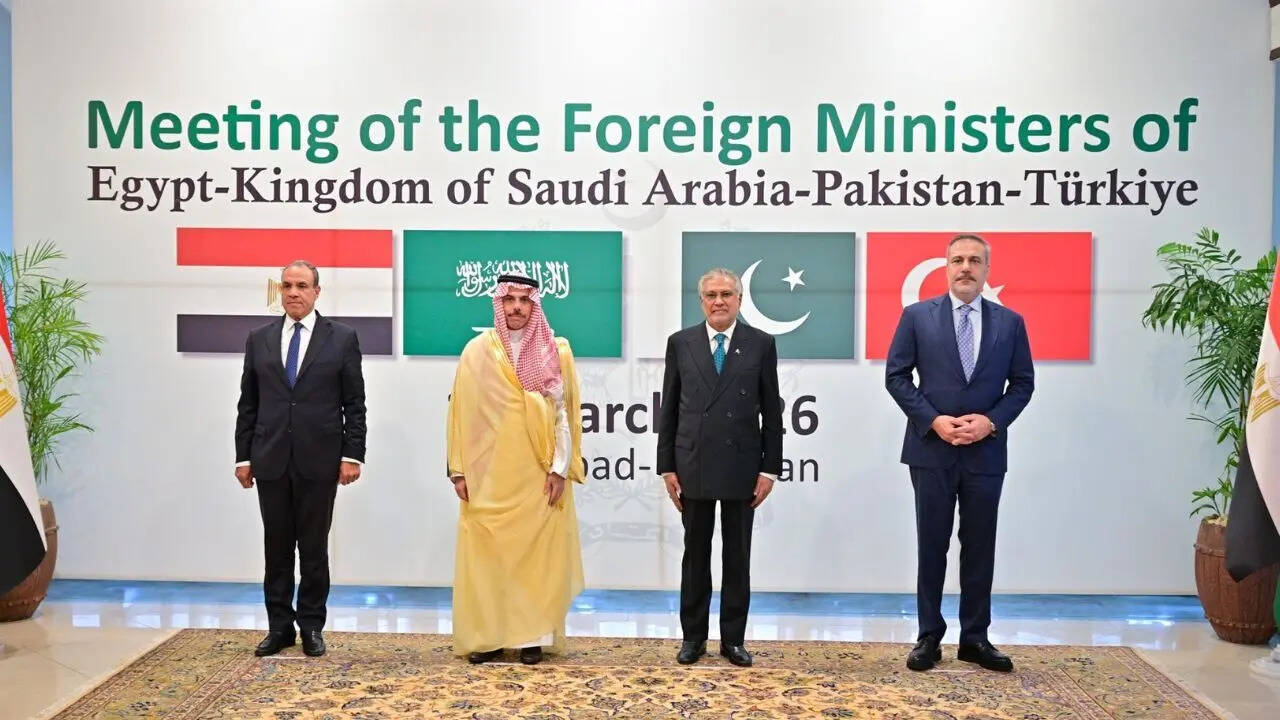
On Sunday, top diplomats from Saudi Arabia, Turkey, and Egypt landed in Islamabad. They aren't there for a photo op. They're there because Pakistan has managed to do something nobody else could: keep a working phone line open to both Tehran and Washington.
The Islamabad huddle and the 15 point list
While the US and Israel are skipping the formal sit-down in Pakistan, their presence is felt in every room. A few days ago, the US dropped a 15-point "action list" on the table via Pakistani channels. It’s essentially a framework for a ceasefire, but the details are a hard sell for an Iranian leadership that feels it’s fighting for its very survival.
Iran’s Parliament Speaker, Mohammad Bagher Qalibaf, hasn't been shy about his skepticism. He’s calling the talks a "cover" for the US to move more troops into the region. He isn't entirely wrong about the buildup; some 2,500 US Marines just arrived in the Middle East, specifically trained for the kind of amphibious landings that would be necessary for a ground push. Qalibaf’s rhetoric is predictably fiery, warning that any American boots on the ground would be "set on fire."
Despite the public posturing, there's movement under the surface. Iran agreed to let 20 Pakistani-flagged vessels through the Strait of Hormuz this weekend. It’s a tiny crack in the blockade, but in a month where every headline has been about escalation, it’s a massive signal. Pakistan’s Foreign Minister Ishaq Dar is calling it a "confidence-building measure." I’d call it a desperate attempt to show that diplomacy isn't dead yet.
Why Pakistan of all places
You might wonder why a country dealing with its own massive economic headaches is the one leading this charge. It’s a mix of geography and historical baggage. Pakistan has been representing Iranian interests in Washington since 1992. They know the backchannels better than anyone.
Plus, there’s a massive internal pressure for Islamabad to succeed. Pakistan has the world’s second-largest Shia population. If this war turns into a full-scale sectarian firestorm across the region, Pakistan won't just be watching from the sidelines—it'll be dealing with the fallout at home. Prime Minister Shehbaz Sharif and Field Marshal Asim Munir are playing a high-stakes game. They've spent the last week bouncing between calls with President Donald Trump and Iranian President Masoud Pezeshkian.
The spoilers and the new players
Just as the mediators were settling in, the conflict decided to get wider. Yemen’s Houthi rebels officially jumped into the ring this weekend, launching missiles at "sensitive Israeli military sites." This isn't just about another front opening up. It’s a direct threat to the Bab el-Mandeb strait. If you think oil prices are bad now with the Hormuz situation, wait until the Red Sea becomes a total no-go zone.
Then there’s the university threat. The Revolutionary Guard recently issued an ultimatum: if the US and Israel don't stop hitting Iranian universities and research centers by noon on Monday, March 30, then American and Israeli-linked universities in the region become "legitimate targets." It’s a terrifying shift in targeting philosophy. The Iranian Foreign Ministry claims dozens of academic sites, including the Isfahan University of Technology, have already been hit.
The sticking points holding back a deal
Peace isn't coming easy because the demands on both sides are fundamentally at odds. Iran wants:
- An immediate end to the targeted killing of its officials.
- Hard guarantees against future strikes on its soil.
- Substantial war reparations.
- Uncontested "sovereignty" over the Strait of Hormuz.
The US and Israel, meanwhile, are focused on degrading Iran's ability to project power through its proxies. The IDF recently announced they took out Rear Admiral Alireza Tangsiri, the IRGC Navy Commander, in Bandar Abbas. They’re also pushing deep into southern Lebanon to clear out Hezbollah. When one side is looking for a way out and the other is expanding its "security strip," the "quad" in Islamabad—Pakistan, Saudi Arabia, Turkey, and Egypt—has a mountain to climb.
What actually happens if the talks fail
If the Islamabad meetings break up on Monday without a clear path to a direct US-Iran dialogue, we’re looking at a grim April. The US "action list" is sitting there, but without a face-to-face meeting, it’s just paper. Pakistan has suggested that Vice President JD Vance lead the US delegation for a future sit-down, a move Tehran supposedly favors because they view him as more skeptical of long-term foreign entanglements than the usual hawks.
Honestly, the biggest risk right now isn't just the rhetoric from Tehran or the troop movements from Washington. It’s the "inflection point" that military analysts keep talking about. When a war hits the 30-day mark, it either settles into a long, grinding stalemate or it explodes into something much bigger.
For the people on the ground in Islamabad, the goal is simple: get both sides to stop shooting long enough to talk. If you're looking for signs of hope, watch the shipping lanes. If Iran increases the number of vessels it allows through Hormuz, the talks are working. If the Monday deadline for the university ultimatum passes with a strike on a regional campus, the Islamabad peace push is effectively over.
Track the movement of the Saudi and Turkish foreign ministers over the next 24 hours. Their continued presence in Pakistan is the only thing standing between the current crisis and a regional war that nobody—not even the people starting it—really knows how to finish. Keep an eye on the official statements from the Pakistan Ministry of Foreign Affairs on Monday evening for the finalized joint communique.
Monitor the Strait of Hormuz transit numbers on global shipping trackers for real-time evidence of de-escalation.