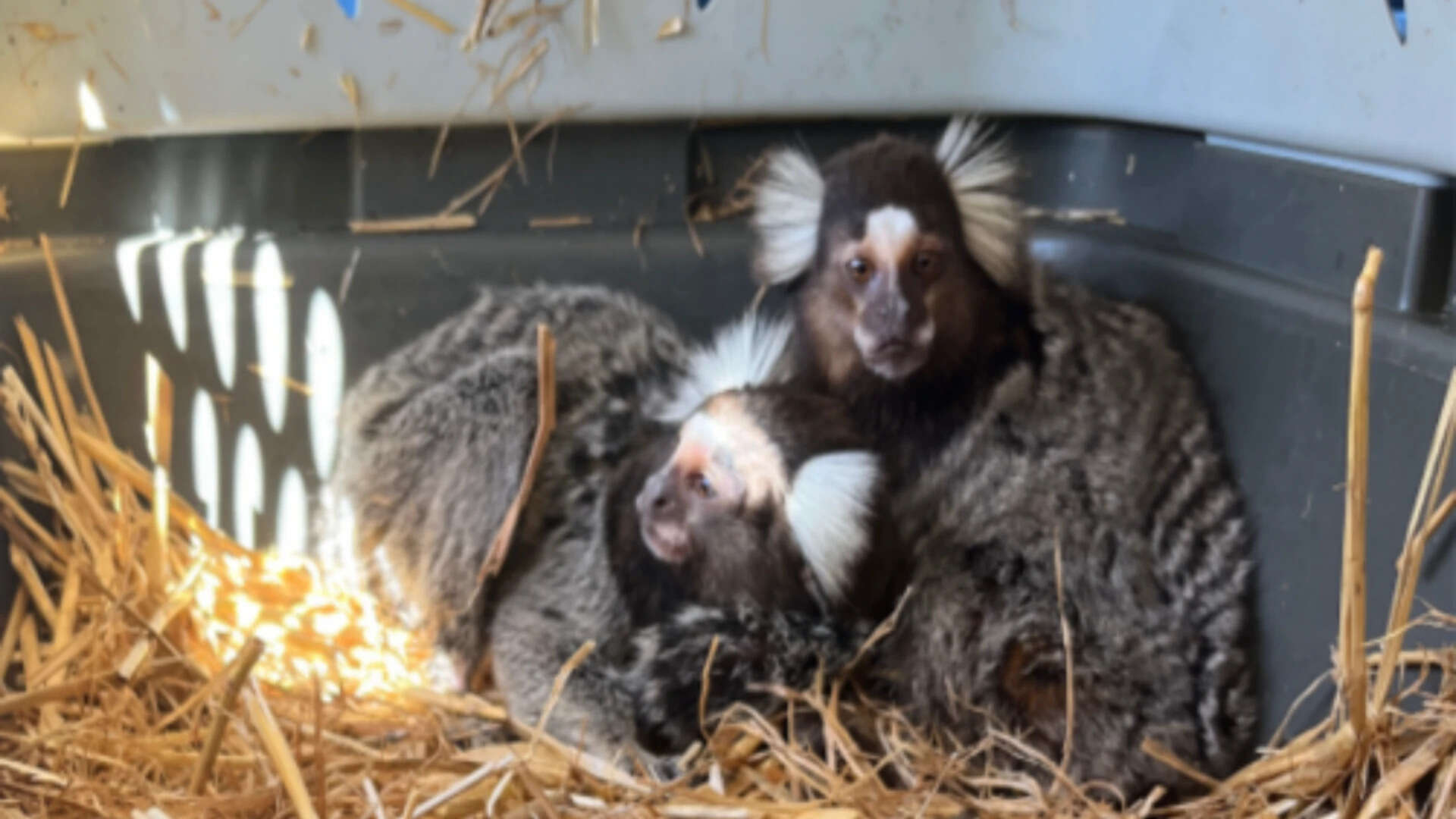
The humidity in Central Florida doesn't just sit on your skin; it breathes with you. In the back of a nondescript white van parked near a roadside citrus stand, the air was thicker than usual. It smelled of sour fruit, unwashed linen, and a sharp, metallic musk that most people wouldn't recognize. It is the scent of fear secreted from the scent glands of a marmoset, a primate no larger than a soda can, with eyes the color of polished amber.
We call them "finger monkeys." The name itself is a marketing masterstroke, designed to bypass the rational part of the human brain that understands wild animals belong in canopies, not birdcages. It suggests a toy. A living trinket. But for the man the locals called the Monkey Whisperer, these creatures were liquid assets.
The arrest of a 48-year-old Florida resident this week for the illegal trafficking of exotic primates isn't just a blip on a police scanner. It is a window into a shadow economy fueled by a very human loneliness and a very modern vanity. When the Florida Fish and Wildlife Conservation Commission (FWC) finally moved in, they didn't just find animals. They found a ledger of a slow-motion tragedy.
The Illusion of the Tiny Companion
Imagine a Saturday morning in a suburban living room. A woman—let’s call her Sarah—is scrolling through a social media feed. She sees a video of a common marmoset wearing a miniature knitted sweater, eating a tiny piece of pasta with human-like hands. The dopamine hit is instant. Sarah doesn’t see the years of specialized care required. She doesn’t see the sharp teeth or the complex social hierarchies. She sees a surrogate child that will never grow up.
This is the hook.
The illegal trade thrives because it sells a lie. The "Whisperer" didn't just sell monkeys; he sold the feeling of being special. To own a marmoset or a capuchin is to project a certain status. It says you have the resources to tame the untamable. But the biological reality is far grimmer. These are high-strung, incredibly intelligent social beings. In the wild, they live in family groups, grooming each other and communicating through a series of high-pitched whistles that sound like birdsong.
When they are ripped from their mothers as infants to be "hand-reared" for the pet trade, the psychological damage is permanent. They become neurotic. They bite. They self-mutilate. The Whisperer knew this, yet the transactions continued in parking lots and behind closed garage doors, fueled by cash and a total disregard for federal wildlife protections.
The Logistics of a Living Contraband
Money moves differently in the exotic animal world. A single marmoset can fetch anywhere from $3,000 to $6,000 on the black market. If the animal is "tame" or comes with forged veterinary papers, the price climbs higher.
The investigation revealed a network that stretched far beyond the Florida state line. This wasn't a hobbyist who got in over his head. This was a calculated operation. To move primates across state lines without the proper permits—specifically the captive-bred wildlife registration required by the U.S. Fish and Wildlife Service—is a federal offense.
Why the red tape? It isn't just about bureaucracy.
Primates are biological mirrors. We share a vast majority of our DNA with them, which makes the transmission of zoonotic diseases a two-way street. A "pet" monkey can carry Herpes B, tuberculosis, or various intestinal parasites that are devastating to humans. Conversely, a common human cold sore can be a death sentence for a three-hundred-gram marmoset. When animals move through the black market, there are no health screenings. There are no quarantine periods. There is only the hand-off and the disappearance of the seller into the humid Florida night.
The Invisible Stakes of the Backyard Zoo
There is a specific kind of silence that follows a wildlife raid. Once the shouting stops and the handcuffs click, the animals are left in their crates, blinking at the flashlights.
The tragedy of the "Monkey Whisperer" case is that there is no easy "happily ever after" for the victims. You cannot simply release a captive-bred marmoset into the jungles of Brazil or the forests of Peru. They lack the survival skills. They don't know how to forage. They don't know the language of their own kind.
Instead, they head to sanctuaries. These facilities are often at breaking point, struggling to fund the lifelong care of animals that can live for twenty years. The cost of food, specialized veterinary care, and enrichment for a single confiscated primate can run into the thousands of dollars annually. The taxpayer and the private donor pick up the tab for the "Whisperer's" profit.
Consider the physical toll on the animals found in these conditions. Many were kept in cages far too small, leading to metabolic bone disease from a lack of proper UV lighting and a diet of "people food." Their bones become soft, their spines curve, and their world shrinks to the size of a wire box.
Why the Law Matters
Critics often argue that if a person has the money and the space, they should be allowed to own whatever they want. They view wildlife laws as an infringement on personal liberty. But this perspective ignores the collective cost.
When an exotic animal escapes—and they always eventually try—it becomes a public safety nightmare. A frightened primate is a buzzsaw of teeth and nails. In Florida, the stakes are even higher. The state is already a graveyard of ecological mistakes, from Burmese pythons in the Everglades to rhesus macaques in the Silver River. Each time a non-native species is introduced into the wild through the pet trade, the local ecosystem takes a hit.
The arrest of the Monkey Whisperer wasn't just about one man breaking the law. It was a necessary intervention in a cycle of exploitation.
Federal authorities and the FWC spent months tracking digital footprints, following the money, and documenting the conditions of the animals. It was a grueling process of "connecting the dots" between online advertisements and physical hand-offs. The charges—ranging from the sale of wildlife without a permit to the more serious federal violations of the Lacey Act—carry significant prison time.
The Mirror in the Cage
We have to ask ourselves why we want to own the wild in the first place.
The desire to hold a tiny, shivering piece of the jungle in our hands is a testament to our disconnect from nature. We want the aesthetic of the animal without the responsibility of its soul. We want the "whisperer" to tell us it's okay, that the monkey likes the sweater, and that the cage isn't a prison.
But the "whisper" was a lie.
The man in Florida wasn't a whisperer. He was a broker of misery. He profited from the gap between human desire and animal necessity. As he sits in a cell, the animals he traded are finally seeing a veterinarian for the first time in their lives. They are being moved to enclosures where they can see the sky. They are being given the chance to be monkeys, rather than toys.
The next time you see a video of a tiny primate in a human dress or a "finger monkey" clinging to a thumb, look past the cuteness. Look at the eyes. There is a cost to that image. It is measured in trauma, in illegal wire transfers, and in the loss of something that can never be truly tamed.
The van is empty now. The citrus stand remains. The Florida heat continues its slow, heavy press against the earth. Somewhere in a quiet sanctuary, a marmoset is making a sound like a bird, waiting for an answer from a family it will never see again.