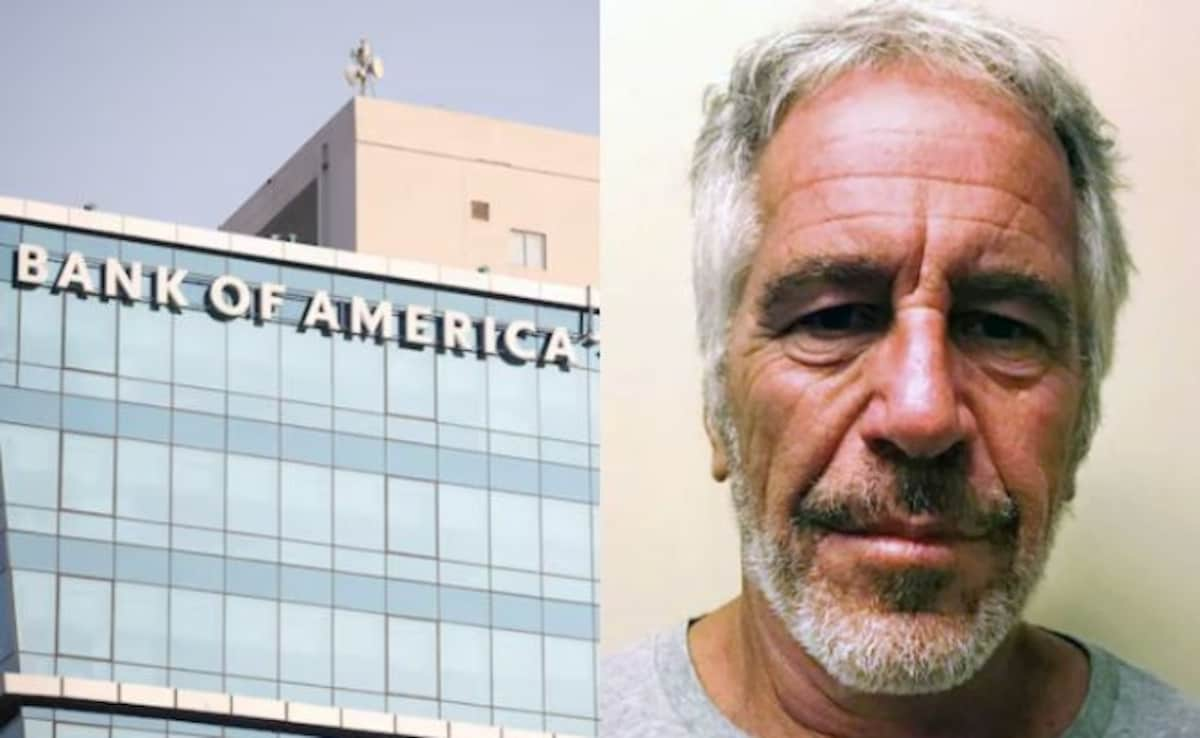
Bank of America has agreed to pay $72.5 million to settle a class-action lawsuit brought by survivors of Jeffrey Epstein, finally shuttering a legal chapter that threatened to expose how the nation’s second-largest bank handled over $170 million in suspicious transfers. The settlement, filed in a Manhattan federal court, addresses allegations that the financial institution ignored a "plethora" of red flags to maintain lucrative relationships with Epstein and his billionaire associates. This payout follows a predictable Wall Street pattern: admit no wrongdoing, pay a fraction of quarterly earnings, and ensure the most damaging testimony never reaches a public jury.
The core of the case rested on the bank’s relationship with Leon Black, the billionaire co-founder of Apollo Global Management. While Black has not been charged with a crime and denies knowing about Epstein's conduct, the lawsuit alleged that Bank of America facilitated massive payments from Black to Epstein for "tax and estate planning" long after Epstein was a registered sex offender. By settling now, the bank successfully blocked a scheduled deposition of Black that was set for the very day the deal was announced.
The Infrastructure of an Exploitation Ring
To understand how a global bank becomes a "financial partner" in a trafficking operation, one must look past the teller window and into the world of high-net-worth private banking. Banks are legally required to file Suspicious Activity Reports (SARs) when they detect erratic movement of funds. In this instance, the plaintiffs argued that Bank of America watched as millions moved in $10 million and $20 million increments without pulling the alarm.
The mechanics were surprisingly manual. According to the complaint, Epstein’s victims were often directed to open personal accounts at Bank of America. These accounts were then used as conduits. One plaintiff, a woman recruited from Russia, alleged that the bank ignored the fact that her account was being used by Epstein's employees to pay her rent and a "salary" for a non-existent job. To a compliance officer, a high-volume account for a person with no clear source of income is a textbook red flag. To a private banker looking to keep a billionaire client happy, it was simply "routine service."
A Calculated Cost of Doing Business
The $72.5 million figure might seem substantial to the public, but in the context of global finance, it is a rounding error. JPMorgan Chase previously settled similar claims for $290 million**, and Deutsche Bank paid $75 million. Bank of America’s settlement falls right in line with these precedents, effectively setting a "market rate" for enabling the Epstein network.
Critics argue that these settlements allow institutions to bypass the Trafficking Victims Protection Act (TVPA), which is designed to hold those who "knowingly benefit" from trafficking accountable. Judge Jed Rakoff, who presided over the case, had already ruled in January that the claims against Bank of America were plausible enough to go to trial. By opting for a settlement, the bank avoids a discovery process that would have likely unmasked internal emails and memos. These documents often reveal the internal tug-of-war between compliance teams—who see the risk—and executive leadership—who see the profit.
The Problem with Delayed Compliance
The timeline of the bank's cooperation is particularly damning. Records show that Bank of America only filed two SARs related to the $170 million in payments from Black to Epstein in 2020—well after Epstein’s death and the subsequent media firestorm.
- 2008: Epstein is convicted in Florida of soliciting a minor for prostitution.
- 2011-2019: Hundreds of millions flow through major U.S. banks linked to Epstein’s entities.
- 2019: Epstein dies in a Manhattan jail cell.
- 2020: Bank of America finally flags the transactions as suspicious.
This decade-long gap is not a failure of technology. It is a failure of will. Modern banking software is designed to trigger alerts for much smaller, less frequent transactions. When a bank "misses" nine figures moving between a convicted felon and a billionaire, it suggests a systemic decision to look the other way.
The Shadow of Leon Black
Leon Black’s role as a "critical witness" cannot be overstated. He reportedly paid Epstein $158 million over a five-year period for what was described as tax advice. While an independent review by the law firm Dechert found no evidence that Black was involved in Epstein's criminal activities, the sheer scale of the payments moving through Bank of America should have triggered immediate scrutiny.
By settling the lawsuit, Bank of America has spared Black from a grueling deposition. For the bank, the $72.5 million is a small price to pay to keep its most prestigious clients out of the witness chair and its own internal procedures out of the headlines. It is a clean exit from a messy situation, even if it leaves the "why" and "how" of the bank's oversight failures largely unanswered.
The Precedent for Future Litigation
This settlement does not exist in a vacuum. It signals to other financial institutions that while the Epstein saga is expensive, it is manageable. The legal strategy has shifted from "defend at all costs" to "settle before discovery." This approach protects the brand, but it does little to reform the culture of private banking that allowed this to happen in the first place.
The victims, represented by attorney Sigrid McCawley, view this as a victory. For many, the money is less about the dollar amount and more about the public acknowledgement that these institutions played a role in their suffering. However, as long as the cost of a settlement remains lower than the profit generated by high-risk clients, the incentive for banks to act as a "first line of defense" remains dangerously low.
The reality of the American banking system is that it operates on trust, yet provides a premium tier where that trust is rarely questioned. If a regular customer deposits $10,000 in cash, they are treated with suspicion. If a billionaire moves $10 million to a known sex offender, the bank calls it a routine transaction. This settlement is a stark reminder that in the halls of global finance, the rules of the road are often paved with enough cash to make the most uncomfortable questions disappear.
Ask me about the specific regulatory changes being proposed to prevent banks from ignoring human trafficking red flags in the future.