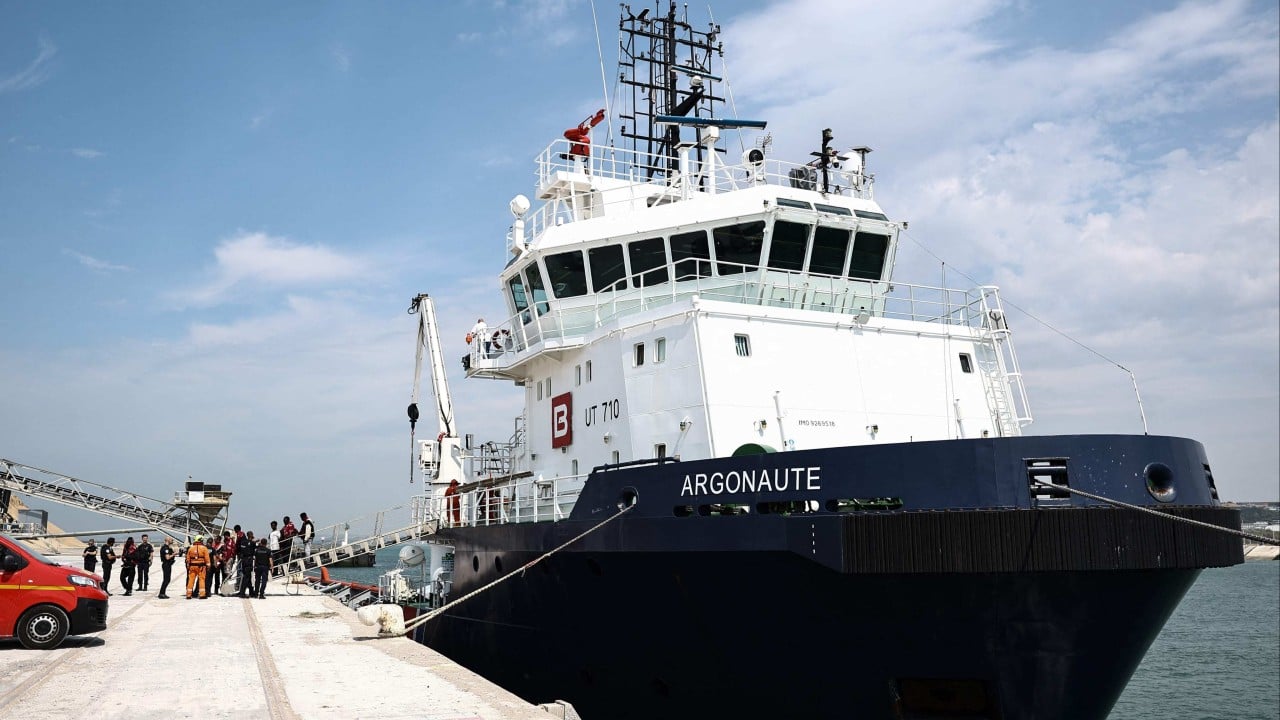
Every time a rubber dinghy catches fire or starts taking on water in the English Channel, the media runs the same tired script. We get breathless updates, photos of coastguard cutters pulling shivering passengers onto steel decks, and politicians offering platitudes about humanitarian duty or border control failure. Yesterday, French and UK vessels hauled 157 people off a burning boat mid-crossing. Cue the applause. Cue the outrage from the hardliners. Cue the hand-wringing from the activists.
Everybody is fighting over the wrong thing.
The lazy consensus splits cleanly into two exhausted factions. One side screams about open borders and moral obligation, acting as if naval rescue operations are an end in themselves—a victory for humanity. The other side screams about invasion and sovereignty, acting as if the coastguards should stand down and let tragedy occur to deter the next boat. Both positions are intellectually bankrupt. Both miss the structural reality of maritime geography, criminal economics, and operational incentives.
Let's look at the mechanics nobody wants to talk about.
The Economics of the Matchbox Fleet
I spent years analyzing illicit supply chains and high-risk logistical networks. What is happening in northern France is not an immigration crisis in the traditional sense; it is a failing marine shipping enterprise run by cartels with zero overhead.
The cartels do not sell safe passage. They sell a ticket to a lottery.
Consider the unit economics. A sub-standard, Chinese-manufactured PVC dinghy costs roughly one thousand euros wholesale. Stuff seventy desperate people into it, charge each person three thousand euros, and the organizers pull in over two hundred thousand euros for an asset that costs less than a used moped. They do not need the boat to reach Dover. They just need it to launch.
Once the vessel clears the surf zone and enters international shipping lanes, the risk calculation flips entirely. Under international maritime law, specifically the SOLAS conventions and the Search and Rescue Convention, any vessel or state agency that spots a craft in distress has an absolute legal obligation to render assistance. The traffickers know this better than the pundits do. The rescue fleet is not an interruption to their business model; it is the primary safety net underwriting it.
If you provide a 100% guaranteed rescue service fifty yards outside the French territorial limit, you have effectively eliminated the primary deterrent of maritime transit: drowning.
The False Dichotomy of Border Control
Politicians love to pretend that the solution is purely about enforcement. More cutters. More drones. More barbed wire on the beaches of Calais. This is political theater designed for evening broadcasts.
Geography is an unrelenting taskmaster. The Strait of Dover is one of the busiest shipping lanes on earth, packed with container ships, oil tankers, and ferries moving hundreds of thousands of tons of cargo every hour. You cannot blockade a twenty-one-mile stretch of water without grinding global trade to a complete halt.
When law enforcement successfully pressures a beach, smugglers simply shift tactics. They launch smaller groups in worse weather. They use lower-quality engines. They overload the hulls further because every square inch represents pure profit. Increased policing without changing the structural incentives does not stop crossings; it increases the lethality of the crossings.
That is the dirty secret of the enforcement-only model. The harder you squeeze the balloon, the sharper the edges become.
[Traditional Enforcement] -> [Smugglers Adapt: Worse Boats] -> [Higher Distress Rates] -> [More Rescues] -> [Perverse Incentive Loop]
When 157 people are pulled from a burning vessel, the headlines focus on the bravery of the crews. The crews are brave. French and British sailors pulling freezing humans out of burning fuel slicks display genuine courage. But praising the rescue while ignoring the systemic loop that caused the fire is like praising the efficiency of an emergency room while ignoring the factory down the street dumping toxic waste into the water supply.
Dismantling the Moral Trap
The public discourse is paralyzed by a false moral binary. You are either a cold-hearted nationalist who wants to push people back into the surf, or a naive idealist who thinks anyone who steps foot on a boat should automatically get a flat in London.
Both extremes rely on magical thinking.
The nationalists ignore human desperation. People do not pay criminal gangs life-savings to ride across freezing waters in flimsy rubber because they are bored; they do so because the legal pathways are choked by bureaucratic inertia, and the countries they are fleeing offer zero alternative.
The idealists ignore operational capacity. No state can absorb infinite arrivals without straining housing, healthcare, and integration frameworks to the breaking point. Pretending otherwise is a form of progressive cowardice that ultimately fuels the far-right backlash it claims to oppose.
If we want to fix this, we have to stop treating the symptom—the boat in the water—as the disease.
The Uncomfortable Blueprint for Disruption
Real solutions are never clean, and they almost always offend ideologues on both sides. If we actually wanted to dismantle the Channel smuggling trade, here is what it would actually require:
- Processing at the Point of Origin: You destroy the economic model of the smuggler the moment you render their product obsolete. If legitimate asylum claims and skilled migration visas can be processed efficiently inside consular offices in safe third countries or source nations, nobody hands thousands of euros to a smuggler in a Dunkirk forest.
- Targeting the Financial Pipelines: Smugglers do not operate on bags of cash dropped in dark alleys. They use hawala networks, crypto rails, and front businesses across Europe. Intelligence agencies treat these operations like minor nuisances. Treat them like major terrorist financing networks and freeze the capital at the source.
- Redefining Maritime Safe Harbours: This is the most controversial pillar, and the one nobody has the stomach for. As long as rescue means immediate transport to British soil, the incentive structure remains broken. Under international maritime law, rescued persons must be taken to a place of safety. Historically and legally, that means the nearest safe port—which, in the case of vessels launching from France, is France.
Critics will shriek that returning rescued migrants to the point of departure violates international conventions. It does not. SOLAS and maritime law require safety, not a ticket of the passenger's choice. When a cargo ship rescues sailors in the mid-Atlantic, it doesn't divert to Tokyo because the sailors prefer sushi; it takes them to the nearest practical port.
Applying standard maritime protocols to Channel rescues would instantly deflate the smuggling pitch. If traffickers cannot promise arrival on British soil—if they know a rescue means a return to the French coast and mandatory detention or repatriation processing—the value proposition collapses overnight.
The Mic Drop
We can keep celebrating these dramatic mid-channel rescues. We can keep patting ourselves on the back every time a burning hull is cleared and nobody dies.
We can also keep watching the dinghies multiply, keep counting the bodies when the rescues fail, and keep pretending that throwing more coastguard vessels at an infinite supply of plastic boats is a strategy.
It is not a strategy. It is a subsidy for organized crime, wrapped in the flag of humanitarianism. Stop funding the fire while pretending you are surprised by the smoke.