We love putting ancient humans into neat little boxes. You picture a rugged hunter sprinting across a dusty plain, spear in hand, chasing down a woolly mammoth to haul back to the cave for a purely carnivorous feast. Modern diet fads built entirely around this caveman caricature make billions selling the idea that human biology rejects plants.
The bones and teeth tell a radically different story.
When researchers analyzed 15,000-year-old human remains from the Taforalt Cave in northeastern Morocco, they found something unexpected. These people belonged to the Iberomaurusian culture, long before the invention of agriculture. Conventional assumptions dictate their plates should have run red with animal blood. Instead, chemical footprints locked inside their teeth and bones proved that wild plants formed a massive pillar of their daily nutrition.
What Isotopic Signatures Actually Reveal About Ancient Teeth
You can't fake a chemical fingerprint stored in human enamel. Scientists from the Max Planck Institute for Evolutionary Anthropology used zinc and stable isotope analysis on teeth and bones recovered from the Moroccan site to reconstruct what these people consumed over a lifetime.
The results shattered long-held archaeological dogma. While animal protein like Barbary sheep certainly factored into their daily lives, sweet acorns, pine nuts, pistachios, oats, and wild pulses dominated their caloric intake. Plant foods weren't just a casual snack gathered on an empty stomach when hunting failed. They served as a primary source of sustenance.
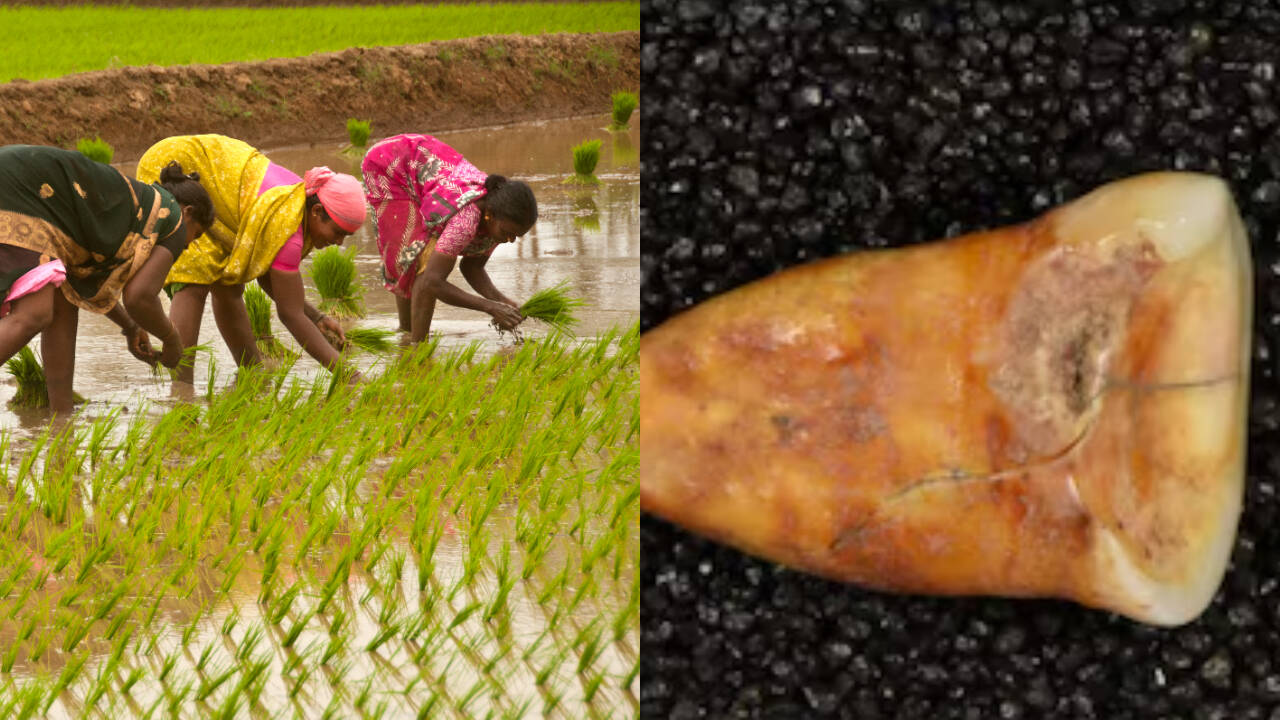
Teeth from these ancient individuals also showed distinct signs of cavities. Dentists today link tooth decay directly to high carbohydrate and natural starch consumption. Finding cavities in pre-agricultural populations proves that grains and starches were heavily exploited long before anyone ever plowed a field or domesticated a crop.
The Myth of Constant Nomadism
Another widespread misconception suggests that pre-agricultural humans spent every waking hour wandering in endless circles behind migrating herds. The evidence from Taforalt paints a much more sedentary picture.
Because these groups mastered the art of gathering and storing seasonal plants as they matured year-round, they didn't have to chase food every single day. They built localized food reserves. Storing sweet acorns and wild grains allowed these communities to anchor themselves to specific regions for extended periods. They used caves not just as temporary shelters during a storm, but as permanent home bases and burial grounds.
Even infant care habits surprised the research team. Analysis of baby teeth indicated that weaning happened earlier than previously thought. Mothers introduced plant-based foods to infants around twelve months of age. Survival required a flexible, opportunistic strategy rather than a strict adherence to a single food group.
Rethinking Modern Dietary Dogma
The modern obsession with drawing clean lines between meat-eaters and plant-eaters ignores how human evolution actually worked. Our ancestors survived by eating whatever was available, nutritious, and calorie-dense. They were generalists of the highest order.
Next time you hear someone claim that human biology is built exclusively for a single type of ancestral eating style, remember what is carved into 15,000-year-old enamel. Real survival was messy, plant-heavy, and entirely adaptable.
What Did Prehistoric Humans Actually Eat?
This video explores the actual chemistry behind prehistoric human diets using isotope analysis and fossilized dental plaque instead of marketing copy.
http://googleusercontent.com/youtube_content/1