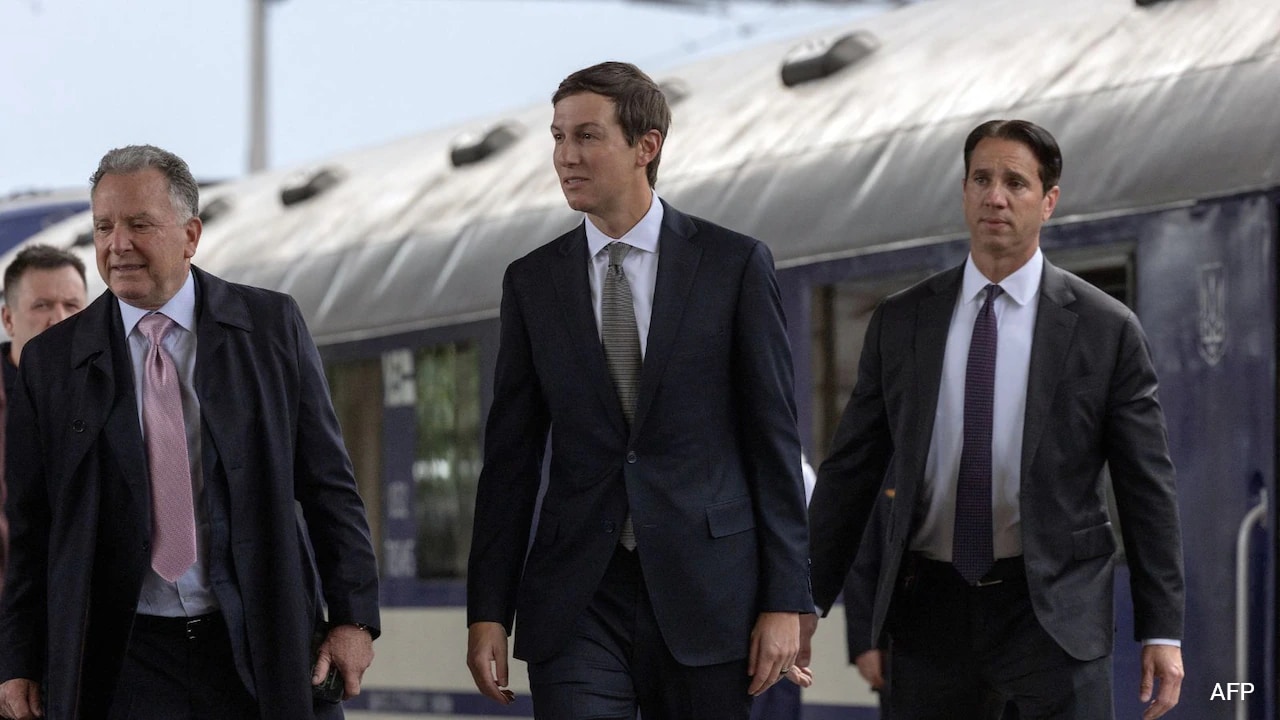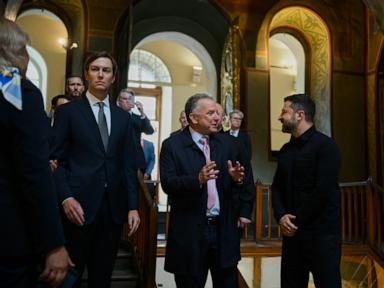
Diplomatic interventions in prolonged attritional conflicts routinely collapse when mediators misinterpret strategic signaling as a willingness to compromise. The recent arrival of United States envoys Steve Witkoff and Jared Kushner in Kyiv following closed-door consultations with Vladimir Putin in Moscow provides a textbook case of structural misalignment between high-level diplomatic choreography and the underlying mechanics of escalation dominance. When intermediaries operate without accounting for the hard economic and military cost functions governing the belligerents, peace missions devolve into performative theater rather than substantive bargaining mechanisms.
The Asymmetric Incentive Matrix
Evaluating peace architecture requires mapping the payoff structures of the participating actors. In the current operational environment, the Kremlin's calculus relies on sustained attritional pressure, where time functions as a strategic variable designed to erode Western financial endurance and Ukrainian manpower pools.
The three primary variables driving Moscow's cost-benefit analysis include:
- Territorial consolidation within the administrative boundaries of the Donbas region.
- The domestic political insulation provided by redirected state spending toward militarized industrial production.
- The calculation that prolonged friction degrades adversarial resolve faster than domestic resource exhaustion.
When envoys present generalized settlement proposals without shifting these underlying variables, negotiations encounter a hard mathematical ceiling. Economic theory dictates that a rational actor will not trade a rising probability of battlefield dominance for speculative diplomatic concessions unless the alternative cost structure becomes prohibitive. Because Washington's recent focus was diverted by concurrent obligations in the Middle East, Moscow's perception of opportunity cost favored continued military pressure rather than immediate settlement.
Tactical Deconfliction Versus Strategic Bargaining
A structural flaw in the current mediation framework is the conflation of temporary tactical deconfliction with permanent strategic resolution. The localized, short-duration cessation of aerial bombardment targeting Kyiv and Moscow during the diplomatic transit window represents a classic example of operational pause rather than a shift in strategic posture.
A ceasefire designed purely to facilitate high-level visits creates a temporary information asymmetry. Both sides use the operational lull to recalibrate logistics, repair localized infrastructure damage, and assess adversary intelligence posture. Kyiv intercepted significant drone and missile payloads even as limited deconfliction windows were supposedly active, demonstrating that tactical forbearance at the administrative center does not alter frontline kinetic velocity.
Mediators frequently misread these fleeting diplomatic accommodations as momentum. In reality, structural rigidity remains intact: Russia insists on territorial surrender and the permanent neutralization of alliance ambitions, while Ukraine operates under a constitutional mandate prohibiting the alienation of sovereign land. Until a framework alters the military equilibrium forcing either side past its breaking point, intermediary shuttles serve primarily as intelligence-gathering exercises for the belligerents rather than conduits for genuine treaty drafting.
The Mechanics of Secondary Agendas
Diplomatic missions of this scale rarely isolate a single variable. Reports from Moscow indicate that discussions encompassed bilateral economic projects and broader macroeconomic considerations alongside the immediate security crisis in Eastern Europe. Introducing non-security vectors into an active attritional conflict creates a multi-variable bargaining problem that complicates rather than streamlines resolution.
When economic incentives are decoupled from security guarantees, the bargaining space fragments. The Kremlin treats economic normalization proposals as secondary benefits to be accrued without altering its primary kinetic objectives. Conversely, Kyiv views any framework that separates economic normalization from territorial restoration as an existential hazard. This divergence in valuation ensures that talks remain stalled at the preliminary consultation phase, characterized by extensive closed-door sessions yielding no formal structural announcements.
The Operational Horizon
The trajectory of the conflict depends entirely on resource sustainability thresholds rather than intermittent envoy visits. As long as industrial output capacities in the participating states maintain the current operational tempo, diplomatic initiatives lacking coercive leverage will continue to stall against immutable national security demands.
To transition from procedural visits to viable negotiation structures, future diplomatic interventions must establish concrete penalty mechanisms for non-compliance and verifiable incentives that outweigh the projected gains of continued attrition. In the absence of such calibration, high-level diplomatic transit between Moscow and Kyiv functions as a lagging indicator of stalemate rather than a leading indicator of peace.