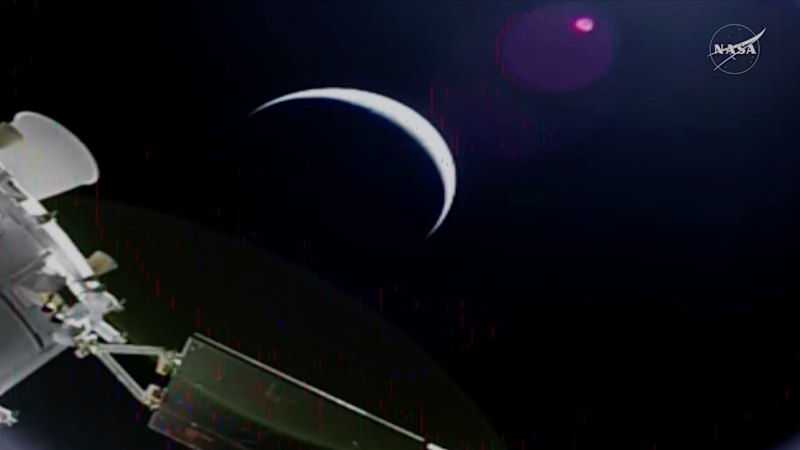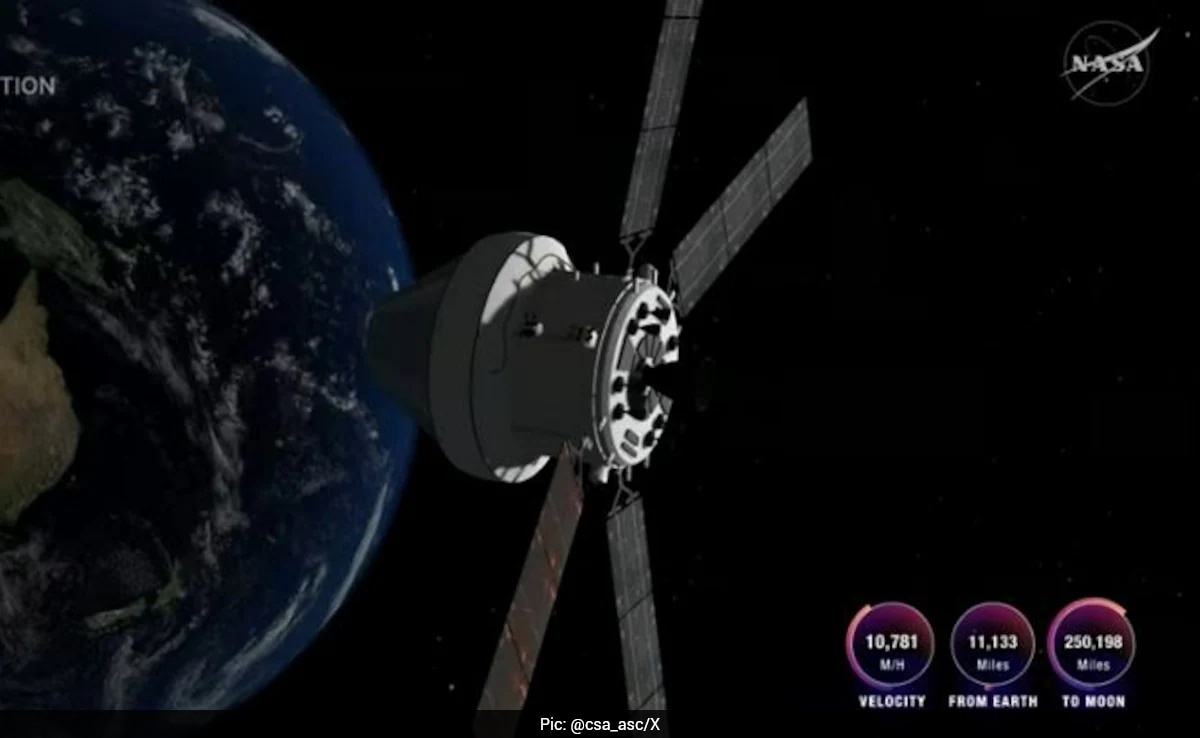
The success of the Artemis II mission hinges on a phased energy-management strategy designed to validate human life-support systems in high-radiation environments before committing to a trans-lunar injection. Unlike the Apollo missions, which prioritized rapid transit to the lunar surface, Artemis II utilizes a High Earth Orbit (HEO) period as a critical functional buffer. This 24-hour dwell time is not a delay; it is a systematic stress test of the Orion spacecraft’s Environmental Control and Life Support System (ECLSS) and the Crew Health and Performance System (CHPS) while the vehicle remains within a recoverable proximity to Earth.
The High Earth Orbit Validation Phase
The mission architecture bifurcates the journey into two distinct orbital regimes. Following the initial launch and a standard Low Earth Orbit (LEO) insertion, the Integrated Cryogenic Propulsion Stage (ICPS) executes a burn to raise the apogee to approximately 74,000 kilometers.
This HEO phase serves three primary engineering objectives:
- Life Support Stress Testing: Engineers require a full diurnal cycle to monitor how the ECLSS handles the metabolic output of four crew members. In LEO, a failure allows for an immediate de-orbit and reentry within hours. In HEO, the return window extends, but remains significantly shorter than the three-day transit from the Moon.
- Radiation Shielding Assessment: The HEO trajectory sends the Orion capsule through portions of the Van Allen radiation belts. This allows for real-time data collection on the effectiveness of the Hybrid Electronic Radiation Assessor (HERA) and the Crew Interactive Mobile Companion (CIMON) under actual solar particle event conditions.
- Optical Navigation Calibration: With Earth as a massive reference point and the Moon as the target, the crew validates manual piloting and optical navigation sensors. This ensures that if Deep Space Network (DSN) communications fail during the lunar far-side pass, the crew can maintain positional awareness through star-tracking and planetary limb sensing.
The Mechanics of Trans-Lunar Injection
Once the systems are verified in HEO, the spacecraft must transition from a closed Earth orbit to a free-return trajectory. This requires a precise application of delta-v ($\Delta v$), the change in velocity necessary to break the gravitational "well" of Earth.
The physics of this maneuver are governed by the Tsiolkovsky rocket equation:
$$\Delta v = v_e \ln \frac{m_0}{m_f}$$
Where $v_e$ is the effective exhaust velocity, $m_0$ is the initial total mass, and $m_f$ is the final mass after the burn. For Artemis II, the ICPS provides the final thrust to achieve a velocity exceeding 10 kilometers per second. This speed allows the spacecraft to enter an elongated ellipse that intersects the Moon’s orbital path.
The choice of a Free-Return Trajectory is the defining safety feature of Artemis II. The spacecraft is aimed not directly at the Moon, but at a point in space where the Moon’s gravity will naturally whip the capsule around its far side and sling it back toward Earth. This "figure-eight" path ensures that even in the event of a total propulsion system failure after the TLI burn, the crew will return to Earth's atmosphere without further engine firings.
Thermal Management and the "Barbecue Roll"
Deep space transit introduces extreme thermal gradients. The side of the Orion facing the sun can reach temperatures of 150°C, while the shadowed side plunges to -150°C. To mitigate structural stress and ensure internal temperature stability, the spacecraft employs Passive Thermal Control (PTC).
Often referred to as a "barbecue roll," the spacecraft rotates slowly along its longitudinal axis. This rotation distributes solar thermal energy evenly across the hull, preventing the expansion and contraction of materials that could lead to seal failures or sensor misalignment. The rotation rate is calculated based on the thermal mass of the vehicle and the efficiency of its external radiators, which dump excess heat into the vacuum of space.
Communication Latency and Deep Space Network Constraints
As the Orion moves toward its lunar apogee, the distance introduces a signal delay that necessitates increased crew autonomy. At a distance of 384,400 kilometers, radio waves traveling at the speed of light take approximately 1.3 seconds to reach Earth, creating a 2.6-second round-trip latency.
The mission relies on the Deep Space Network (DSN) stations in Goldstone (California), Madrid (Spain), and Canberra (Australia). The primary technical bottleneck is the handover process between these stations as the Earth rotates. Any misalignment in the S-band or Ka-band antennas during these handovers can result in data loss. To counteract this, the Orion’s onboard computers are programmed with high-level heuristic fault-management protocols, allowing the ship to "safing" itself—entering a low-power, stable orientation—without waiting for ground control instructions.
Reentry Dynamics and Heat Shield Loading
The return to Earth from a lunar trajectory involves significantly higher kinetic energy than a return from the International Space Station (ISS). An ISS reentry occurs at roughly 7.8 kilometers per second, whereas Artemis II will hit the atmosphere at approximately 11 kilometers per second.
The thermal load on the heat shield is proportional to the cube of the velocity. Consequently, the Orion heat shield must dissipate energy that is nearly twice as intense as that of a LEO return.
The spacecraft uses an Avcoat ablative material. As the material heats up, it chars and breaks away, carrying the thermal energy away from the crew module. The reentry profile utilizes a "skip" maneuver, where the capsule enters the upper atmosphere, bounces off to bleed off speed and heat, and then re-enters for the final descent. This maneuver reduces the G-loads on the crew and provides a more precise landing at the designated splashdown site in the Pacific Ocean.
Strategic Integration of Human and Machine Systems
The Artemis II mission serves as the final validation of the "human-in-the-loop" philosophy for deep space exploration. While the SLS and Orion are highly automated, the HEO phase and the lunar flyby are designed to prove that humans can intervene in complex system failures where pre-programmed logic might fail.
The critical path forward requires the transition from a test-pilot mindset to a long-duration habitation mindset. The 10-day duration of Artemis II is the minimum viable product (MVP) for lunar orbital operations. Success is defined by the stability of the ECLSS oxygen-reclamation cycles and the management of nitrogen levels within the cabin, which are notoriously difficult to stabilize in a fluctuating thermal environment.
The final phase of the mission is the deployment of the parachute system. The Orion uses a sequence of drogues, pilots, and three main parachutes to slow the 11-ton capsule to a terminal velocity of about 30 kilometers per hour. The redundant design of the parachute mortars ensures that even if one main chute fails to deploy, the descent rate remains within the survivable limits for the crew and the structural integrity of the hull.
The mission must be viewed as an integrated system of systems. The SLS provides the raw energy, the ICPS provides the precision vectoring, and the Orion provides the life-support envelope. Any deviation in the performance of one system necessitates an immediate re-calculation of the free-return trajectory. The 24-hour HEO dwell is the final go/no-go point where the flight director must weigh the telemetry against the probability of a successful lunar transit. If the ECLSS shows any non-nominal behavior during this period, the mission will likely be aborted to a high-speed reentry rather than committing to the three-day journey to the Moon.