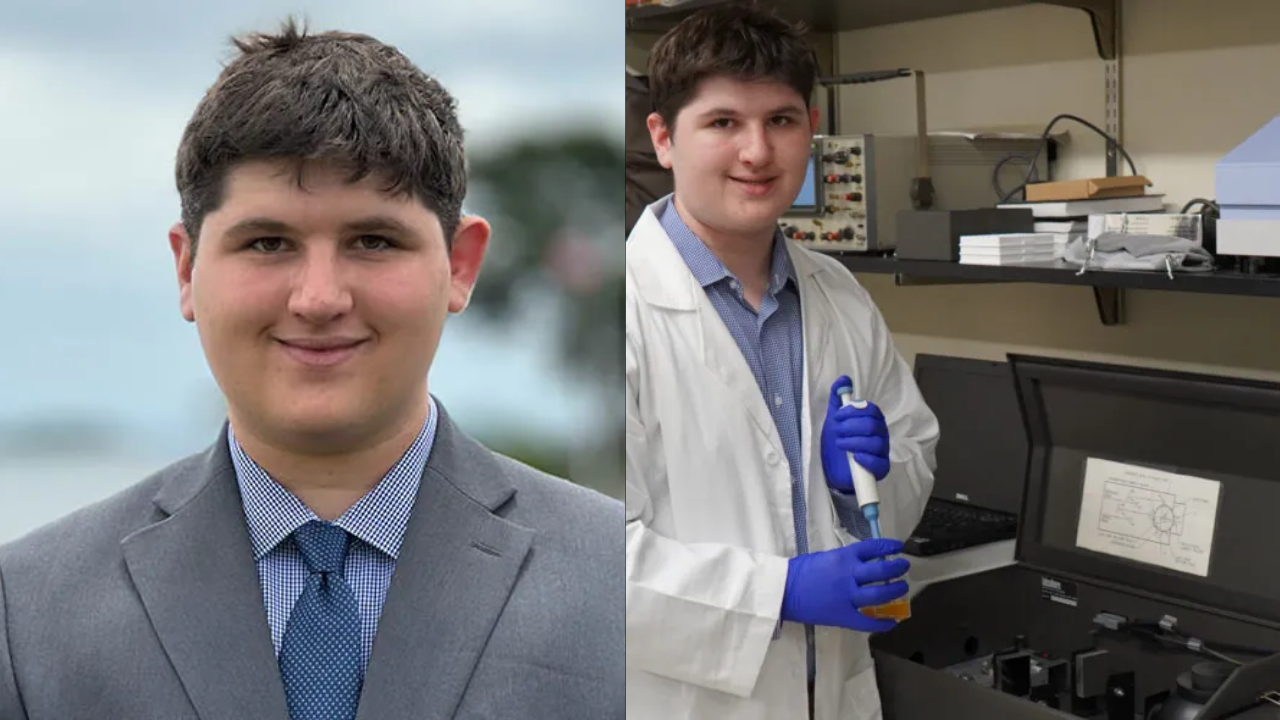
Every few months, the media industrial complex finds its favorite narrative trope: the wunderkind prodigy engineering something miraculous in a high-school lab to fix a planetary crisis. The latest iteration features a seventeen-year-old student deploying genetically modified bacteria designed to combat Arctic ice melt. The headlines practically write themselves. Hopeful, clean, and utterly detached from the brutal realities of thermodynamics, scaling, and geochemical engineering.
It makes for a fantastic human-interest story. It is also an absolute distraction from the engineering and economic realities of climate mitigation.
Let us be entirely clear about what is happening here. A teenager tinkering with bacterial cultures in a controlled environment is not solving the loss of multi-year sea ice in the Fram Strait. The lazy consensus of mainstream reporting wants you to believe that climate change is just waiting for a clever biological hack from a garage or an advanced placement biology class. This narrative persists because it is comforting. It implies that we can bypass the messy, expensive, politically toxic work of systemic industrial decarbonization if we just clap hard enough for precocious youth.
Physics does not care about heartwarming profiles.
The Scaling Illusion of Biological Interventions
To understand why dumping engineered microbes onto Arctic ice is a non-starter, you have to look at the sheer scale of the Arctic Ocean. We are talking about roughly fourteen million square kilometers of surface area at the winter maximum, shrinking down to millions of square kilometers of dynamic, drifting, highly saline pack ice during the melt season.
Even if you genetically engineer a strain of ice-nucleating or albedo-enhancing bacteria that can survive freezing temperatures, high ultraviolet radiation, and fierce polar winds, you run into the fundamental wall of logistics. How do you manufacture kilograms of this organism, let alone millions of metric tons? Who pays for the cold-chain logistics required to ship biological agents to the high latitudes? How do you distribute it uniformly across an ocean where the surface is constantly fracturing, shearing, and ridging under the pressure of trans-polar drift currents?
Biology requires inputs. It requires nutrients, stable temperatures within certain thresholds, and protection from predation by native extremophiles. The moment you introduce a transgenic organism into a pristine or semi-pristine polar ecosystem, you trigger ecological feedback loops that regulatory bodies cannot even begin to model, let alone approve. The biosafety protocols alone would take decades of field testing in contained environments—testing that is virtually impossible to simulate accurately in the open, chaotic ocean.
We have seen this movie before. Every few years, proponents of geoengineering pitch iron fertilization of the Southern Ocean to trigger massive phytoplankton blooms that will supposedly draw down carbon dioxide and sink it to the abyss. Every single time, field experiments show that the real-world ecological response is messy, inefficient, and often thwarted by secondary nutrient limitations like silicates or trace metals. Microbes do not follow human press releases. They follow the path of least metabolic resistance.
The Albedo Trap and Thermodynamics
The core premise behind modifying ice surfaces with biological agents usually boils down to one goal: altering the surface albedo. The theory is that by darkening the ice with specific pigments or brightening it with reflective biological crusts, you either absorb more heat to stabilize structure or reflect incoming solar radiation to prevent surface ablation.
Let's run the thermodynamic numbers. Albedo modification at the poles operates against a relentless background of global heat transport driven by ocean currents and atmospheric circulation. The Arctic is warming nearly four times faster than the rest of the planet primarily because of the loss of high-albedo sea ice exposing low-albedo open ocean water—the classic ice-albedo feedback loop.
When open water absorbs solar radiation, it stores heat in the upper mixed layer of the ocean. No amount of surface bacteria sprayed onto floating ice floes is going to reverse the heat content of thousands of cubic kilometers of Atlantic water entering the Barents Sea. You are trying to cool a boiling pot of water by blowing on the lid.
Furthermore, biological agents on ice typically degrade rapidly. Solar ultraviolet radiation in the polar summer is punishing. Without robust repair mechanisms or continuous self-replication that outpaces photolysis, these engineered strains bleach and die within days. And if they do self-replicate rapidly enough to maintain coverage, you have an uncontained biological bloom altering surface absorption characteristics in ways you cannot shut off once unleashed.
The Dangerous Allure of Silver Bullets
The real danger of the teenage-wonder-bacteria narrative is not that it is false in a vacuum—it is that it provides moral and political cover for inaction.
When policymakers and corporate boards read about biological hacks saving the poles, they subconsciously downgrade the urgency of boring, expensive infrastructure investments. It becomes much easier to justify delaying fossil fuel phase-outs or grid modernization if there is a lingering fantasy that a fleet of crop-dusters loaded with genetically modified microbes will magically freeze the Arctic back to 1980 levels by next Tuesday.
I have watched venture capital and philanthropic funding get squandered on speculative, biologically implausible climate tech startups for over a decade. Millions of dollars flow into slide decks and bench-scale demonstrations while proven technologies—grid-scale storage, transmission buildouts, geothermal baseloads, and industrial electrification—starve for capital because they lack the cinematic appeal of a sci-fi novel.
We must stop treating climate change as a puzzle waiting for a brilliant clever hack. It is a mass mobilization problem. It is an economic restructuring problem. It is a political power struggle against entrenched fossil fuel interests who love nothing more than watching society chase speculative biological squirrels while they continue pumping out gigatons of carbon.
Facing the Geopolitical Reality
If you genuinely want to protect Arctic ice, the strategy has zero to do with biotechnology and everything to do with atmospheric chemistry and greenhouse gas concentration. The equilibrium thickness and extent of sea ice are direct functions of radiative forcing. Reduce the forcing by pulling carbon out of the atmosphere at scale and stopping emissions at the source, and the ice recovers on its own. It does not need a customized plasmid. It just needs the heat turned down.
The seventeen-year-old student should be commended for intellectual curiosity, experimental initiative, and mastering molecular biology concepts that most adults cannot parse. But the adults in the room—the journalists, the funders, the scientific establishment—fail everyone by framing this as a viable climate solution.
Stop looking for the magic bullet in a petri dish. The crisis is in the atmosphere, and the tools to fix it are sitting right in front of us, gathering dust behind political cowardice.