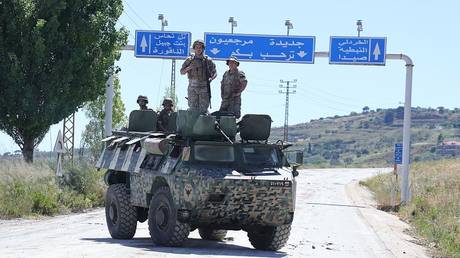
The mainstream media is hyperventilating over declarations of indefinite territorial control in the Middle East. Commentators swallow the bait every single time, treating declarations of permanent occupation in Gaza, southern Lebanon, and parts of Syria as a definitive, long-term roadmap. They frame it as a triumphant or terrifying expansion of absolute control.
They are fundamentally misreading the mechanics of modern asymmetrical warfare.
Holding ground is not the same as neutralizing a threat. In fact, in the 21st century, physical occupation is often a structural liability masquerading as a position of strength. When a state commits to holding hostile, densely populated territory indefinitely, it is not winning; it is subsidizing its own attrition. The lazy consensus views maps and lines in the dirt as the ultimate metrics of victory. The reality is that fixed positions create fixed targets.
The Cost of the Cartographic Illusion
Military history is littered with the carcasses of doctrine built on permanent geography. Look at the data from historical occupations over the last century. From the French experience in Algeria to the American decade in Afghanistan, the math never works out in favor of the occupying force over a long enough timeline.
The security apparatus required to police a hostile population creates an exponential drain on resources. It forces a conventional military into a defensive posture. Instead of maintaining an agile, high-tech deterrence capability, capital and manpower get sucked into the mundane, high-risk realities of checkpoint management, convoy security, and bureaucratic administration.
When a defense establishment announces indefinite occupation, it is often a sign of strategic stagnation, not strategic foresight. It means the political leadership has failed to define a viable exit criterion and has chosen instead to manage a permanent crisis. This is a classic case of confusing tactical dominance with strategic success.
The Real Metrics of Security
Conventional analysis focuses on three flawed metrics:
- Square kilometers captured.
- Number of stationary outposts established.
- Depth of buffer zones.
A sophisticated analysis looks at an entirely different set of indicators:
- The ratio of security spending to GDP sustainability.
- The rate of tactical adaptation among decentralized insurgent networks.
- The diplomatic and economic isolation costs incurred per square mile held.
When you weigh the actual output against the input, buffer zones frequently yield diminishing returns. A fifty-mile buffer zone means nothing in an era of precision guided munitions, low-altitude drones, and cyber warfare. You cannot bayonet a drone. You cannot put a checkpoint in front of a digital network. By focusing heavily on physical boots on the ground, states inadvertently optimize for yesterday's war while draining the coffers needed to prepare for tomorrow's.
Dismantling the Buffer Zone Myth
Let's address the inevitable pushback. Proponents of indefinite occupation argue that physical separation is the only way to prevent cross-border incursions. They point to historical precedents where walls and garrisons provided temporary reprieves.
This argument ignores the concept of asymmetric adaptation. Insurgent groups do not disband when a border shifts; they decentralize, go underground, and exploit the governance vacuum that occupation inevitably creates.
"An occupying power breaks the existing social contract but rarely has the capability or the political will to install a functional, legitimate alternative."
When a state assumes indefinite control over foreign territory, it inherits the liabilities of that territory—the infrastructure collapse, the radicalized youth, the economic devastation—without any of the benefits of sovereign integration. It becomes the de facto government, responsible for the very populations that detest its presence. This is not strength. It is a self-imposed siege.
The Operational Reality of Static Defense
Imagine a scenario where a military establishes a permanent network of bases across a newly acquired zone. On paper, it looks like a ironclad wall of deterrence.
On the ground, it looks like an endless supply of targets.
[Conventional Army] -> Tethers itself to fixed bases -> High resource drain
[Insurgent Network] -> Mobile, decentralized, fluid  -> Low resource drain
Every single supply line becomes a vulnerability. Every outpost requires constant reinforcement. The insurgent network can choose the time, place, and method of attack, forcing the occupying military to be 100% right, 100% of the time, across hundreds of miles of hostile terrain. The math is relentlessly brutal.
The True Cost of Strategic Inertia
The downside to challenging the occupation narrative is that the alternative requires immense political courage. The counter-intuitive truth is that real security is achieved through dynamic deterrence and technological supremacy, not territorial accumulation.
It is far easier for politicians to point to a map and say, "We own this now," than it is to build a resilient, adaptable security framework that leverages intelligence, flexible strike capabilities, and economic leverage.
The hard truth is that declaring an indefinite occupation is an admission of intellectual bankruptcy. It proves that the state has run out of ideas, run out of diplomatic options, and is relying on brute force to freeze a conflict that cannot be frozen. Geography cannot solve a political and ideological crisis. It can only delay the reckoning while compounding the interest on the ultimate cost.
Stop looking at the moving borders as a sign of permanent victory. The real conflict is happening in the domains of economic endurance, technological innovation, and international alliances. Holding onto land indefinitely isn't a masterstroke; it is anchoring yourself to a sinking ship and calling it a harbor.