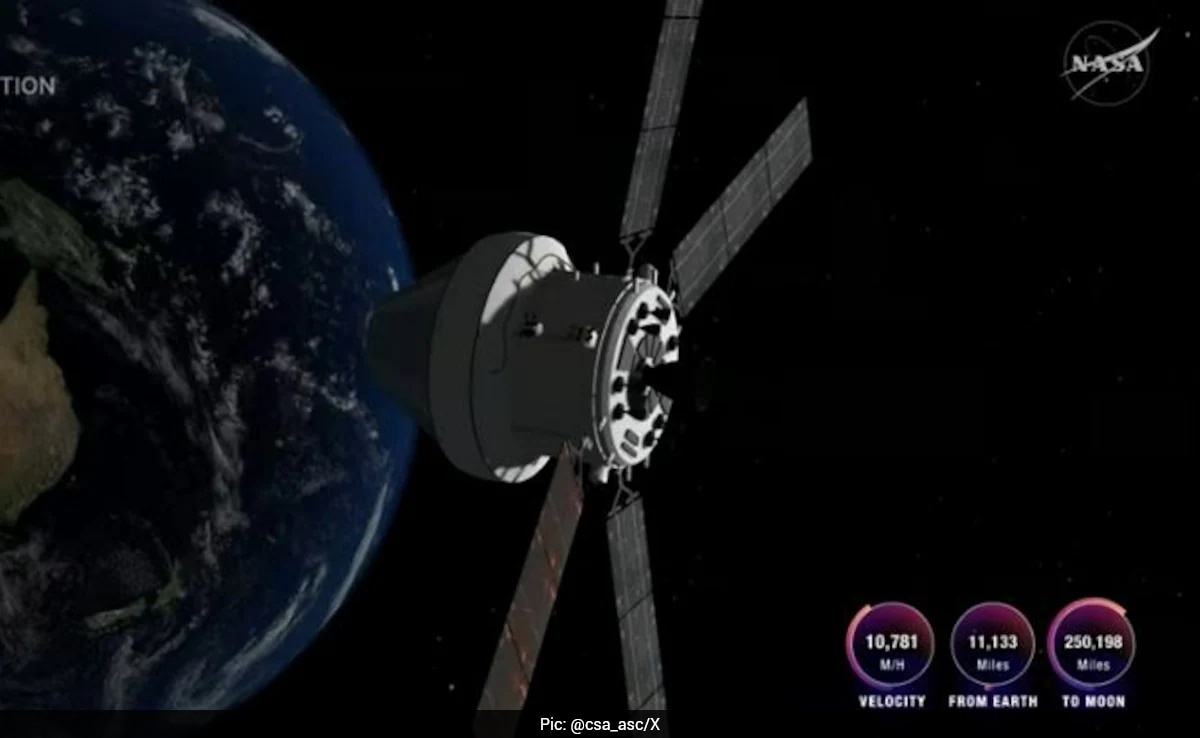
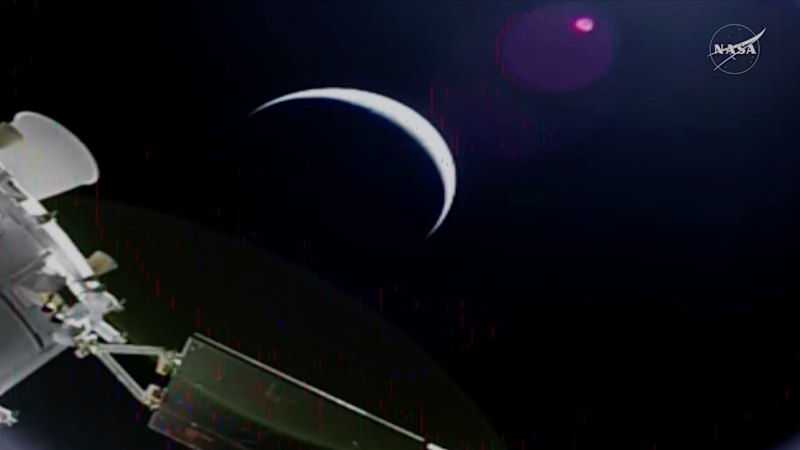
The four astronauts strapped into the Orion capsule atop the Space Launch System (SLS) rocket are carrying more than just the hopes of a nation; they are the physical manifestation of a massive shift in geopolitical and scientific priority. Artemis II is not a repeat of the Apollo era. It is a calculated, high-risk demonstration of endurance meant to prove that humans can survive the lethal radiation of the Van Allen belts and the deep-cold vacuum of space for the first time in over fifty years. While the media often focuses on the "message of hope" sent back to Earth, the cold reality of the mission lies in its engineering hurdles and the brutal physics of lunar injection. This is the moment where the theoretical safety of computer models meets the unforgiving environment of the high ground.
The mission profile involves a complex maneuver called a Trans-Lunar Injection (TLI). Unlike the International Space Station (ISS), which sits comfortably in Low Earth Orbit (LEO) roughly 250 miles up, Artemis II will swing around the Moon at a distance of over 230,000 miles. This is not a casual stroll. The crew will spend approximately ten days testing the life support systems that must function without the possibility of a quick emergency descent. If something breaks on the ISS, you can be home in hours. If something breaks behind the Moon, you are days away from help.
The Engineering Debt of the SLS
The Space Launch System is the most powerful rocket ever built, but its journey to the pad was paved with delays and budget overruns that nearly killed the program. We are looking at a vehicle that utilizes refurbished Space Shuttle Main Engines (RS-25s) and solid rocket boosters, a design choice meant to save money that instead created a logistical bottleneck. Each launch costs roughly $2 billion. That price tag means there is zero room for error.
Critics argue that the SLS is a "senate launch system" designed for job distribution rather than efficiency. However, in the realm of heavy-lift capacity, nothing else currently has the flight certification to carry a crewed Orion. While private entities like SpaceX are developing the Starship, the SLS remains the only "man-rated" option for deep space. The tension between government-led legacy hardware and the rapid-fire iteration of private aerospace defines this mission. Artemis II is the establishment's attempt to prove it can still lead the charge.
Survival in the Deep Cold
The Orion capsule must protect its crew—Reid Wiseman, Victor Glover, Christina Koch, and Jeremy Hansen—from a thermal environment that swings hundreds of degrees. When the sun hits the hull, it bakes. When they slip into the lunar shadow, the heat vanishes.
The most critical component being tested is the Environmental Control and Life Support System (ECLSS). On the ISS, this system is the size of several refrigerators and has a constant supply of spare parts. On Orion, it has been shrunk down to fit a footprint smaller than a walk-in closet.
- Carbon Dioxide Scrubbing: The crew must ensure that CO2 levels remain low enough to prevent cognitive decline.
- Radiation Shielding: The astronauts will be exposed to cosmic rays and solar energetic particles. Orion is equipped with "storm shelters" made of water and cargo bags to block the worst of a solar flare.
- Thermal Protection: The heat shield must withstand 5,000 degrees Fahrenheit upon reentry.
This is a live-fire exercise. We are watching to see if the miniaturized life-support tech can handle four humans breathing, sweating, and living in a cramped volume for over a week. Any fluctuation in these systems turns the "message of hope" into a survival scenario very quickly.
The Van Allen Gauntlet
One of the most significant dangers of Artemis II is the transit through the Van Allen radiation belts. These are zones of energetic charged particles, most of which originate from the solar wind, that are captured and held around the planet by Earth's magnetic field.
The Orion capsule will pass through these belts twice. While the transit is relatively fast, the cumulative dose of radiation is a concern for long-term health. The mission is designed to gather data on how the aluminum hull and internal shielding mitigate this risk. This data is the "hidden" goal of the mission. We cannot go to Mars if we cannot safely get past our own backyard. The sensors scattered throughout the cabin will provide more value to NASA than any televised broadcast from the cockpit.
The Geopolitical Moon Race
The Moon is no longer just a scientific curiosity; it is a strategic asset. Artemis II is the opening salvo in a race to secure the lunar south pole, where water ice is believed to exist in permanently shadowed craters. Water means oxygen. Water means hydrogen fuel. Whoever controls the water controls the gateway to the rest of the solar system.
China's space agency is moving with predatory speed. Their lunar program is not hampered by the four-year election cycles that plague NASA's funding. By sending Artemis II around the Moon, the United States is signaling that it still owns the orbital lanes. It is a projection of power masquerading as a scientific expedition. If the U.S. fails to establish a presence, we risk being locked out of the most valuable "real estate" in the near-earth vicinity.
Reentry and the Velocity Problem
Returning from the Moon is significantly more dangerous than returning from the ISS. When a capsule returns from Low Earth Orbit, it hits the atmosphere at about 17,500 mph. When Orion returns from the Moon, it will be screaming toward Earth at 25,000 mph.
The kinetic energy that must be dissipated is immense. Orion uses a "skip reentry" technique. Think of it like skipping a stone across a pond. The capsule hits the upper atmosphere, bounces back up slightly to bleed off speed and heat, and then descends for its final splashdown. This reduces the G-loads on the crew and allows for a more precise landing. However, it requires a perfect angle of attack. If the angle is too steep, the capsule burns up. If it is too shallow, they bounce off into space with no way to return.
The Illusion of Routine
We have become bored with space. Decades of watching astronauts float in the ISS have created a false sense of security. Artemis II is a reminder that space is a vacuum that wants to kill you. The "message of hope" is a necessary PR tool to keep the public engaged, but the industry analysts are looking at the telemetry. We are looking at the pressure seals. We are looking at the reliability of the communication arrays.
The success of this mission rests on thousands of components that have never been tested together in a deep-space environment. It is a massive integration challenge. Every valve, every circuit, and every line of code must perform perfectly. There is no such thing as a "routine" flight when you are leaving the Earth's magnetic protection.
The four individuals on board are essentially test pilots in a billion-dollar prototype. They are pushing the boundaries of human physiology and mechanical engineering. The goal isn't just to see the Moon; it is to see if we can still do the hard things that we stopped doing in 1972. We are moving out of the "shuttle era" of low-altitude loops and back into the era of true exploration.
The real story isn't the words spoken from the cabin. It is the silent, relentless operation of the machines keeping those people alive. If Artemis II succeeds, the path to a permanent lunar base is open. If it fails, the American space program faces a reckoning that could last a generation. We are betting the future of our species' multi-planetary ambitions on a skip-reentry and a heat shield.
The stakes could not be higher. We are finally leaving the cradle, and the cradle is a very long way away.