The coffee in your mug is lukewarm, but the fuel that helped ship those beans across the ocean is currently the subject of a high-stakes diplomatic dance in a room thousands of miles away.
Most people don't think about the Strait of Hormuz when they wake up. They don't think about the narrow strip of water, barely twenty-one miles wide at its tightest squeeze, that separates the Persian Gulf from the rest of the world. They don't think about the tankers, those steel leviathans carrying millions of barrels of crude oil, threading the needle between rocky coastlines.
But Kazem Jalali thinks about it. As Iran’s Ambassador to Russia, his job is to convince the world—and specifically the Kremlin—that the needle will stay threaded.
The Ghost in the Machine of Global Trade
To understand the weight of Jalali’s recent assurances, you have to look past the dry headlines about "safe passage." You have to look at the math of survival. Every single day, roughly one-fifth of the world’s total oil consumption passes through that single, cramped waterway.
If Hormuz closes, the global economy doesn't just stumble. It gasps for air.
Imagine a logistics manager in a mid-sized trucking firm in the Midwest. Let's call him Mark. Mark doesn't care about Iranian-Russian relations. He cares about the "diesel surcharge" line on his quarterly balance sheet. If a single stray missile or a naval blockade hits that strait, Mark’s company goes under within six months because the price of fuel would spike to levels that make movement a luxury.
This is the invisible thread connecting a diplomat in Moscow to a truck driver in Missouri.
Jalali stepped into the spotlight recently to address a growing cloud of anxiety. The Middle East is currently a tinderbox, and the smoke is visible from space. With tensions ratcheting up between regional powers and the looming shadow of broader conflict, the world began to hold its breath. Would Iran use its geographic leverage to choke the world's energy supply?
The Ambassador's answer was a firm, calculated "no." He framed Iran as the guarantor of security, not the threat to it.
The Art of the Strategic Promise
Diplomacy is rarely about what is said; it is about what the listener needs to hear. By speaking directly to Russian media and officials, Jalali was doing more than reciting a script. He was reinforcing an alliance that has become one of the most significant geopolitical shifts of the decade.
Russia, currently navigating its own complex web of sanctions and energy redirections, needs the Middle East to remain a stable corridor—or at least a predictable one.
Consider the mechanics of the "Safe Passage" pledge. Iran maintains that its presence in the Persian Gulf is the only thing preventing chaos. From their perspective, foreign naval shadows—specifically American and European ones—are the agitators. Jalali’s narrative is one of local stewardship. He posits that the region is a neighborhood, and the neighbors are perfectly capable of watching their own fences without outside interference.
But the stakes are not merely political. They are visceral.
For the sailors on those tankers, the "assurance" of safe passage is the difference between a routine haul and a journey through a combat zone. Imagine standing on the bridge of a vessel worth $200 million, carrying cargo worth three times that, knowing that you are sailing through a geopolitical pressure cooker. You watch the radar. You watch the horizon. You wait for a signal that says you are a target.
Jalali is trying to turn off those alarms.
Why Words Matter in a World of Steel
One might ask why a verbal assurance matters at all. After all, a promise isn't a physical barrier. A diplomat’s word cannot stop a torpedo.
However, in the world of global finance and maritime insurance, words are currency. When a high-ranking envoy like Jalali confirms that the Strait will remain open, it acts as a stabilizer for insurance premiums. If the perceived risk of a "total blockage" drops even by a few percentage points, the cost of shipping drops with it.
The complexity of the situation lies in the duality of the Strait. It is both a physical reality and a psychological weapon.
Iran knows that it holds the "kill switch" for the global economy. By publicly committing to not using it, they are playing a sophisticated game of chess. They are signaling that they are a responsible actor on the world stage—provided their own interests and security are respected. It is a carrot dangled alongside a very large, very visible stick.
The Ripple Effect of a Single Narrow Channel
The reality of Hormuz is that it is a funnel. Everything gets concentrated there.
When Jalali speaks of the "strategic partnership" with Russia, he is highlighting a pivot. We are seeing the creation of a North-South corridor that bypasses traditional Western-dominated routes. This isn't just about oil; it's about the fundamental rewiring of how goods move across the planet.
If you look at a map of the region, the Strait of Hormuz looks like a throat. If that throat constricts, every organ in the global body politic feels the pain.
We often talk about "energy security" as if it’s an abstract concept found in textbooks. It isn't. It is the heat in your home. It is the plastic in your medical supplies. It is the very fabric of modern existence. The assurance given by the Iranian envoy is an attempt to keep the blood flowing through that throat.
Yet, there is a haunting uncertainty that lingers behind the polished mahogany of diplomatic tables. Promises are made by men in suits, but they are tested by men in uniform. The tension in the Gulf is not a static thing. It breathes. It expands and contracts with every news cycle, every drone launch, and every speech.
The Human Core of the Hardline
We must look at the people on the ground—the residents of the coastal towns along the Strait. To them, the massive tankers are just part of the scenery, like clouds or mountains. They live in the shadow of a mountain that could erupt at any moment.
Their livelihoods depend on the sea. If the Strait becomes a war zone, the fishing boats stay docked. The markets go quiet. The silence would be deafening.
Jalali’s message to Russia was intended to project strength and stability. He spoke of Iran’s naval capabilities not as a threat of aggression, but as a shield for commerce. This distinction is the razor's edge upon which global peace currently balances.
There is a deep irony in the fact that the most modern, technologically advanced societies on Earth are still beholden to a few miles of seawater and the word of a single government. We have built a world of satellites and silicon, yet we can still be brought to our knees by the physical bottleneck of an ancient trade route.
The conversation in Moscow was a reminder of our collective fragility. It wasn't just a news update; it was a status report on the health of the world's most vital artery.
The Unspoken Agreement
As the meeting concluded, the underlying message was clear: the status quo will be maintained. For now.
But the status quo is a fragile thing. It requires constant maintenance, constant reassurance, and a relentless series of diplomatic maneuvers to keep the gears of the world turning.
The invisible weight of Hormuz rests on the shoulders of every consumer, every driver, and every business owner. We all live at the mercy of the narrow water. When an envoy speaks, we listen not because we are interested in the nuances of Iranian foreign policy, but because we are all passengers on those tankers, whether we realize it or not.
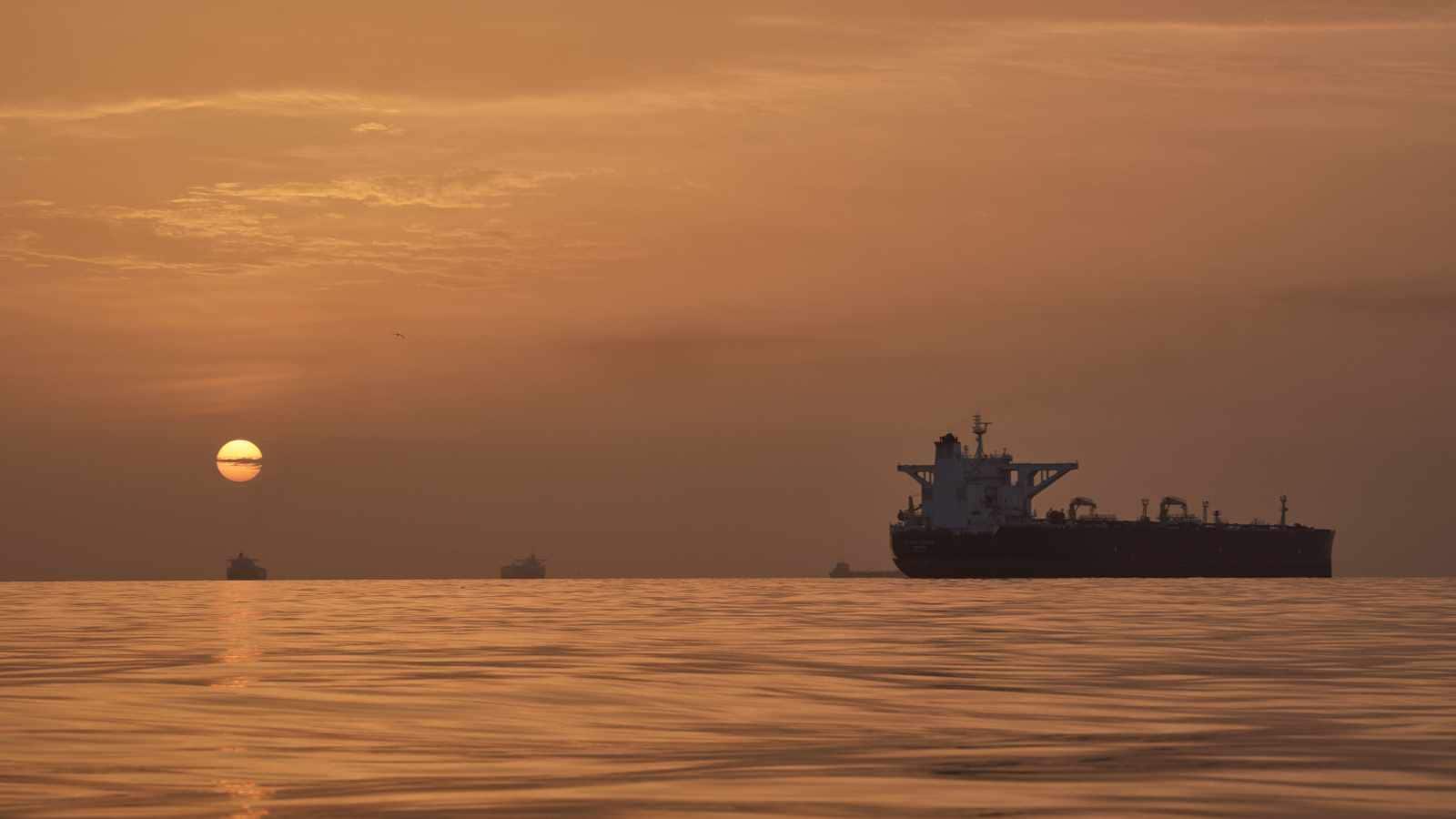
The sun sets over the Persian Gulf, casting long, dark shadows across the water. The tankers continue their slow, rhythmic crawl through the Strait, guided by the flickering lights of the coast and the fragile promises of distant men.
The needle remains threaded. The world keeps breathing.
For tonight, the lights stay on.