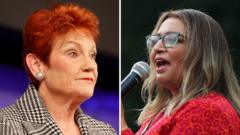
An Australian court just drew a massive, unmovable line in the sand regarding public hate speech. The Full Federal Court unanimously dismissed Pauline Hanson's appeal, cementing a landmark 2024 ruling that found the One Nation leader racially discriminated against Greens Senator Mehreen Faruqi.
If you thought high-profile politicians could say whatever they want online without legal consequence, think again. This decision proves section 18C of the Racial Discrimination Act carries teeth, even against seasoned political figures who try to hide behind free speech defenses.
The Tweet That Sparked a Legal Showdown
The entire legal battle traces back to September 2022. Following the death of Queen Elizabeth II, Senator Faruqi posted on the platform X, stating she could not mourn the leader of a colonial empire built on stolen land.
Hanson fired back with a post telling Faruqi to pack her bags and piss off back to Pakistan, claiming the immigrant senator took every advantage of Australia.
Faruqi didn't just let it slide. She took Hanson straight to the Federal Court under section 18C of the Racial Discrimination Act 1975, which makes it unlawful to publicly offend, insult, humiliate, or intimidate someone based on their race, color, or national origin.
When the initial judgment landed, Justice Angus Stewart didn't mince words. He called Hanson's post an angry personal attack, anti-Muslim, and anti-immigrant. He ordered Hanson to take down the post and pay legal costs. Instead of backing down, Hanson doubled down and appealed.
Why the Appeal Failed
Hanson's legal team tried a few familiar angles. They argued the tweet was protected by the constitutional implied freedom of political communication and qualified as a fair comment on a matter of public interest.
The Full Federal Court wasn't buying it. A three-judge panel reviewed the case and firmly rejected every single defense Hanson threw at them.
- No Free Pass for Hate: The court confirmed that political debate doesn't give public figures a license to use racial slurs or tell migrants to leave the country.
- Real Harms Recognized: The judges upheld that the post was reasonably likely to offend, insult, and humiliate not just Faruqi, but Muslim Australians and people of color broadly.
- No Constitutional Shield: Section 18C survived the constitutional challenge yet again, proving anti-discrimination laws can peacefully coexist with free speech principles.
Outside the court, Senator Faruqi celebrated the outcome as a massive win for everyone who has ever been told to go back to where they came from. Meanwhile, Hanson signaled she might look toward the High Court of Australia, leaving the door open for one final legal roll of the dice.
What This Means for Public Discourse Down Under
You can't separate this case from Australia's broader history with speech laws. Critics of section 18C often claim it stifles honest debate. Supporters argue it provides a vital baseline of respect in a multicultural society.
This ruling shifts the power dynamic squarely toward accountability. When a prominent lawmaker with a massive megaphone targets a minority colleague with xenophobic tropes, the courts view that amplification as a serious aggravating factor. It sets a clear standard for online behavior that internet trolls and elected officials alike ignore at their peril.
Check your own digital footprint, understand how anti-discrimination laws apply to public commentary, and watch whether the High Court grants a final hearing.