The dust never really settles in El Obeid. It hangs in the air, a persistent, chalky haze that coats the tongue, stains the skin, and settles deep inside the lungs of everyone who breathes it.
I remember the grit of it grinding between my teeth when I first arrived, a sensory reminder that in this part of Kordofan, the earth itself is slowly reclaiming what was once built upon it. But dust is merely the visible enemy. Beneath the scorching sun of Sudan, a quieter, more lethal crisis is unfolding inside the displacement camps, where thousands have fled seeking sanctuary from the wider conflict tearing the nation apart.
Water is no longer a resource here. It is currency. It is breath. It is a fragile thread holding human lives together.
To understand the reality of El Obeid today, you have to strip away geopolitical abstracts and look at a single plastic jerrycan. It holds twenty liters. For a family of six, that jerrycan must suffice for drinking, cooking, washing, and whatever small measure of hygiene is possible under corrugated iron sheets that turn tents into ovens by noon.
Imagine walking three miles under a sky that feels like an open furnace, dragging that empty yellow vessel behind you. Imagine reaching the distribution point only to find the taps dry, the pumps broken, or the queue so impossibly long that you must choose between waiting for hours in the blinding heat or returning empty-handed to children whose lips are already cracked from dehydration.
This is not a temporary inconvenience. This is the daily existence in the El Obeid refugee camps, where the collapse of municipal infrastructure has collided catastrophically with a massive influx of displaced families.
The Anatomy Of A Slow-Moving Disaster
Water scarcity in Sudan did not begin with the current war, but the conflict acted as a magnifying glass, burning a pre-existing vulnerability into a full-scale emergency. El Obeid sits at a strategic crossroads, a historic trading hub that should be thriving. Instead, it has become a pressure cooker.
When fighting erupted across the country, millions packed what they could carry and fled westward. El Obeid absorbed tens of thousands of these souls. Schools became shelters. Open lots became tent cities. Municipal water treatment plants, already underfunded and strained by years of economic instability, simply buckled under the sudden weight of extra demand.
Power outages halt the pumps. Fuel shortages prevent backup generators from roaring to life. Spare parts for fractured pipelines are trapped behind front lines where no convoy dares to tread.
The math is brutal. When supply drops by fifty percent while demand doubles, the deficit is paid in human suffering.
Waterborne diseases do not knock; they sweep through camps like wildfire. Without clean water for handwashing or sanitation, acute watery diarrhea and cholera find fertile ground among malnourished children. Mothers watch helplessly as routine infections turn deadly, not because medical science lacks the cure, but because the cure requires a clean glass of water that simply does not exist.
Voices From The Dust
Meet Fatima. Note: Fatima is a composite character drawn directly from dozens of real testimonies gathered from aid workers and survivors in North Kordofan, constructed to illustrate the lived reality of maternal survival in the camps.
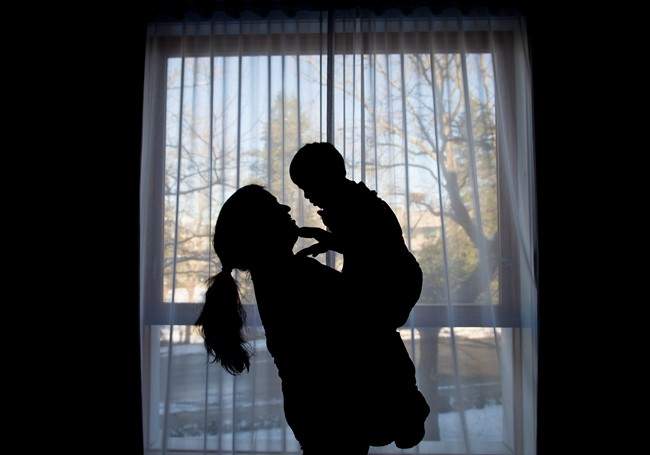
Fatima is thirty-two, though the lines etched around her eyes make her look fifty. She arrived in El Obeid eight months ago after fleeing her home in Khartoum with her three youngest children. Her husband was separated from them in the chaos of the initial evacuation, and she has heard no word since.
Every morning at four o'clock, before the desert heat begins its relentless climb, Fatima wakes up. She listens to the quiet breathing of her children. Then she checks the plastic bucket in the corner of her shelter. It is bone dry.
She steps out into the cool, deceptive dawn. The journey to the nearest functioning borehole takes forty-five minutes each way. By the time she returns, her shoulders ache, her palms are blistered from the wire handle of the heavy container, and the sun is already a white-hot disk overhead.
"In the city, I turned a handle and water came out," she told an aid worker last month, her voice flat with a fatigue that sleep cannot cure. "Here, I spend half my day thinking about liquid. Will there be enough for the porridge? Will my youngest survive the week if the water smells of sulfur again? You do not live when you are counting drops. You just wait."
That waiting defines the psychological weight of displacement. It is not just the physical ache of thirst; it is the erosion of dignity. When people are reduced to fighting over muddy puddles or paying exorbitant black-market prices for trucked-in water, community structures fracture. Desperation breeds tension. Trust evaporates faster than the morning dew.
The Invisible Stakes
Why should anyone outside the borders of Sudan care about the dry taps of El Obeid?
Because crises of this magnitude do not stay contained. Water scarcity is a global threat multiplier. When basic human needs are denied on a mass scale, populations are forced into impossible migrations, triggering regional instability that ripples across continents.
More importantly, ignoring El Obeid is a failure of our shared humanity. The statistics cited by humanitarian agencies—thousands displaced, millions facing severe food and water insecurity—are not numbers on a spreadsheet. They are human beings with names, memories, and futures that deserve protection.
Humanitarian organizations are working valiantly against staggering odds. Trucking water in is expensive, unsustainable, yet entirely necessary as a stopgap measure while deep boreholes are drilled and electrical grids are repaired. But relief operations are chronically underfunded. Aid budgets are stretched thin by simultaneous global emergencies, leaving places like El Obeid hovering on the edge of complete abandonment.
We talk endlessly about peace agreements, political transitions, and ceasefire negotiations. These are vital conversations. Yet, peace remains an abstract concept to a child whose throat is parched and whose mother is weeping over an empty cup.
The solution requires more than emergency food packets and temporary plastic sheeting. It demands a sustained, unyielding commitment to rehabilitating critical infrastructure, securing safe corridors for engineers and technicians, and treating water access not as a logistical afterthought, but as the absolute foundation of any viable humanitarian response.
Consider what happens next if the international community looks away. The camps will swell. Diseases will mutate and spread. The fragile social fabric of the region will snap entirely, leaving behind a silent wasteland where life was once fiercely defended against impossible odds.
The sun dips below the horizon in El Obeid, plunging the displacement camps into a cool, star-studded darkness. The daytime heat fades, but the anxiety remains, hanging as heavy in the night air as the midday dust.
Fatima sits outside her tent, watching her youngest child sleep, listening to the distant, hollow echo of a stray dog barking in the arid wind. Beside her sits a half-empty jerrycan. She counts the remaining cups in her head, rationing the precious fluid hour by agonizing hour, waiting for the dawn to break and the long walk to begin all over again.