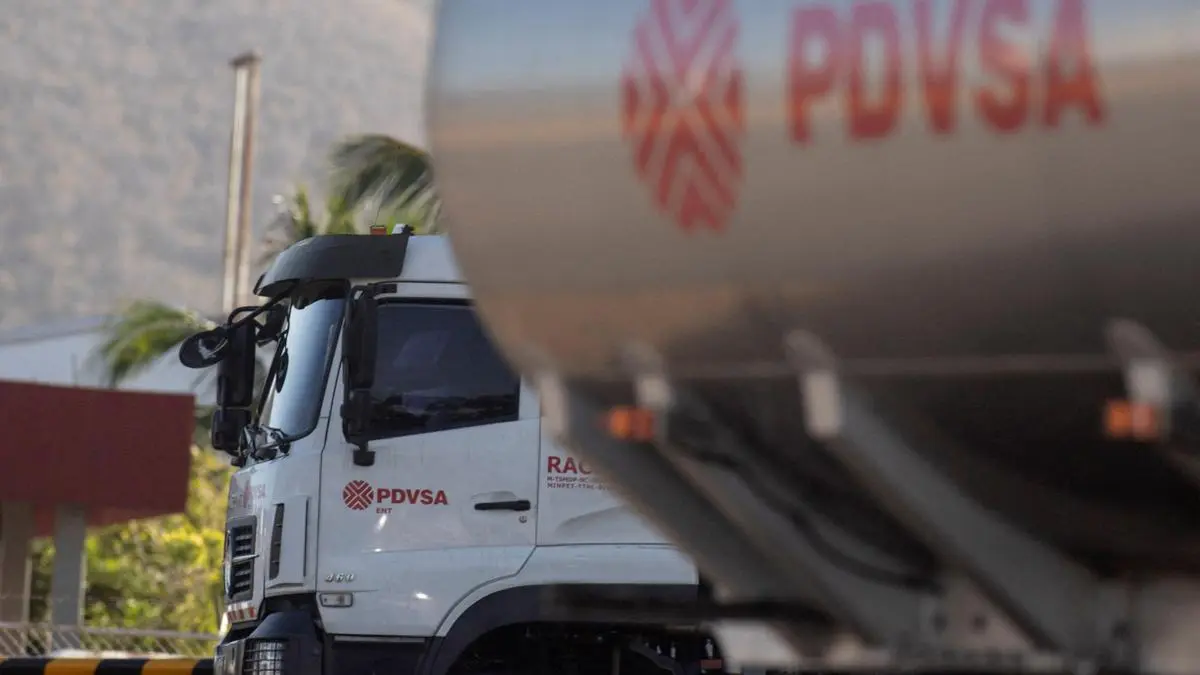
The headlines are singing a familiar, lazy tune. Washington eases sanctions on Caracas to "flood the market" with Venezuelan crude. They claim this will offset the supply shocks from the Middle East. It sounds logical if you possess the geopolitical depth of a kiddy pool.
It is a fantasy.
The idea that lifting a few sanctions can suddenly flip a switch on South American oil production is not just optimistic; it is functionally illiterate regarding how the energy industry operates. We are witnessing a desperate political pivot masquerading as a strategic energy play. If you think your gas prices are dropping because Chevron got a new license, you are being sold a bridge in a country that cannot afford to maintain its own.
The Infrastructure Decay Myth
Most analysts look at Venezuela's proven reserves—the largest in the world—and assume the capacity is just sitting there, waiting for a signature in D.C. to start flowing. I have spent years looking at the CAPEX requirements of nationalized oil firms that have been cannibalized for decades. You don't just "turn on" a well that has been neglected for five years in a tropical climate.
Venezuela’s production peaked at over 3 million barrels per day (bpd) in the late 1990s. Today, they struggle to break 800,000 bpd. To even get back to 1.5 million bpd, the industry requires an estimated $10 billion to $15 billion in immediate, annual investment. That money doesn't exist. Private equity isn't rushing into a jurisdiction where the rule of law is a suggestion and the power grid fails if someone sneezes too hard.
The "swing producer" narrative is dead. Venezuela is a reclamation project, not a reservoir.
The Iran War Distraction
The pretext for this policy shift is the escalating conflict in the Middle East. The logic follows that if Iranian supply is choked or the Strait of Hormuz becomes a shooting gallery, Venezuelan heavy crude fills the gap.
This ignores the chemistry of refining.
- API Gravity Matters: Venezuelan oil is largely extra-heavy bitumen. It requires specialized complex refineries—mostly on the US Gulf Coast—to process.
- The Diluent Deadlock: To even move this sludge through pipes, Venezuela needs diluents (like naphtha), which they currently have to import.
- The China Factor: For years, Caracas has survived by selling "bitumen blend" to independent "teapot" refineries in China at massive discounts. Those contracts aren't just going to vanish because Uncle Sam said it’s okay to sell to the West again.
The US isn't "boosting supply." It is merely reshuffling the deck chairs on a sinking ship. Any marginal increase in Venezuelan exports will be a drop in the bucket compared to a real Iranian disruption, which could take 2 million bpd off the market instantly.
Why the Market is Calling the Bluff
If the markets believed this "supply boost" was real, we would see a sustained softening in Brent and WTI futures. We aren't seeing it. Traders know that "easing sanctions" is a bureaucratic term that doesn't fix a broken pump or a rusted-out tanker terminal.
The real play here isn't energy; it's migration and optics. The US administration needs to show it is "doing something" about energy prices before an election cycle, and they need the Venezuelan economy to stabilize just enough to slow the flow of migrants. Using oil as the lever is a convenient lie that both sides are happy to tell.
The Real Cost of "Cheap" Venezuelan Oil
Let’s talk about the E-E-A-T that the "experts" ignore: the actual operational risk.
I have seen companies lose billions betting on "thaws" in hostile regimes. When the sanctions ease, the first thing that happens is a parade of creditors—from ConocoPhillips to everyday bondholders—lining up to seize every drop of oil that hits international waters. The legal quagmire surrounding Venezuelan assets is so thick that any "new" oil will be tied up in litigation before it ever reaches a refinery.
The "nuance" the competitor missed is that Venezuela isn't an oil state anymore; it's a series of interlocking debt obligations with a bit of drilling on the side.
The Brutal Reality of the Energy Transition
While the world argues over sanctions, the actual energy landscape is moving away from the heavy, sour crudes that Venezuela produces. These are the most carbon-intensive barrels to extract and refine. In a world increasingly governed by ESG mandates and carbon taxes, Venezuelan oil is the "subprime mortgage" of the energy world.
Investing billions to revive 1970s-era heavy oil infrastructure in 2026 is a sunk-cost fallacy of global proportions.
Stop Asking if Sanctions Work
The question isn't "Will easing sanctions lower gas prices?" The answer is a flat no.
The question you should be asking is: "How much more leverage is the US willing to hand to Caracas for a 1% change in global supply?"
The policy shift is a sign of weakness, not tactical brilliance. It signals to the world that the US Strategic Petroleum Reserve is depleted and that we are now forced to bargain with the very regimes we spent a decade trying to isolate.
How to Actually Play This
If you are an investor or a policy observer, ignore the "supply boost" headlines.
- Watch the Diluents: If you don't see massive shipments of naphtha heading to Caracas, the oil isn't coming out of the ground.
- Track the Rigs: Baker Hughes rig counts in Venezuela are the only metric that matters. Headlines don't drill wells. Steel in the dirt drills wells.
- Ignore the "Peace" Premiums: Geopolitical risk is being priced in poorly. The market is currently underestimating the chance of a total Venezuelan collapse regardless of sanction status.
The status quo is a delusion. We are trying to solve a 21st-century energy crisis with 20th-century diplomatic tools and 19th-century infrastructure.
Washington isn't opening a tap. They are staring at a dry well and telling you it's raining.
Build your strategy around the scarcity, not the phantom surplus.