The ground beneath Java does not sleep. It stutters. It groans. Anyone who has lived through an earthquake knows the specific terror of that sound, a low subterranean rumble that starts in the soles of your feet before you even hear it with your ears. The earth opens, swallows roads, and reshapes hillsides in seconds.
Now, imagine dropping a nuclear reactor into that exact choreography of chaos.
The Ancient Gamble
Indonesia sits squarely on the Pacific Ring of Fire. This is not a metaphor. It is a violent, churning geological reality where tectonic plates grind against one another with the force of millions of freight trains. Volcanoes crown the islands. Fault lines crisscross the soil like shattered glass.
For decades, the national conversation has danced around a singular, massive question: How does an archipelago of nearly three hundred million people power its future without burning the planet to ash? Coal plants choke the skies over Sumatra and Borneo, turning the sun into a hazy copper coin. The transition to clean energy is an absolute necessity.
Yet the proposed solution introduces a haunting paradox.
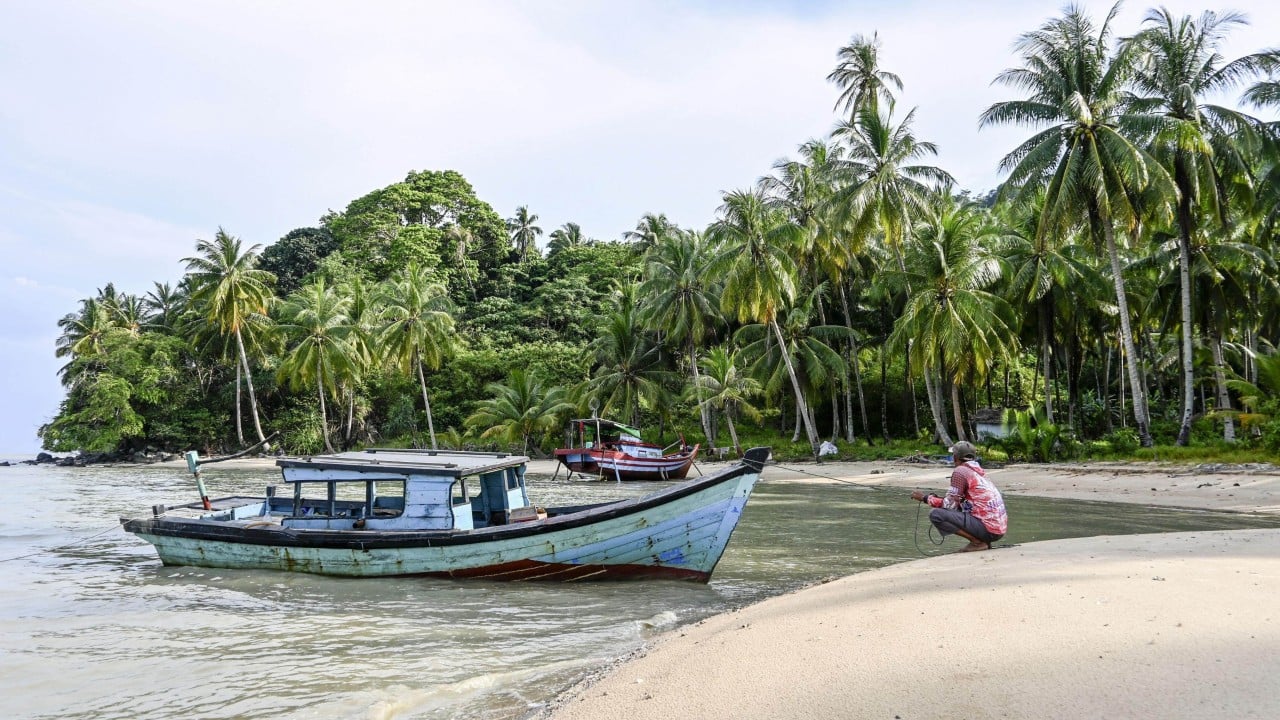
Consider Dewi, a hypothetical fisheries worker on the northern coast of Central Java, near the planned site on the Muria Peninsula. Every morning, she pushes her wooden boat into the Java Sea, watching the sun crest over dormant volcanic slopes. She does not read white papers on thermal efficiency or seismic mitigation coefficients. She only knows that when the sea churns, the land breaks. When government planners speak of clean atomic energy arriving on her shores, she does not feel safe. She feels targeted.
The proposal is not entirely new. It has flickered in and out of government agendas for over thirty years, rising like smoke after every energy crisis, only to recede whenever the earth violently reminds the nation of its volatility. But recent economic pressures and zero-emission targets have brought the dormant nuclear power plant plan back to life.
Translating the Invisible
Nuclear energy is fundamentally simple in theory and terrifyingly unforgiving in execution. Think of it as a very aggressive way to boil water. Atoms of uranium are split, releasing immense heat. That heat turns water into steam, the steam spins a turbine, and electricity flows into the grid.
The mechanics are clean. The byproduct is long-lived radioactive waste. And the containment requires absolute, unyielding stability.
A standard reactor vessel is built to withstand immense internal pressure and external shocks. Engineers calculate maximum probable earthquakes, adding safety margins, concrete walls meters thick, and redundant cooling systems. But the Indonesian archipelago does not operate on standard geological rules. It is a zone of mega-thrust earthquakes and hidden offshore fault lines that can generate tsunamis capable of erasing entire coastlines within minutes.
When the Fukushima disaster unfolded in Japan—a nation known for its rigorous engineering and strict safety culture—the world watched an advanced nuclear facility buckle under the combined fury of an offshore quake and a wall of water. If it can happen there, people along the Muria Peninsula ask, what happens when the earth shakes harder here?
Proponents argue that modern small modular reactors, or SMRs, offer a safer path. These designs are smaller, theoretically easier to cool passively, and can be factory-built. They are marketed as the agile answer to island grids.
Skeptics point out that changing the size of the reactor does not change the physics of tectonic plates. You cannot engineer your way out of a shifting continent. You can only manage the probability of disaster. And when the consequence of failure is permanent environmental contamination, probability ceases to be a mathematical abstraction. It becomes a shadow cast over generations of fishermen, farmers, and families.
The Human Cost of Progress
Energy policy is always a compromise between competing catastrophes. If Indonesia does not build clean power, the continued reliance on fossil fuels guarantees rising seas that will submerge the very coastal communities Dewi and millions of others call home. Climate change is a slow-motion earthquake, eating away at the shoreline inch by inch, salt-poisoning freshwater wells, and destroying the traditional rhythms of agrarian life.
Choose coal, and you poison the air today. Choose nuclear on an active fault line, and you gamble with the genetic heritage of tomorrow.
There is no clean exit from this dilemma.
The planners in Jakarta sit in air-conditioned offices staring at spreadsheets of energy demand curves, calculating gigawatt-hours and projected economic growth. They see a nation rising on the global stage, requiring stable, baseload power that solar and wind alone cannot immediately guarantee without massive, expensive battery infrastructure. They see an inevitable destiny.
Down on the coast, the perspective shifts. The wind carries the scent of salt and diesel. The horizon is wide, beautiful, and indifferent to human plans.
As the debate intensifies, the true test for the nation will not be whether it possesses the engineering brilliance to pour thick enough concrete. It will be whether it can look its citizens in the eye and prove that the promise of light is worth the shadow of the fault line.
The earth beneath Java continues its slow, relentless grind, storing energy in the deep stone, waiting for the moment it must release it again.